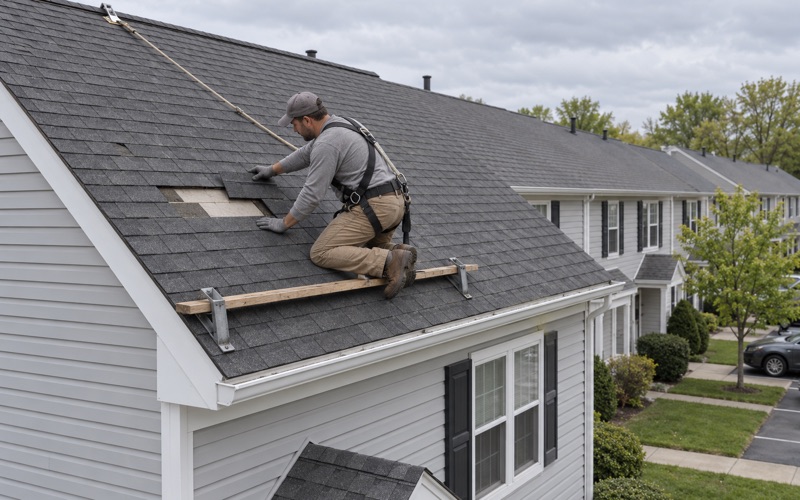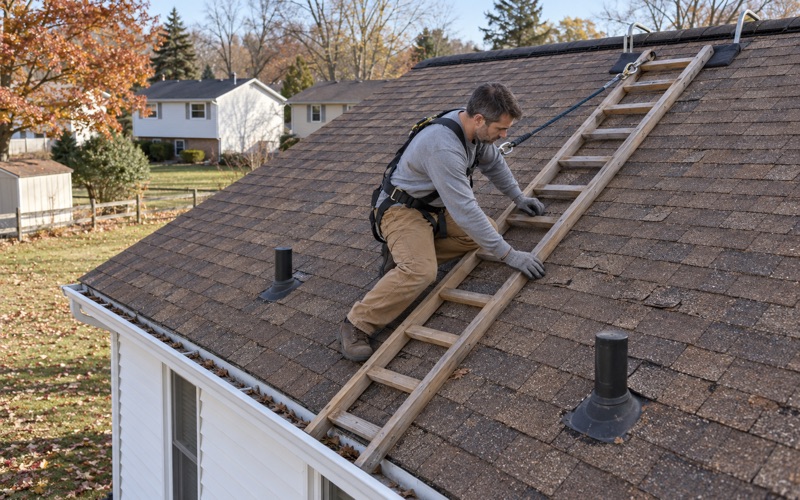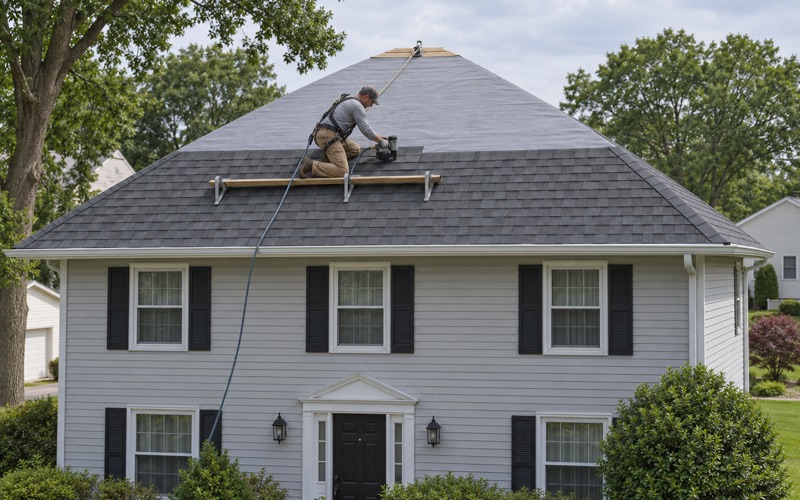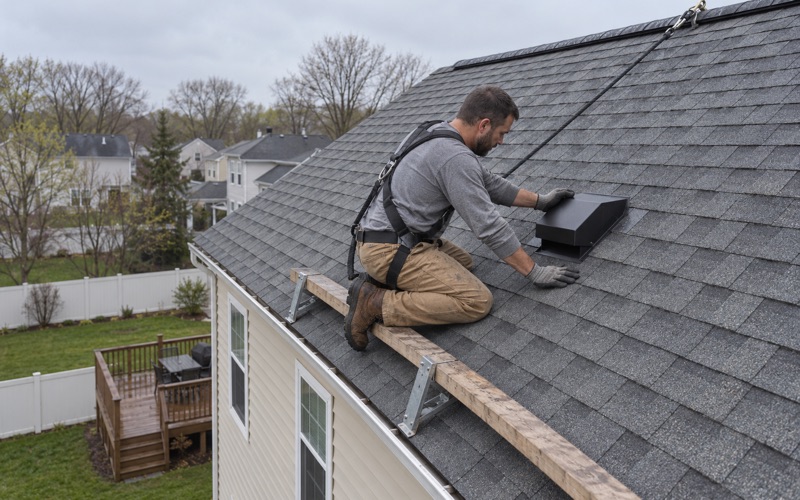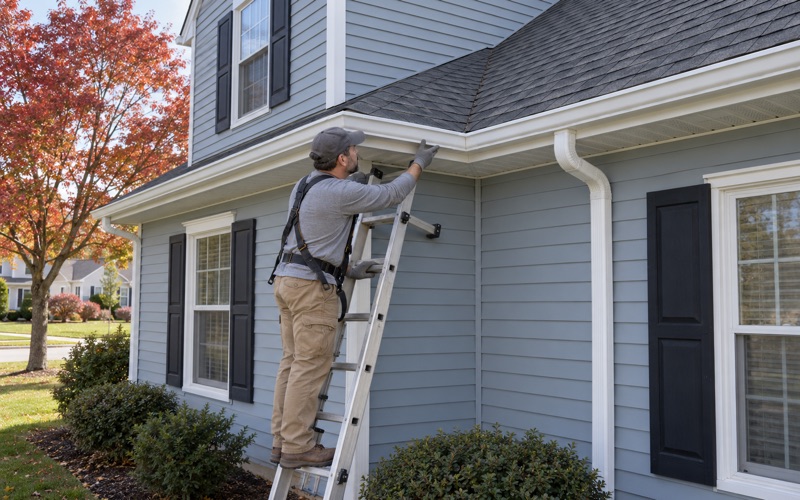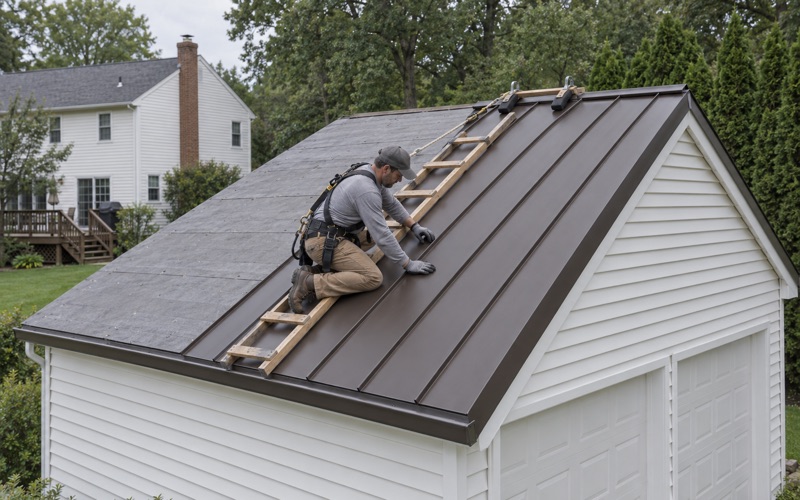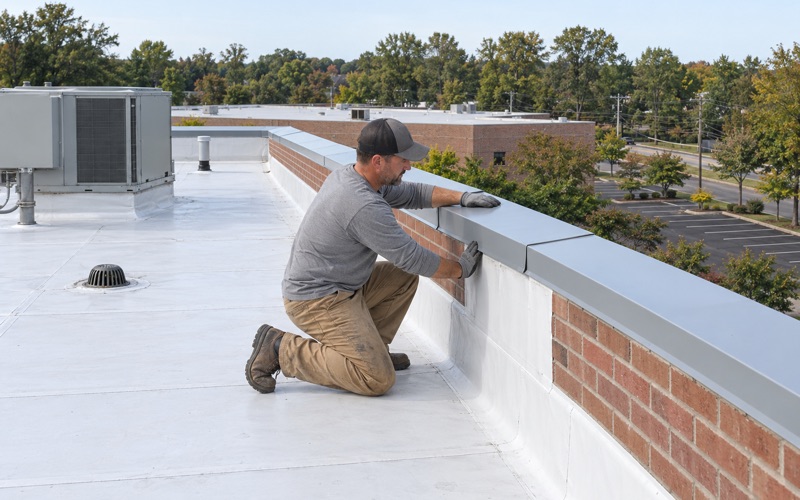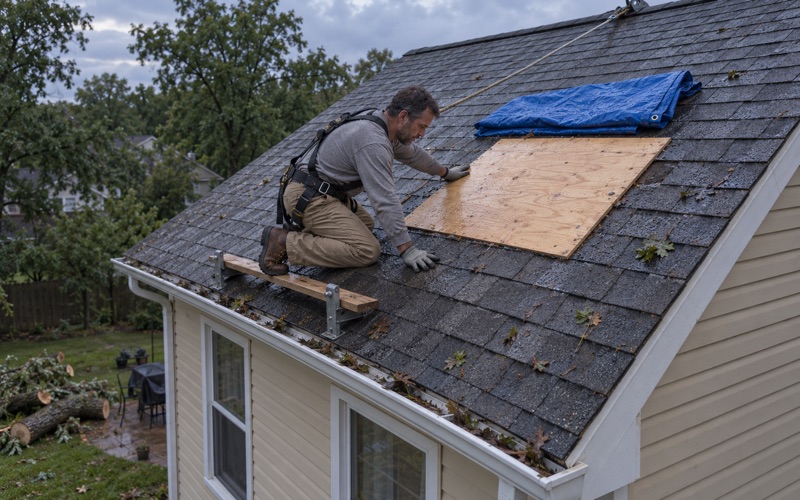
Gloucester Township Roofing brings more than 20 years of trade experience to roofing in Southampton, and the first thing we settle on any call here is what kind of roof we are standing on. A shingled ranch and a factory-built home can sit a mile apart and need entirely different answers, so we identify the structure before we talk about materials, labor or price.
Our approach to a leak does not change with the house. We look at the underside as well as the surface, follow the stain back to where water actually gets in, and only then tell you whether a repair will hold. If it will, that is the answer you get, and replacement stays off the table unless the roof itself has run out of life.
When a bigger job is warranted, the written estimate splits tear-off, decking, underlayment, flashing, ventilation and gutters onto their own lines. That layout lets you hold our number beside anyone else’s and see exactly where two bids part ways, instead of comparing one lump sum against another and guessing what each one left out.
Mobile Estates and How a Manufactured Home’s Roof Is Built
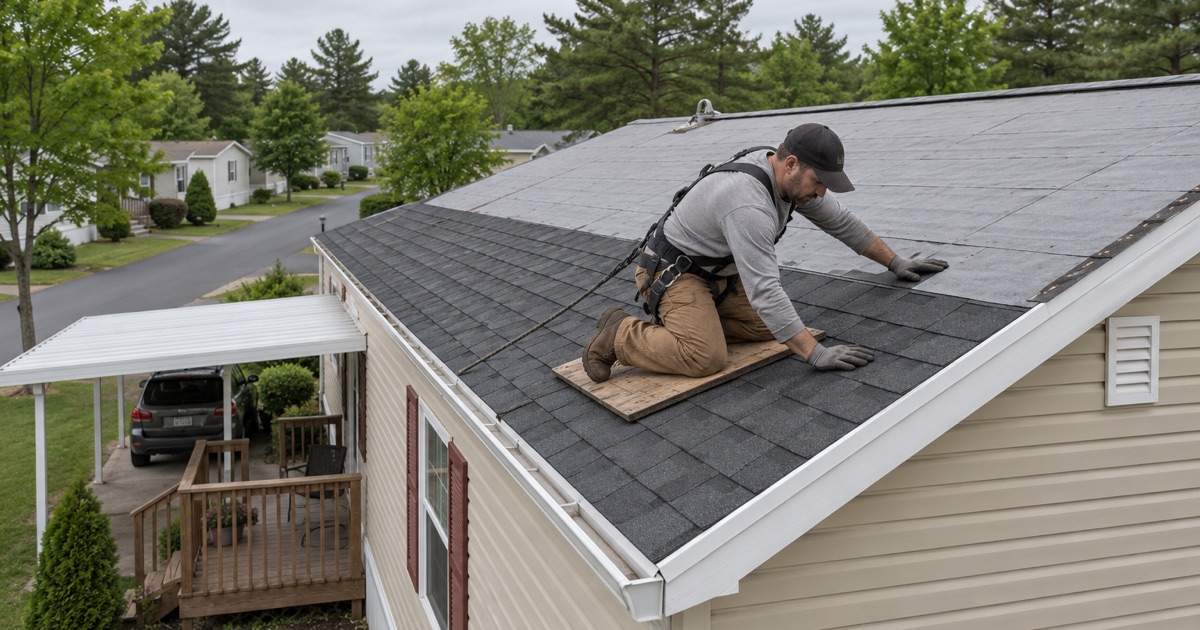
A community of its own off Route 206
Southampton Township has its own manufactured-home community, Mobile Estates, off Route 206 near mile marker 24. The township’s neighborhoods page lists it at 325 units and about 700 residents, while the MHVillage listing for 2362 Route 206 counts 337 sites. That listing gives 1967 as the year it opened and describes it as open to all ages.
The sources do not line up, and we do not pretend they do. The 2024 five-year American Community Survey counts 116 mobile homes across the whole township, a figure that cannot be squared with either the township’s unit count or MHVillage’s site count. For a homeowner, the takeaway is simpler: a sizable share of Southampton’s roofs sit on homes that were built in a factory, not framed on site.
Factory framing, different pitch
A manufactured home’s roof arrives as part of an assembly built to a federal standard rather than raised rafter by rafter on the lot. The framing members, the spacing and the pitch are set by the plant, and many of these homes carry a low-slope or metal top rather than the steeper shingled pitch common on site-built houses nearby.
Federal rules put New Jersey in HUD Wind Zone I and the South roof-load zone under 24 CFR 3280.305. Those design loads matter when anything heavier is added on top. Before we suggest a new covering, we want to know what the original assembly was built to carry, because a roof that was engineered as a single unit does not always accept a second layer gracefully.
What we check before quoting
On a manufactured home we start by identifying the roof type, the age of the covering we can see, and whether earlier owners have already added a layer. We look along the seams, at every penetration and at the edges where the roof meets the walls, since those are the joints most likely to move as the home settles.
Inside, we look at ceiling panels for staining and soft spots, then compare what we find with the exterior. Matching the two is how we keep from quoting a whole new top when the real problem is a single vent boot or one failed seam, which is the most common way owners end up paying for more roof than they needed.
Looking for roofing closer to Nether Providence? See Roofing in Nether Providence.
Peaked Roofs and Low-Slope Roofs in One Community
The half counted as peaked
MHVillage’s listing for Mobile Estates says half its homes have peaked roofs and about 5 percent are multisection. That is the only published statistic we found about these roofs, and it says nothing about the other half, so we treat every home as its own case rather than assuming a material or a condition from the address.
A peaked manufactured-home roof often takes shingles, and the same listing reports lap siding on about three quarters of the homes. Where a homeowner wants new shingles, we hold sample boards up against the actual siding before anyone orders, because a color that looks right in a brochure can fight with a faded or painted lap finish once it is installed.
Low-slope and metal tops
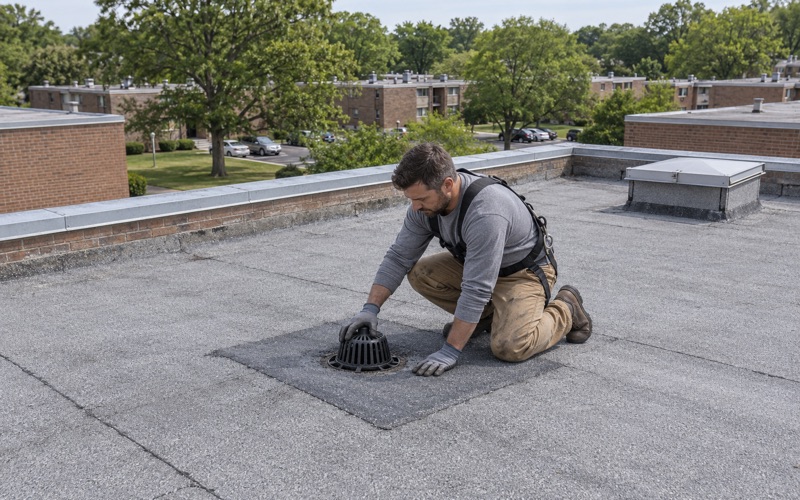
Lower-pitched manufactured roofs shed water slowly, which changes what will last. Standing water finds fastener holes and seams that would stay dry on a steeper roof, so the repair or re-cover has to be continuous across the low spots rather than patched around them.
For those roofs we discuss coverings built for low slope, such as EPDM rubber or a TPO single-ply membrane, alongside repair of the existing metal where it is still sound. Which one fits depends on what is under the current surface, how the edges are detailed, and how long the owner plans to keep the home.
Matching the fix to the roof
A multisection home brings a marriage line down the center of the roof where two factory sections were joined on site. That seam behaves differently from the rest of the surface, and we inspect it on its own before deciding whether a localized repair or a full re-cover makes more sense.
We do not quote a peaked roof and a low-slope roof from the same template. The underlayment, the edge metal, the fasteners and the drainage detail all change between the two, and our estimate shows each of those as a separate line so you can see what the specific roof on your home actually needs.
Leaks, Seams and Re-Covering a Single-Wide Roof
Where manufactured roofs let water in
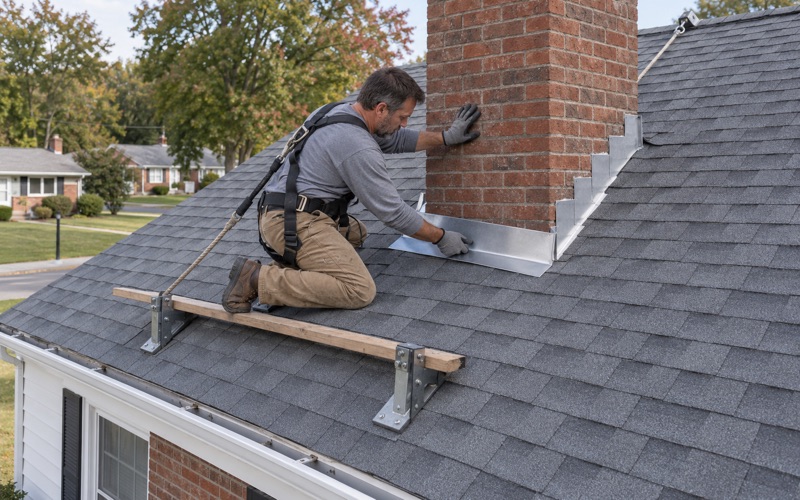
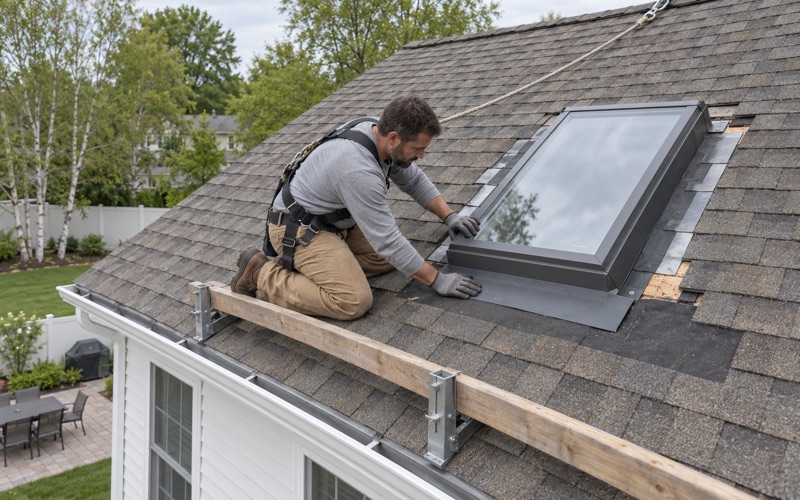
On factory-built roofs the usual entry points are seams, vent stacks, pipe boots and the drip edge along the eaves. A leak at a seam can show up several feet away inside, traveling along a framing member before it stains a ceiling panel, which is why we trace it from both sides before naming a cause.
When we find a failed pipe boot or a lifted flashing at a vent, we replace the component rather than spreading sealant over it. Caulk applied over a moving joint buys a season at best, and on a roof that flexes with temperature it tends to open again just when the weather turns.
A repair answer before a replacement pitch
Many manufactured-home leaks are local, and we say so when that is what we see. If a seam, a boot or one section of edge metal is the problem, we quote that repair on its own and leave the rest of the roof alone, with a plain note on how much life we think the remaining surface has.
If we judge the covering is past repair, we tell you why with photos from the roof and the inside, not a general claim about age. Where decking or a roof panel underneath turns out to be rotted, we photograph it and show you before anything is cut out, at a per-sheet price already written into the contract.
Re-covering a single-wide roof
Re-covering a single-wide is a smaller surface than a typical house, but the details are tighter. The edges, the attachment to the walls, and the transitions at vents and any added rooms decide whether the new top stays dry, and those are where we spend most of our time on the job.
At the end of each work day we clear the yard, the driveway and any gutters, and run a magnet sweep for nails. On a rented lot with neighbors close on both sides, that cleanup matters as much as the roof itself, because a stray nail ends up in someone else’s tire just as easily as yours.
Owning the Home, Renting the Lot
Lot rules we have not read
In a community like Mobile Estates the resident usually owns the home and rents the lot beneath it. MHVillage lists a lot rent of 515 without stating the period, and we have not read the community’s rules on exterior work, what rent includes, or who maintains roofs, so we ask the homeowner to check with the lot owner before we schedule.
That step protects you, not us. Some communities set hours, parking or dumpster terms for contractors, and learning that on the morning of the job can delay a roof that is already open. We plan around whatever the owner confirms, and we do not contact management on your behalf unless you ask us to.
Code status and contracts
New Jersey’s code places HUD-code homes outside the Uniform Construction Code but brings their rehabilitation inside it (N.J.A.C. 5:23-2.2(a)2). We have found no state text that settles how a manufactured-home re-roof is treated, so we take no position on it and resolve the question with the owner before work begins.
Our contracts follow New Jersey’s home improvement rules, including the written notice of your right to cancel. Every line item, the decking price and the start window are in writing before materials are ordered, so a homeowner on a rented lot has the same paper trail as anyone else in the township.
Storms and site-built homes nearby
Southampton, first created in 1845 as Coaxen Township, is mostly owner-occupied detached houses, with 4,347 of 4,680 housing units detached in the same census survey. For those homes and for manufactured ones alike, we photograph storm damage and write it up for the owner’s insurance claim, and we will meet the adjuster on site when asked.
The National Weather Service places the Leisuretowne point in its Northwestern Burlington forecast zone, out of the Mount Holly office, which is where local warnings for the township are issued. When a wind event moves through, we prioritize roofs that are open to the weather, and then work through inspections in the order calls came in.
- 20+ Years in Business
- Line-Item Written Estimates
- NJ and PA Contracts