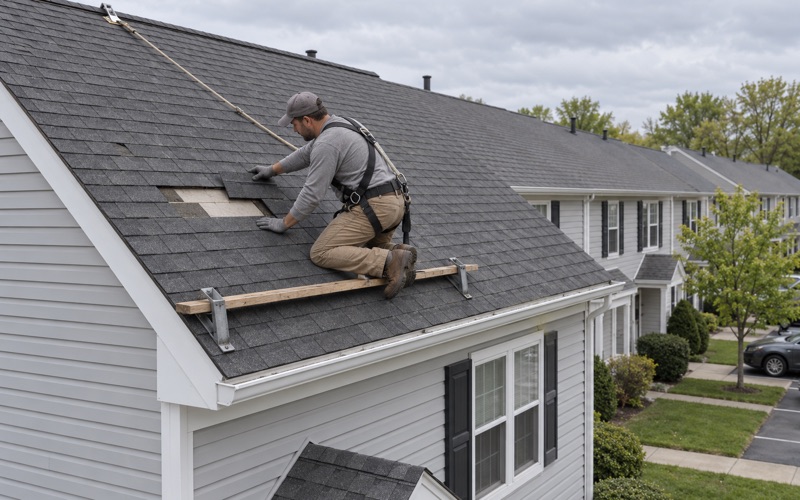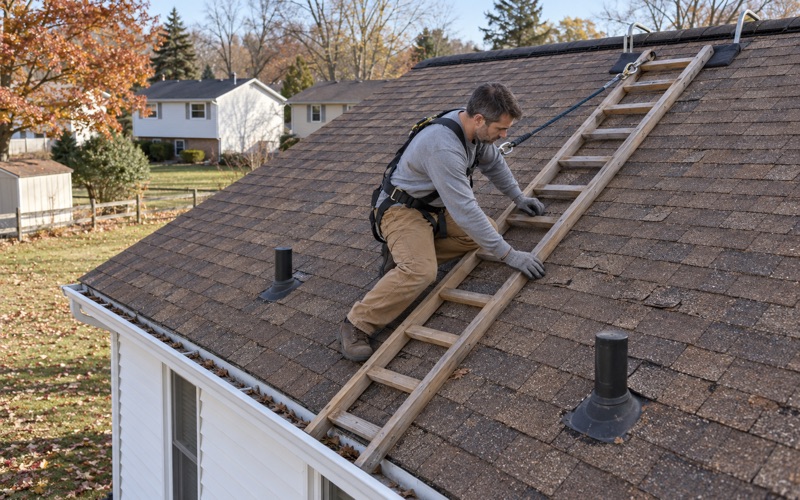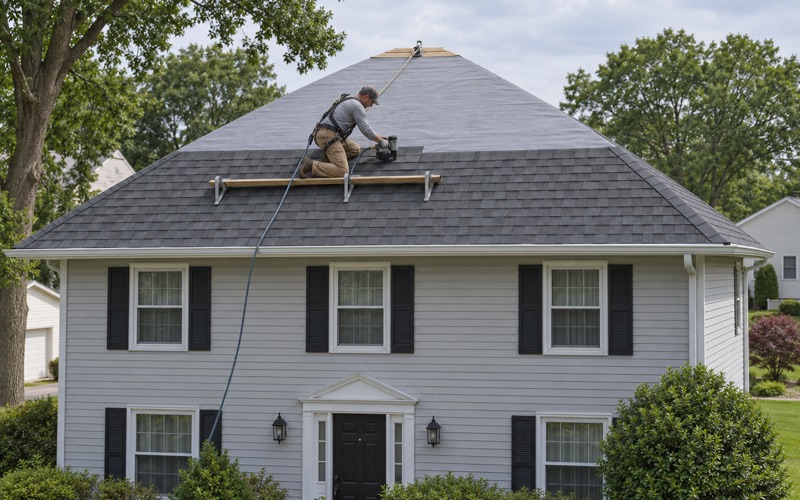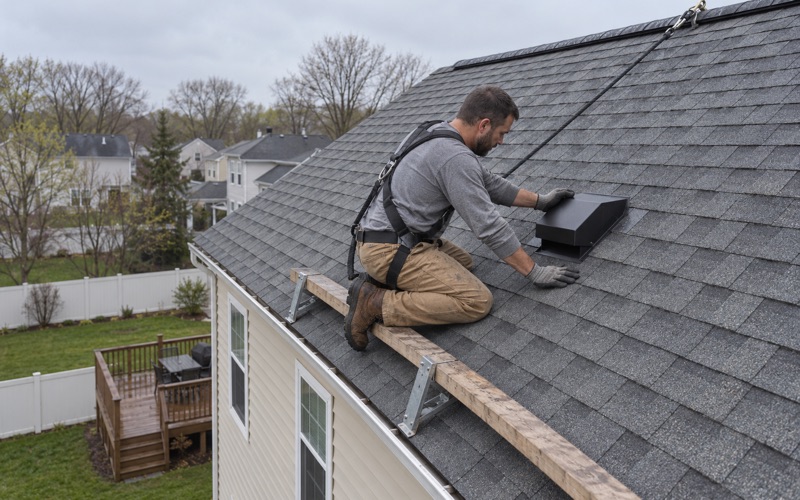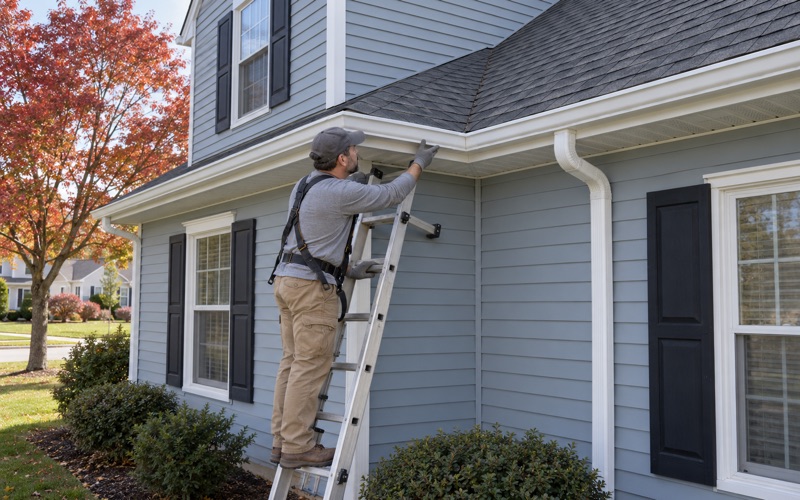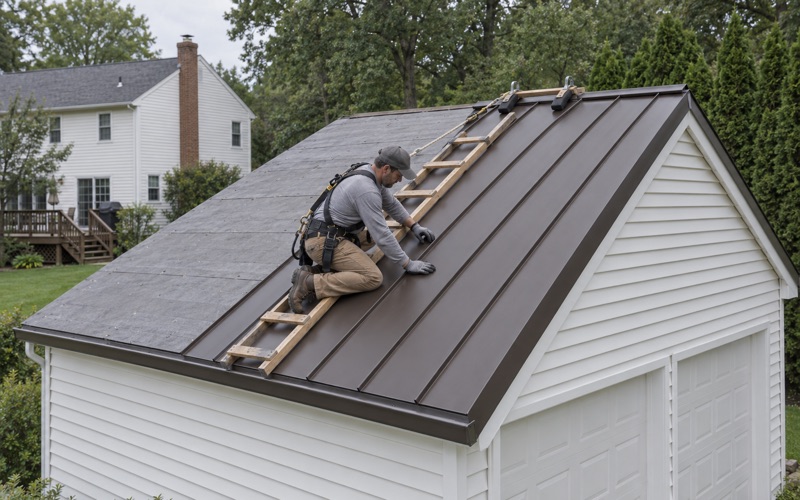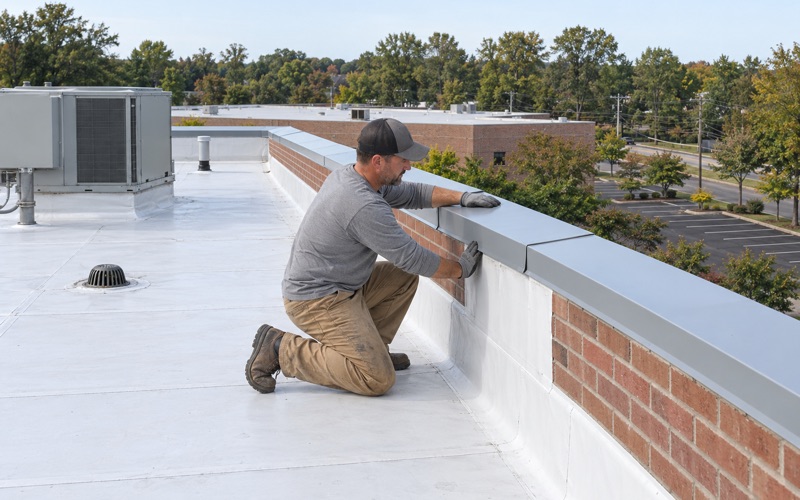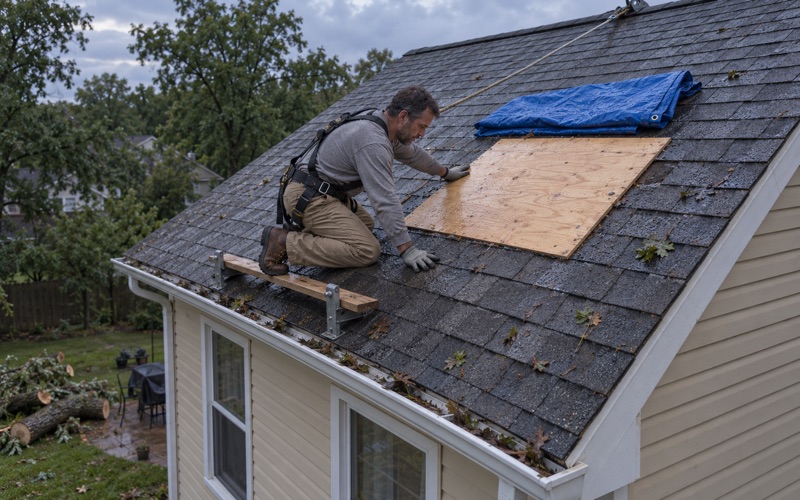
Gloucester Township Roofing brings more than 20 years in the trade to roofing in Pine Hill, and on a house set among tall trees we start by looking at what lands on the roof as well as at the roof itself. Needles, leaves, shade and overhanging limbs shape how a roof wears, how its gutters behave and where the first leak tends to show up. We plan each repair or replacement around the trees as much as around the house.
The first answer we give is whether the roof can be repaired. A worn valley, a few lifted tabs or a stretch of soft edge under an overflowing gutter is often a repair, and we say so before any replacement price comes up. When a roof really has reached the end of its life, we show you what we found and why, so the decision rests on evidence rather than a sales pitch.
Work under trees is messy, and we treat cleanup as part of the job. At the end of every work day the yard, driveway and gutters are cleared, and a magnet sweep pulls roofing nails out of the lawn and planting beds. Houses with solar panels are scheduled with the panel removal and reinstall arranged ahead of time, not sorted out on the morning the crew arrives.
Named for Its Pines, and Roofs That Collect Them
What the borough’s history says
Pine Hill’s own history page is direct about where the name came from: ‘Because of the many pine tree and hills we were named Pine Hill.’ Early visitors came for the clean air, and some would lie in the hot sand among the pine trees. The same page notes that the borough holds the highest point in Camden County, at 214 feet.
None of that changes how a shingle is nailed, but it explains what we look for first on a house here. Where pines and hardwoods stand close, the roof sits inside the trees’ drop zone, catching needles, cones, leaves and bits of bark. Pines let go of needles over a long stretch of the year rather than in one autumn burst, so the debris on a roof is steady rather than seasonal.
Needles packed into the gutters
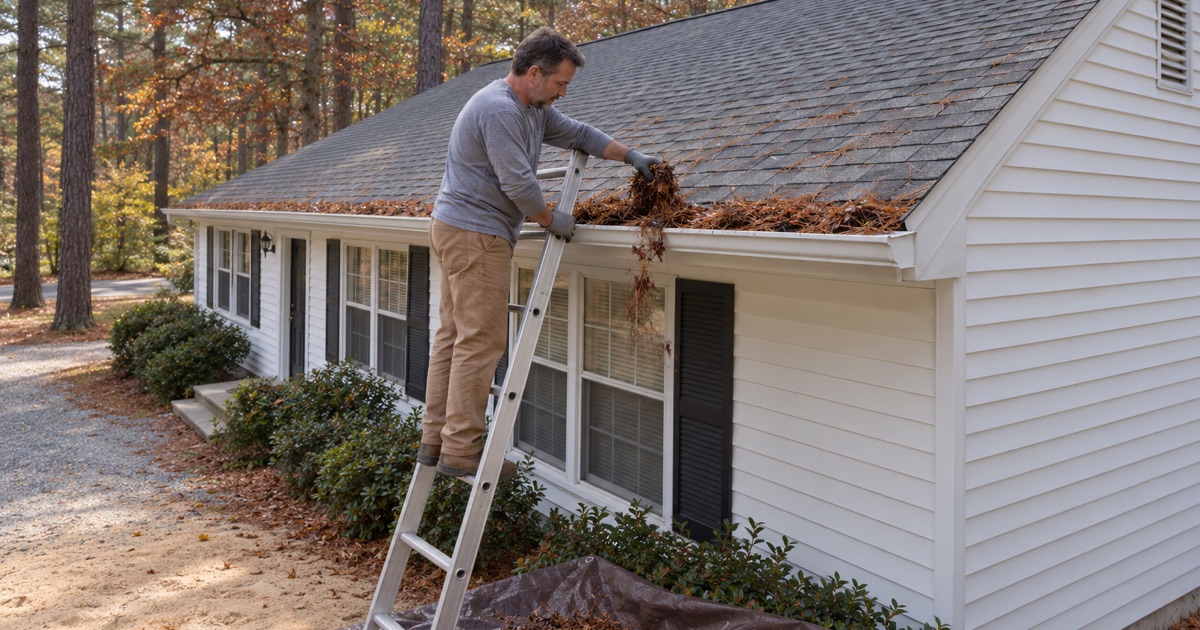
The gutter is usually the first place the trees show up. Pine needles are thin and lie flat, so they mat into a dense layer that holds water and gives seeds and moss a place to grow right in the trough. Once a gutter is half full, rain spills over the front lip, soaks the fascia board behind it and lands beside the foundation instead of leaving through the downspout.
On a gutter run under trees we check the pitch toward each outlet, the hangers, and whether every downspout is clear to the bottom, since a clog at the lower elbow backs up the whole run. If new gutters make sense, seamless aluminum runs with larger downspouts give needles fewer seams to snag on. Our written estimates list gutters as their own line, apart from tear-off, decking, underlayment, flashing and ventilation, so two bids can be compared item by item.
Valleys that hold wet debris
A roof valley, where two slopes meet, is a natural channel, and it gathers whatever slides down both sides. Needles and leaves pile against any obstruction in it, slow the water and push it sideways under the shingle edges. On an older roof that pile can stay damp for weeks, and the valley is often where we find the first soft decking.
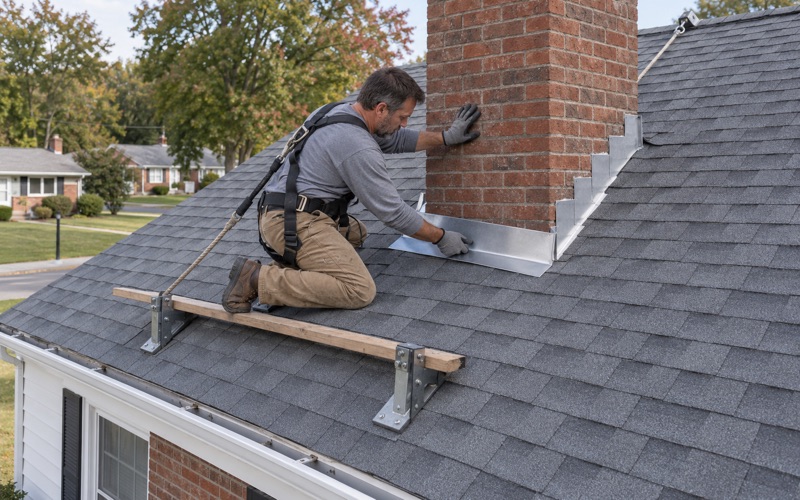
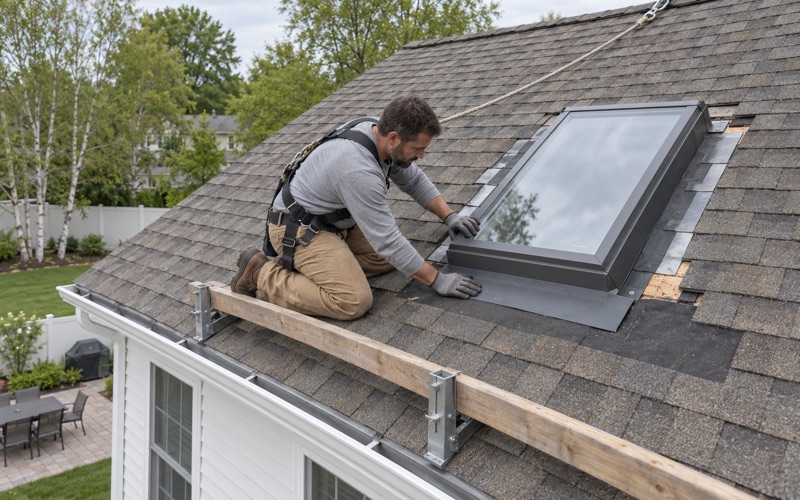
When a valley leaks, we rebuild it rather than smear caulk over the joint. That means new valley lining over an ASTM D1970 self-adhering ice and water barrier, and when the whole roof is redone, new flashing at the chimneys, sidewalls and skylights along the same run. A clean open valley sheds needles far more readily than a cut valley with a ragged shingle line.
Looking for roofing closer to Bellmawr? See Roofing Services in Bellmawr.
Shaded Slopes That Dry Slowly
Why a shaded roof stays wet
Sun and moving air are what dry a roof after rain or heavy dew. A slope under a thick canopy gets less of both, so it can stay damp for hours or days longer than an open slope on the same house. That extra wet time is what lets organic growth settle in, and the slope beneath the tallest trees usually shows it first.
Plenty of lots in town are open, and we never assume a roof is shaded until we have stood under it. But where one side of a house sits under trees and the other does not, the contrast is easy to read: the shaded side looks darker, holds debris longer and wears on its own schedule. We note and photograph that difference during an inspection so you can see it too.
Moss, algae and lost granules
Moss grows in the debris and moisture a shaded slope holds, and it roots into the gaps between shingle tabs. As it thickens, it lifts the shingle edges, holds water against the mat and lets wind-driven rain wick underneath. The dark streaks of algae common on shaded roofs are mostly cosmetic, but moss is a real moisture problem.
Scraping or pressure-washing moss off asphalt strips the granules that shield the shingles from sunlight, so we avoid both. Where growth is light, a gentle cleaning can add useful years to the roof. Where it has lifted tabs and softened the deck, we will tell you plainly what a repair can and cannot fix.
Ventilation under a canopy
A shaded roof dries slowly from the outside, which makes drying from the inside matter more. A balanced ridge vent with soffit intake, sized by net free area, keeps attic air moving so household moisture does not condense under a deck that is already slow to warm. Pipe boots and vent flashing on a damp slope also deserve a closer look, since they are common leak points.
On every leak call we go into the attic as well as onto the roof. Condensation from poor ventilation and water from a failed shingle can look identical from below, and tracing the stain to where water actually gets in is the only way to price the right repair. It also keeps you from paying to fix a shingle that was never the problem.
Limbs Over the Roof
Branches that rub and drop
A limb that hangs over a roof does damage long before it ever falls. Branches swaying in wind scrape granules off the shingles beneath them and can tear tabs loose at the edge, and the twigs and cones they drop collect behind chimneys and in valleys. Squirrels use overhanging limbs as a bridge, and a chewed soffit or vent lets in water as easily as animals.
Cutting those limbs back is work for a tree professional; we do no tree work of any kind. What we do is point out where branches touch or crowd the roof, mark the shingles and flashing they have already worn, and plan our repairs to follow any trimming. Watches and warnings for Pine Hill come from the National Weather Service office in Mount Holly under the Camden forecast zone, NJZ018, and a wind warning there is a good cue to look up at the limbs over the house.
When a heavy limb comes down
A large limb or whole tree landing on a house usually does more than break shingles. It can crack rafters, punch through the sheathing, flatten a gutter run and pull flashing away from a wall, and the opening lets rain in from the first hour. The first step is a temporary cover to stop water, followed by a look from the attic to see how far the framing was affected.
The tree has to be lifted off by a tree crew before the structure under it can be repaired, so the two jobs run in sequence. We photograph the damage and write it up so you have a record for your own insurance claim. When you ask, a member of our crew will meet the adjuster at the house and walk the roof with them.
Materials that hold up under trees
Some roofing suits a house under trees better than others. Architectural shingles such as GAF Timberline HDZ, Owens Corning Duration or CertainTeed Landmark are heavier than old three-tab shingles and resist scuffing better, and products rated UL 2218 Class 4 are built to take impacts from falling debris. Standing seam metal sheds needles readily, though a large limb can still dent a panel.
Color gets the same attention as the material. We bring samples and hold them up against the brick, stone or siding of your actual house, because a shingle that looks warm in a brochure can read flat and dark on a slope that spends most of the day in shade. Choosing on site avoids a color that only works in the showroom.
Taking Down a Tree Near the House
A borough chapter, not a Pinelands rule
While a roof is being replaced, many owners decide that a tree standing too close to the house should finally come down. In Pine Hill that question runs through the borough: the borough code includes Chapter 22A, Tree Removal and Replacement. Pine Hill is not on the Pinelands Commission’s list of Camden County municipalities in the State-designated Pinelands Area, so it is the borough’s chapter that governs a yard here.
Chapters like this were adopted after the state’s 2023 stormwater permit renewal required towns to control tree removal and replacement. The state’s model ordinance describes a hazard tree as one that is dead or dying, diseased, or causing obvious damage to structures. How Pine Hill worded its own version, and what it asks of a homeowner, is a question to put to the borough before anyone starts cutting.
Where our work fits in
We don’t remove trees and we don’t seek tree approvals, so that conversation stays between you, your tree contractor and the borough. Our part is timing. If a tree is coming down, we would rather replace the roof after it is gone, so new shingles never see the felling work and the decking can be checked where the canopy used to sit.
Decking under a slope that stayed shaded and damp for years is the likeliest to be soft once the old shingles come off. Any rotted sheets we find are photographed and shown to you before they are replaced, at the per-sheet price already written into the contract. Nothing is swapped out of sight and added to the bill later.
Contracts and older roofs
Our contracts follow New Jersey’s home improvement rules, including the right-to-cancel notice, so the terms are on paper before a single shingle comes off. Every line is there to read before you sign. If you have questions about any part of it, we answer them before the work is scheduled, not after.
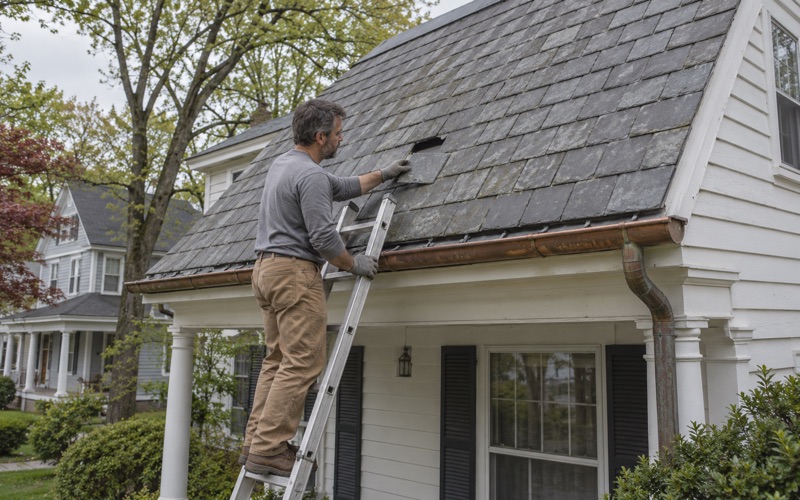
Some older houses still carry slate or cedar, and trees can crack or dislodge those pieces just as they do asphalt. We repair them with matching material wherever it can be found, using slate hooks for slate, rather than patching with whatever is on the truck. That keeps an older roof looking like one roof instead of a quilt of mismatched repairs.
- 20+ Years in Business
- Line-Item Written Estimates
- NJ and PA Contracts