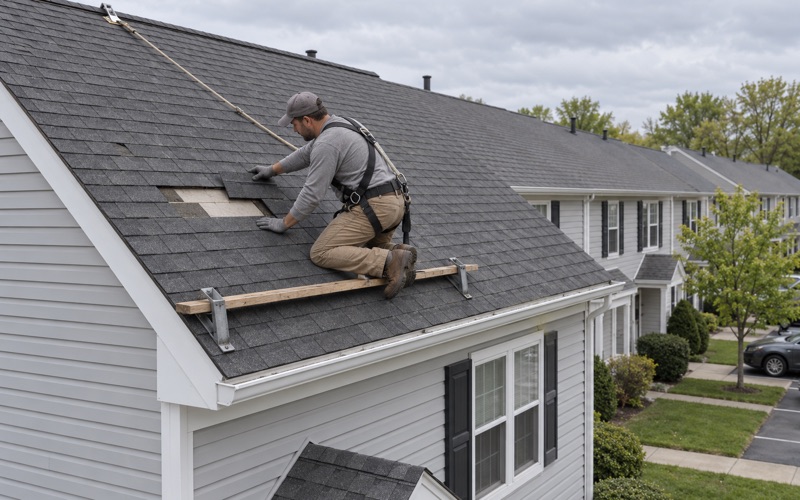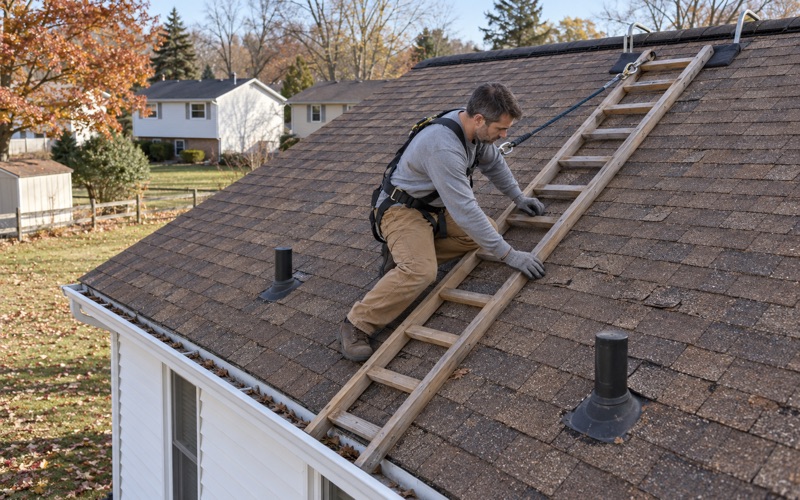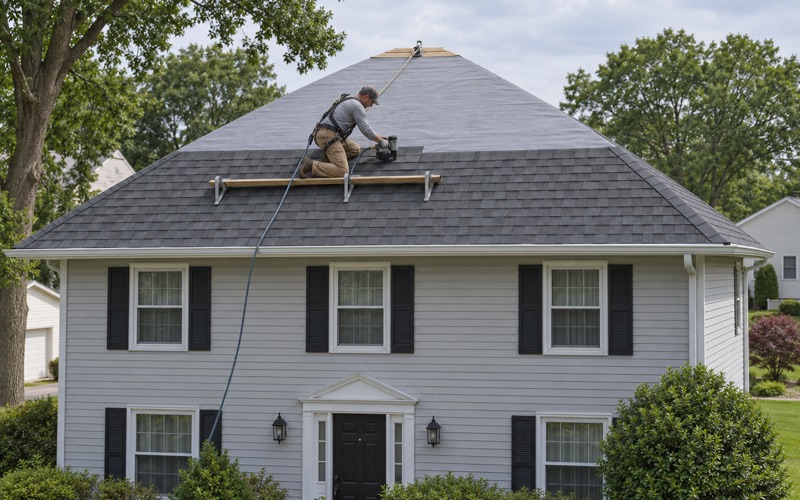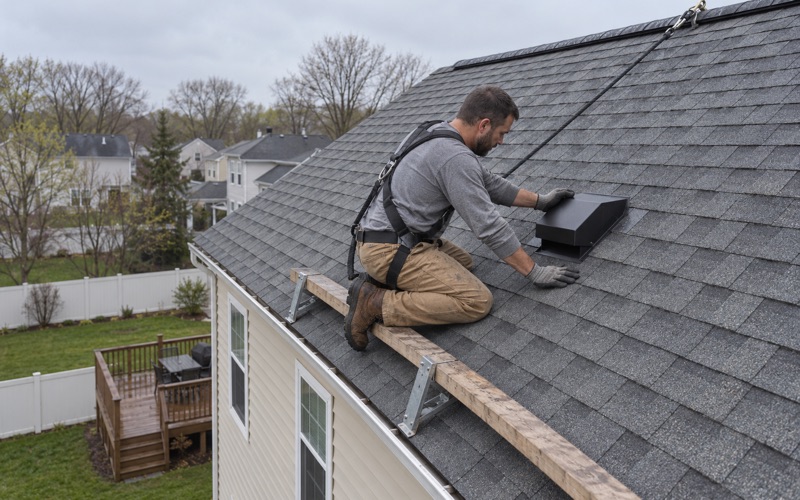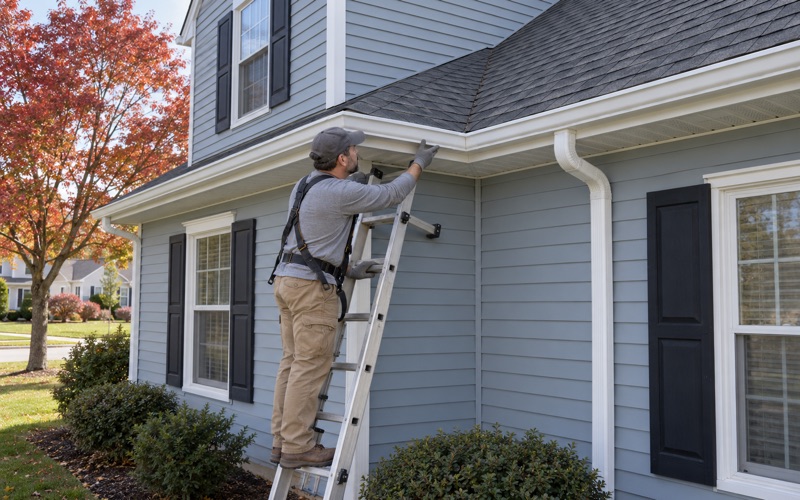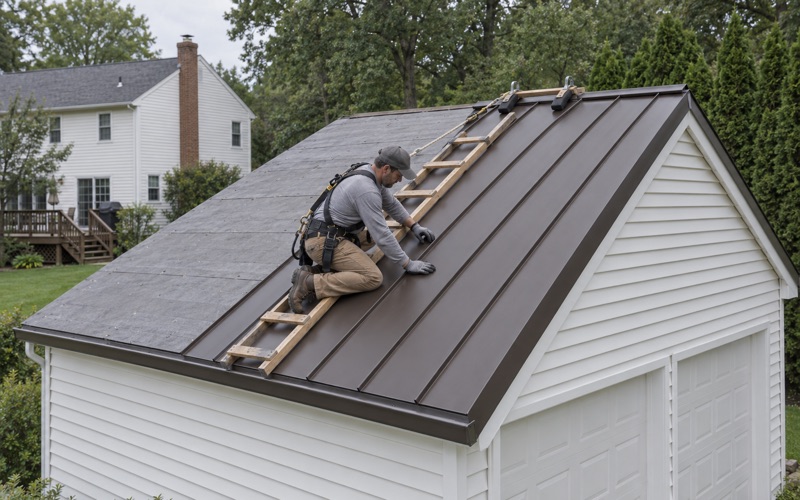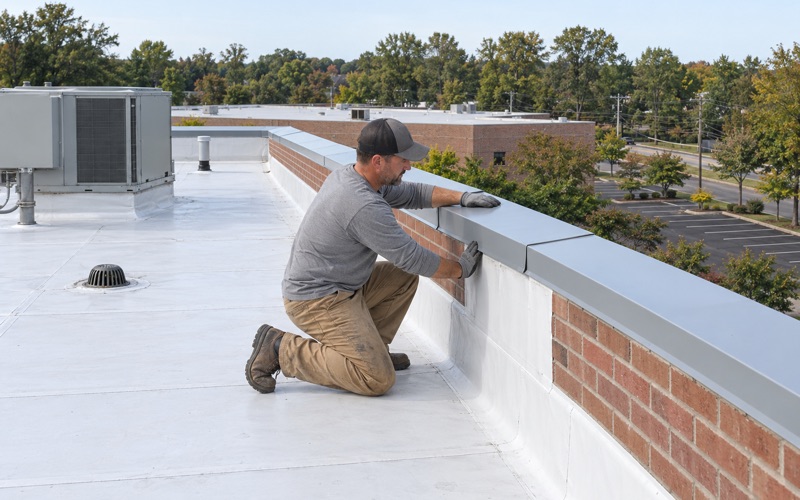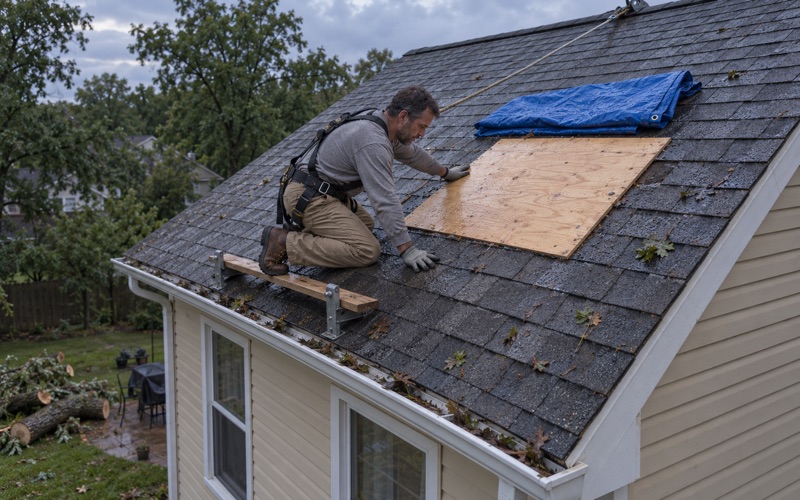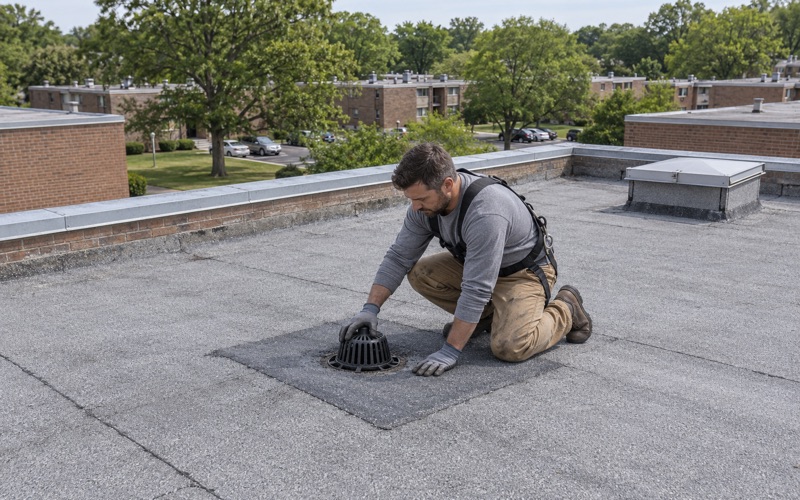
Gloucester Township Roofing handles roofing in Newtown Township with a particular kind of house in mind: one whose roof is still young. After more than 20 years of repair and replacement work, we know that a roof only a decade old rarely needs to come off, and that the job usually turns on finding one small opening before it does more damage.
So we start with tracing, not selling. Every leak call puts us in the attic as well as on the shingles, because the stain on a bedroom ceiling is seldom directly under the place where water gets in. Only after we have followed the water back to its source do we put a price on anything at all.
That price comes with a plain answer about whether the roof can simply be repaired, and on a young roof it usually can. When a bigger job is warranted, our written estimate lists tear-off, decking, underlayment, flashing, ventilation and gutters as separate lines, so an owner can hold it beside any other bid and compare the two item by item.
Liseter, Ellis Preserve and a Township Still Being Built
How much of Newtown Township is new
Newtown Township has added housing at a pace few established suburbs match. The Census Bureau’s American Community Survey 2024 five-year estimates count 1,244 of the township’s 6,299 housing units as built in 2010 or later, 228 of them since 2020. Over a similar stretch, the decennial census count rose from 12,216 in 2010 to 15,002 in 2020.
For roofing, that means a large share of the shingles in the township are still early in their service life. The calls we expect from those homes are about a single leak, a storm-torn patch or a confusing question about coverage, not about whether the whole roof has worn out and has to be stripped to the deck.
Liseter at Route 252 and Goshen Road
Much of that growth sits in two master-planned communities. A December 2012 Patch report described Toll Brothers’ plan for 449 homes, in seven collections of carriage and single-family homes, at Newtown Street Road (Route 252) and Goshen Road. The project took the name Liseter, which the du Pont family used for the farm, and sales were set to open in January 2013.
The same report quoted the township manager saying Toll had committed to the township’s development standards and to a design standards manual. The result is a neighborhood built to a shared look, with houses the report put between 2,500 and 5,000 square feet and roofs that went on from 2013 onward, which makes the oldest of them still young by roofing standards.
Ellis Preserve off West Chester Pike
Ellis Preserve, off West Chester Pike (Route 3), is the other. A broker sheet describes a 218-acre master-planned, mixed-use community whose residential side includes 452 apartments and 127 townhomes, and the developer lists a final phase adding 63 urban-style townhomes along with retail and dining space on the same campus.
Townhomes and apartment buildings put a different roof problem on the table than a detached house does. Attached units often share one continuous roof plane, so a leak inside one home can start at a flashing detail over the unit next door, and finding it means looking along the whole run of roof before anyone cuts into shingles.
Looking for roofing closer to Florence? See Florence Roofing.
When a Roof Under 15 Years Old Leaks
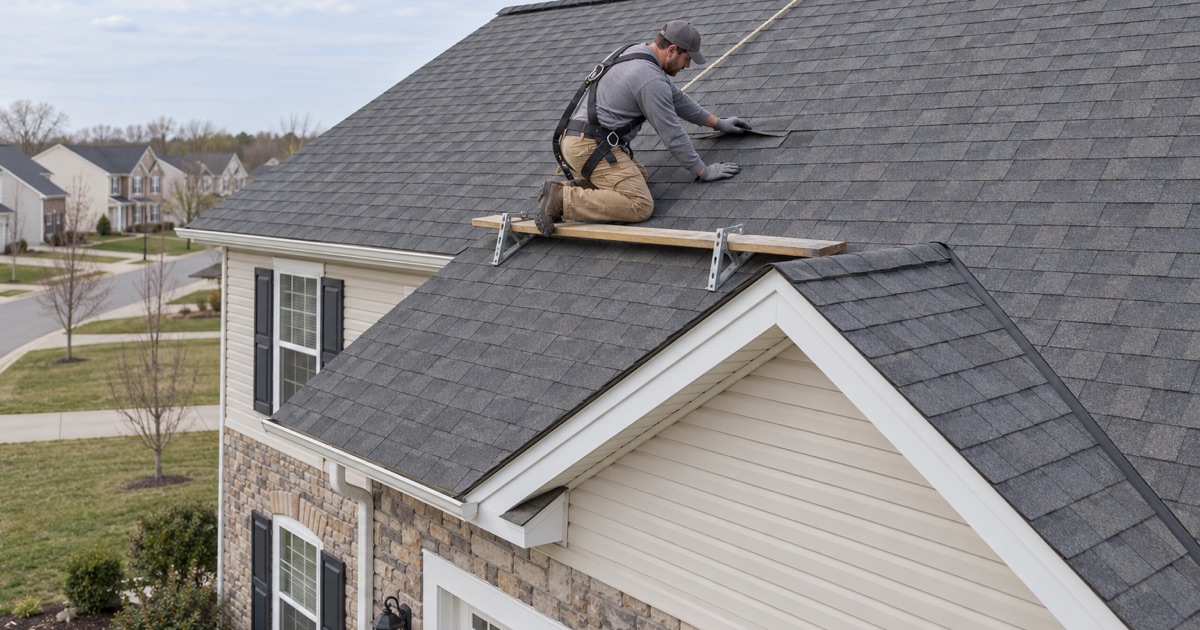
Most leaks we expect on homes of this age come from details rather than from worn-out shingles. A roof can be sound across nearly all of its surface and still let water in at the few points where the installation was most complicated, and those points are where our inspection begins.
Valleys where two slopes meet
Larger homes with several wings and gables tend to have many valleys, the channels where two roof slopes meet and carry the most water. On any roof, a valley that was cut short, nailed too close to its center or underlaid without enough membrane can let water in years before the shingles around it show any wear.
We open a suspect valley carefully, check the underlayment beneath it and look for a self-adhering ice and water barrier of the kind tested to ASTM D1970. If the detail is the problem, we rebuild that valley rather than smearing sealant over the surface, because caulk in a valley usually becomes the same leak a season later.
Skylights, pipe boots and sidewalls
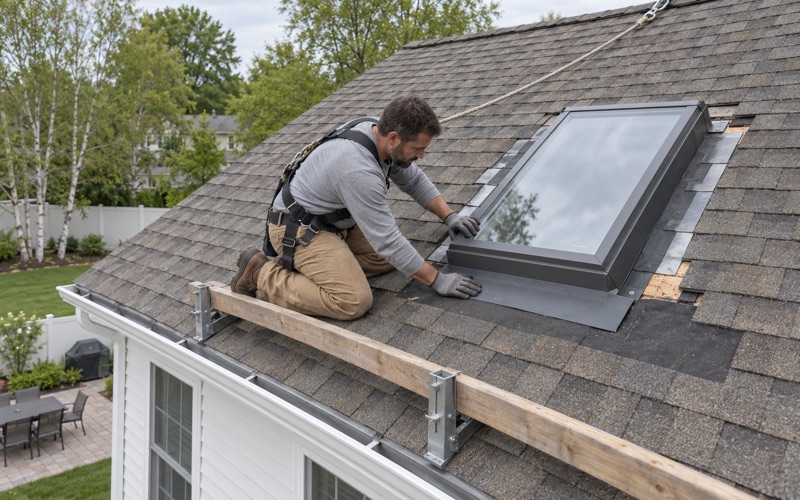
Skylights are another common early-life leak point. Whether a unit is curb-mounted or deck-mounted, its flashing kit has to be lapped into the shingles in the right order, and a step that was skipped during construction may hold for years until a wind-driven rain finally finds the gap.
Pipe boots around plumbing vents, along with the step and kick-out flashing where a roof runs into a sidewall, fail in similar ways. We replace the flashing piece that failed instead of sealing over it, and we show the owner from the attic side where the water was running, so the repair is tied to evidence rather than a guess.
Storm damage on a young roof
Newtown Township falls in National Weather Service forecast zone PAZ070, and wind is what most often lifts or creases shingles on a roof that is otherwise sound. A few torn tabs on a nearly new roof are usually a matter for repair, not a reason to start pricing a new roof.
After a storm, we photograph each damaged area and write up what we found for the owner’s own insurance claim. If the owner wants us there, we meet the adjuster on site and walk the roof together, which tends to settle questions about what was damaged faster than trading photos back and forth for weeks.
Builder, Shingle Maker or Roofer: Who to Call First
A young roof often comes with paperwork attached, and that changes the order of the first few phone calls. Sorting out which party to contact before any work starts keeps the owner’s options open and avoids paying for a fix before checking whether someone else should be asked first.
Start with the paperwork you already have
On a house built in the last dozen or so years, the first question is often whose problem the leak is. A builder’s warranty, a shingle manufacturer’s warranty and a roofer’s workmanship promise can each exist on the same house, and each may come with different terms and a different number to call.
We have not read any builder or manufacturer warranty for homes in Liseter or Ellis Preserve, and we will not guess at what one says. Our advice is simple: before anyone touches the roof, pull the closing documents and any warranty registration and read the claim steps, because a given policy may set out its own process.
What we document on a first visit
If an owner decides to call us first, we treat the visit as an inspection that produces a record. We trace the leak from both the attic and the roof, photograph the source and the shingles around it, and write down what we saw in plain terms that someone who never climbed up can follow.
That record is useful whichever way the owner goes next. It can go to the builder, to a shingle maker or to an insurer, and it gives a clear starting point if the repair ends up being ours. Questions about how a repair interacts with a particular warranty belong to whoever issued that warranty, so we send owners there.
Re-roofing needs a township permit
Small repairs are one thing; replacing a roof is another. Newtown Township’s ‘Do I Need a Permit?’ page lists re-roofing among the work that requires a permit, alongside structural repairs and additions, and notes that its list is not complete, so the township’s Building & Permits office is the place to confirm a specific job.
The township’s permit process asks for completed forms, a certificate of insurance, a copy of the contractor’s state home improvement credential and a signed contract with each submission. Owners should also know that a different Newtown Township, in Bucks County, publishes its own roofing guidance, which does not apply here in Delaware County.
Matching Repairs on New Streets and Old Ones
Newtown Township’s two kinds of housing call for two different ways of working. On the new streets the challenge is making a repair invisible from the sidewalk; in the older neighborhoods it is finding out what decades of earlier work left hidden under the shingles.
Blending a repair on a design-standard street
A repair on a street built to a shared look has to disappear. Shingle lines get updated and colors are retired, so a bundle bought today may not match a roof installed in 2014 even when the brand is the same, and a mismatched patch can stand out from the street for years.
We start by identifying the shingle already on the roof, then hold samples against the existing field and against the brick, stone or siding on the house itself. We have not seen Liseter’s design standards manual, so where an owner has neighborhood guidance on exterior changes, we ask to read it before ordering material.
Carriage homes and townhomes
Carriage homes and townhomes add a layer of coordination. Who handles a shared roof depends on community documents we have not reviewed, so before quoting work on an attached unit, we ask the owner who is responsible for that roof and whether neighbors or an association need to be involved.
On the job itself, we keep the work contained to what was agreed and clean the yard, the driveway and the gutters at the end of every work day, finishing with a magnet sweep for nails. On a tight row of attached homes with shared walkways and parking, that daily cleanup is something every neighbor notices.
Newtown Square’s older neighborhoods
Not all of the township is new. The same ACS estimates count 1,577 units, a quarter of the housing stock, as built in the 1950s, the decade in which the census count climbed from 3,518 in 1950 to 9,270 in 1960. Those houses are a different kind of job from anything in the new communities.
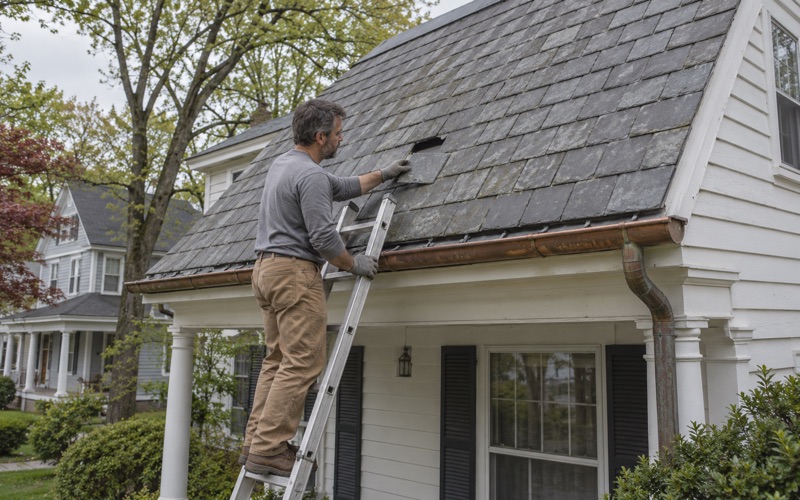
On a house that old, the roof may be on its second or third covering, and the decking underneath is where the surprises live. When rotted sheets turn up after tear-off, we photograph them and show the owner before replacing anything, at a per-sheet price set in the contract, and where slate or cedar remains, we repair it with matching material when it can be found.
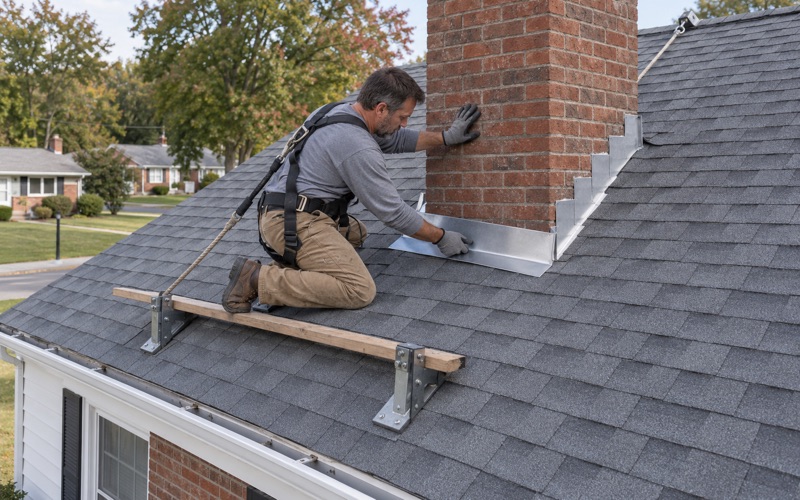
Those older roofs also carry chimneys and sidewalls that have usually been flashed and resealed more than once. When we replace a roof like that, the step flashing, counterflashing and chimney flashing are replaced along with it rather than caulked over, so the new shingles are not depending on decades-old metal to keep the water out.
- 20+ Years in Business
- Line-Item Written Estimates
- NJ and PA Contracts