Gloucester Township Roofing brings more than 20 years in the trade to roofing in Lumberton, and this page is about the part of a roof that a snowy winter tests hardest: the lower edge, where the roof hangs out past the warm house below it. Most of what goes wrong there starts in the attic, so that is where our look at a roof starts too.
A winter leak at the eave rarely comes from a missing shingle. It usually comes from water that was held on the roof by ice and pushed sideways under the shingle laps, a direction no shingle was designed to shed. Fixing it properly means dealing with heat, airflow and the layer under the shingles, not just the surface you can see from the driveway.
Below we cover how that happens, what we look for in the attic and at the eave, when an ice-and-water underlayment is worth adding, and what to check on your own roof once a big storm has passed. You get a straight answer on repair before replacement ever comes up, and our written estimates price each part of the job on its own line.
Lumberton’s 2026 Snow and the Ice Dam at the Eave
Two Storms, a Month Apart
Lumberton has its own snow record because South Jersey Regional Airport sits inside the township. For the February 22-23, 2026 blizzard, New Jersey 101.5 listed the airport at 20.3 inches, the same figure it reported for the National Weather Service office in Westampton. That came about a month after the January 2026 storm, when the Courier-Post listed Lumberton at 9.6 inches and an early NJ.com report had it at 8.
Those are single-storm reports, not a season total or an average, and none of the reports we read mentioned ice dams or roof damage in Lumberton. What they do show is two heavy snowfalls landing on the same roofs within weeks of each other, which is the pattern that leaves snow sitting on a roof long enough for melting and refreezing to begin.
How the Dam Builds
An ice dam begins with heat. Warm air from the living space leaks into the attic, warms the roof deck, and melts the bottom of the snow even when the outdoor air is below freezing. That meltwater runs down the slope under the blanket of snow until it reaches the overhang, which sits outside the heated walls and stays as cold as the air around it.
At the cold overhang the water refreezes into a ridge of ice. Each day of melting adds to the ridge, and the water behind it pools into a shallow pond on the roof. Shingles shed water running downhill; they are not a seal against standing water, so the pond works its way up under the laps and finds the nail holes and the deck.
Where the Water Shows Up Inside
Water from an ice dam often appears well away from the eave, as a stain on a ceiling near an outside wall, damp insulation, or a drip at the head of a window. That distance is why every leak call we take includes the attic as well as the roof: the water is traced to where it actually gets in before anything is priced, so the repair matches the cause.
Looking for roofing closer to Southampton? See Southampton Roofing.
Attic Ventilation and Insulation Behind an Ice Dam
Heat That Should Never Reach the Deck
An ice dam is a symptom of heat reaching the underside of the roof. In most houses that heat escapes through gaps around ceiling lights, bath fans, attic hatches, plumbing stacks and the tops of interior walls, then gets trapped against the deck. Sealing those openings and keeping enough insulation on the attic floor holds the heat in the rooms, where it belongs.
We do not assume anything about a particular Lumberton house; we look. In the attic we note how deep the insulation runs, whether it has been packed tight against the roof at the outside wall, and whether frost, rusty nail tips or dark stains on the sheathing show that warm, moist air has been condensing there through the winter.
Intake at the Soffit, Exhaust at the Ridge
Ventilation is the second half. A balanced system pulls cold outside air in through soffit vents at the eave and lets it out through a ridge vent or other exhaust near the peak, sweeping the underside of the deck so it stays close to the outdoor temperature. A cold deck does not melt snow from below, and that is the whole point.
Intake is where these systems usually fall short. Soffit vents painted over, buried under insulation, or never cut through behind the vent strip leave a ridge vent with nothing to draw from. We check the net free area of the intake against the exhaust, and where insulation blocks airflow at the eave we fit baffles so outside air can pass above it.
Correcting It at Re-Roof
A re-roof is the cheapest moment to correct ventilation, because the deck is open and the ridge can be cut and vented properly. Our estimates show ventilation as its own line, separate from tear-off, decking, underlayment, flashing and gutters, so you can see exactly what the change costs and compare it directly with another contractor’s bid.
Ice-and-Water Underlayment Where Code Does Not Require It
What New Jersey’s Map Says
New Jersey’s version of the residential code requires an ice barrier only where the average daily temperature in January is 25 degrees or less. In this state that line takes in Sussex County alone. Burlington County, along with the rest of South Jersey, is not on the ice-barrier map, so a Lumberton roof was never required to have one.
That leaves the decision to whoever built or last re-roofed the house. Manufacturers recommend a self-adhering membrane at the eaves whatever the local code says, and any given roof in Lumberton may or may not have one. The only way to know is to look at the eave edge, and the only practical time to add it is when the old shingles come off.
How the Membrane Works
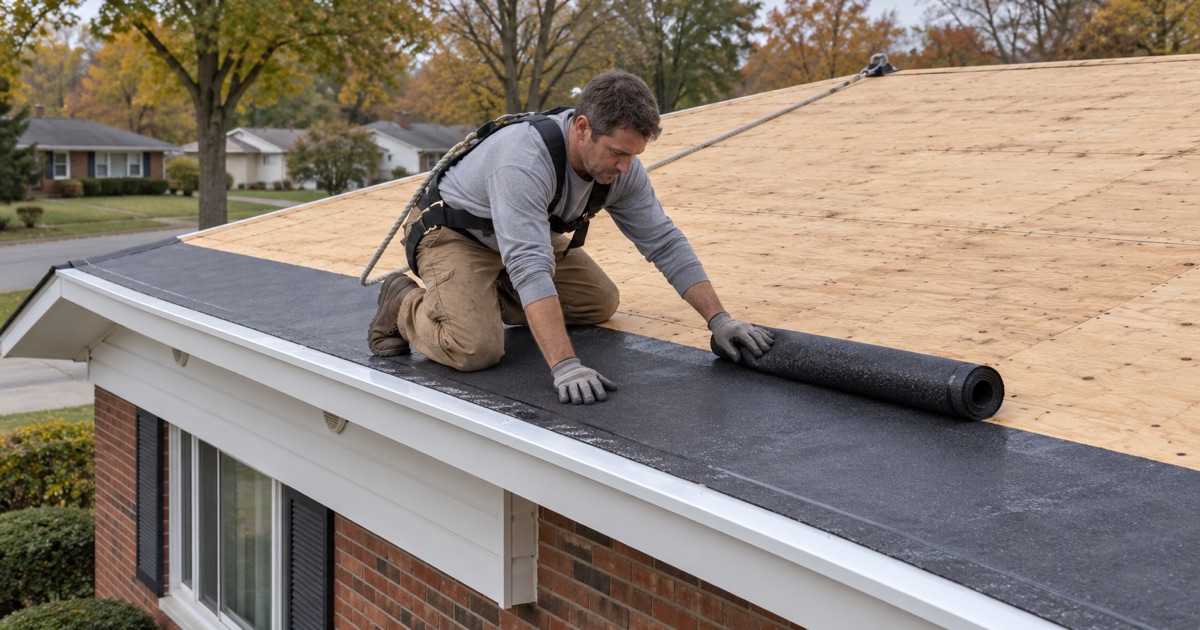
A self-adhering ice and water barrier made to ASTM D1970 is a rubberized sheet that bonds to the bare deck and seals around every nail driven through it. Where an ice dam backs water up the slope, the pond behind the ice has nothing to run into. A synthetic underlayment made to ASTM D8257 then covers the rest of the roof.
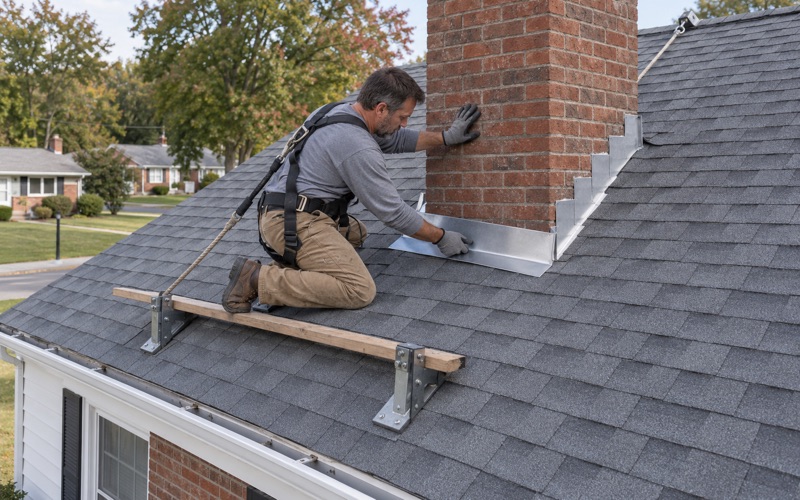
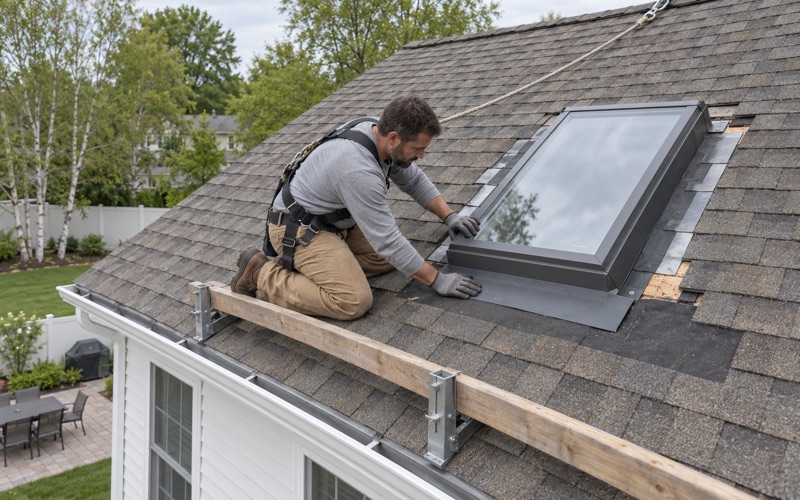
On a re-roof we run the membrane up from the drip edge to a point past the inside line of the exterior wall, so it covers the overhang and the cold strip just above it. We also lay it in valleys and around chimneys and skylights, where snow drifts and water collects, and we replace the flashing in those spots rather than sealing it over with caulk.
One Decision, Several Parts
The membrane is a backstop, not a cure. It keeps a dam from turning into a ceiling stain, but the dam still forms if heat keeps reaching the deck. That is why we treat eave underlayment, soffit intake, ridge exhaust and attic insulation as one decision at re-roof, and price each piece separately so you can choose which ones to do.
Checking a Lumberton Roof After a Heavy Snow
From the Ground, While the Snow Is Still Up
After a storm like February’s, the most useful check happens from the yard. Thick icicles hanging from the gutters, a ridge of ice along the eave, or bare patches melting over the attic while the rest of the roof stays white all suggest heat is escaping to the deck. A photo of each gives us something useful to look at later.
Please stay off the roof and keep ladders away from icy gutters. Our own crews work under OSHA fall protection rules from six feet up, and a snow-covered pitch is no place for a homeowner. Chipping at an ice dam with a hammer or shovel also tears shingles and bends the gutter, which turns a winter problem into a spring repair.
After the Melt
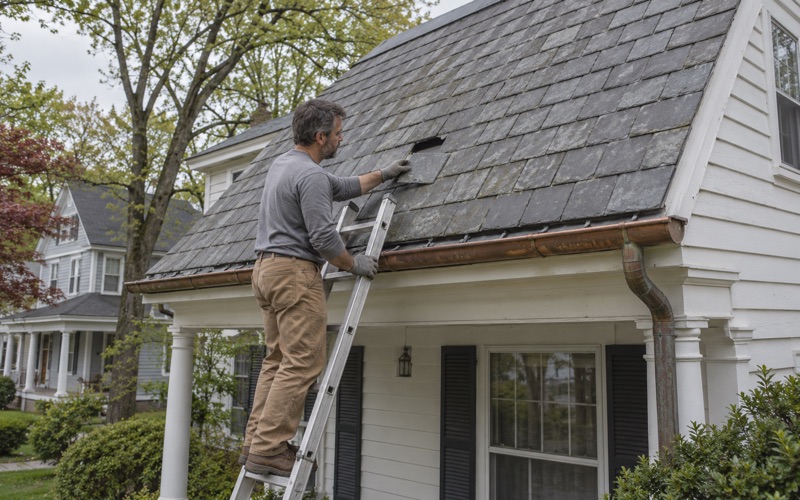
Once the snow clears, look inside first. Check ceilings and the tops of walls along the exterior for stains, and go into the attic with a flashlight to look for wet insulation or water marks on the sheathing near the eave. Outside, look for gutters pulled away from the fascia, bent drip edge, and shingles that look lifted or curled along the bottom courses.
If we find damage, you hear plainly whether a repair will hold before anyone mentions a new roof. Damage is photographed and written up for your own insurance claim, and we will meet your adjuster at the house if you ask; the claim itself stays between you and your insurer.
Watching for the Next Storm
Lumberton falls in the Northwestern Burlington forecast zone of the National Weather Service office at Mount Holly, which is the zone to watch when the next storm warning goes out. When a winter call takes us along Route 38 or County Route 541, we leave the property as we found it, with the yard, driveway and gutters cleaned and a magnet sweep for nails at the end of each work day.
- 20+ Years in Business
- Line-Item Written Estimates
- NJ and PA Contracts