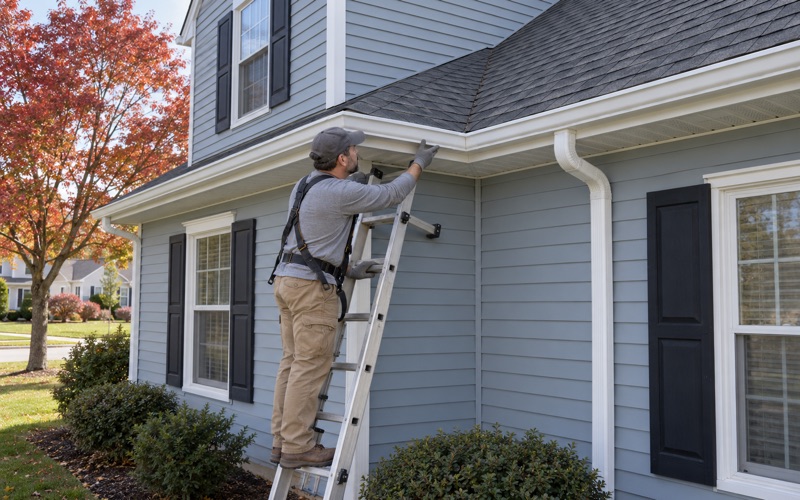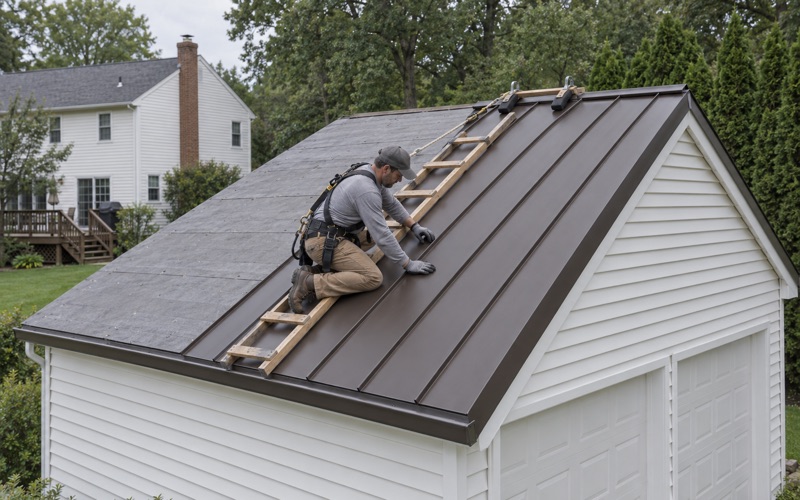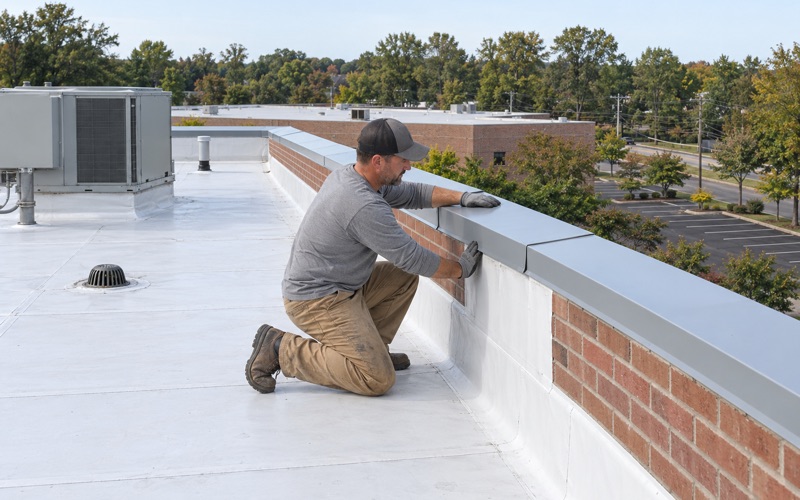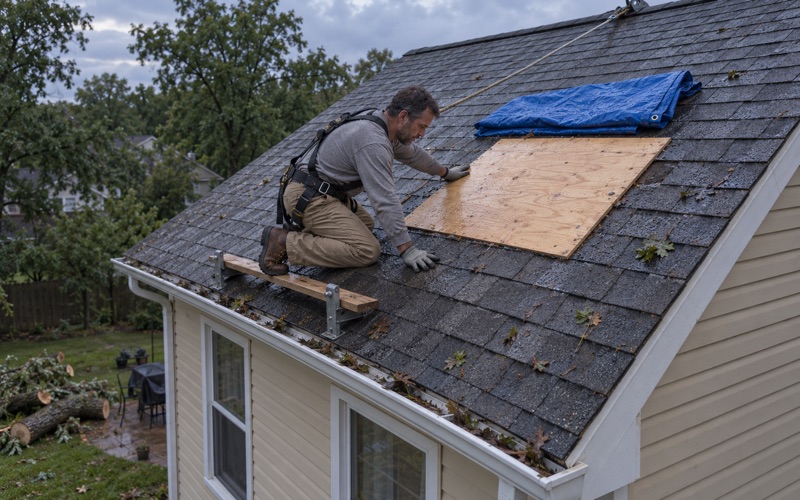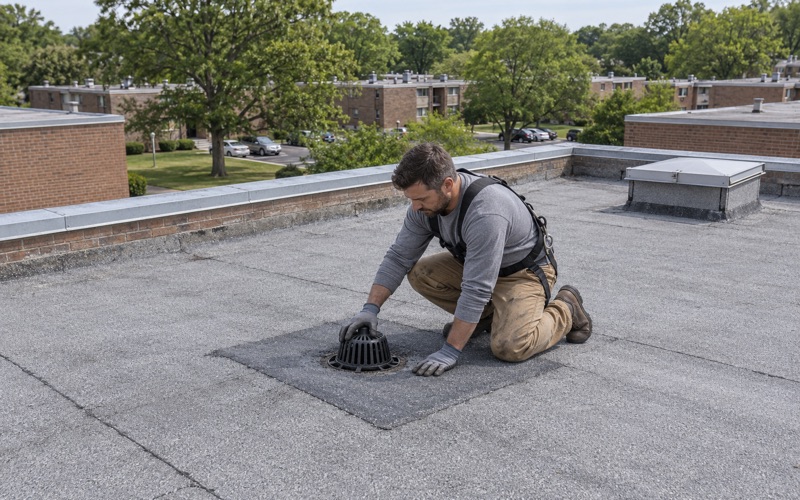
Gloucester Township Roofing brings more than 20 years of trade experience to roofing in Lower Moreland, where some houses face a question most streets never raise. When a home sits beside a working golf course, its roof, gutters and skylights share a property line with a game that sends hard balls in unpredictable directions for months at a time.
Our first job on any call here is the same as anywhere else. Every leak visit includes a look inside the attic as well as on the roof, so the water is traced to the place it really gets in before a price is put on anything. Then you get a straight answer about whether a repair will do, before replacement is ever mentioned.
When a full roof genuinely is the right call, the written estimate keeps tear-off, decking, underlayment, flashing, ventilation and gutters on separate lines. That makes two bids comparable item by item, and it shows an owner beside the course exactly what the skylight and gutter work adds. The sections below cover the club, the new homes, stray balls and the practical side of roof work in the township.
Philmont Country Club and Its Two Courses
A club that began in 1906
Philmont Country Club is one of the long-standing landmarks of Lower Moreland Township in Montgomery County. Its original South course dates to 1906, according to a January 2024 Glenside Local report, and a second 18-hole layout, the North course, was designed in 1924. Philmont is also the name of one of the township’s communities, alongside Bethayres and Huntingdon Valley.
One point of confusion is worth clearing up early. Huntingdon Valley Country Club, despite its name, is in Upper Moreland Township, not here. Everything on this page concerns Philmont, the club inside Lower Moreland, and the houses that sit along its fairways in a township of 7.28 square miles crossed by Huntingdon Pike, Route 232.
Ten holes become 176 townhomes
Concert Golf Partners bought the club in March 2017, according to the project page of Ridgewood Real Estate Partners, which teamed with Concert to redevelop part of the property. The South course was rezoned, and the township approved the final plan for 176 townhouses on August 9, 2022. Of the converted course, ten holes become housing, four were donated for infrastructure and four went to expanded practice facilities.
Site work, including shaping and retention ponds, began in December 2023, and the Glenside Local report put the expected finish in 2026, with the plan filed for 301 Tomlinson Road. We say nothing here about the roofs on those new homes. Construction was still underway in every source we read, and no roofing detail for the project was published.
The North course stays in play
The 1924 North course is being kept, so golf carries on right beside the new homes and the township’s existing streets. That makes Philmont something unusual: a club that is now part golf course and part neighborhood. For anyone owning a house along that edge, a fairway is not just scenery but a working neighbor with its own effect on the outside of a home.
We have not confirmed which existing streets border the North course, and we will not guess at it. If your property backs onto a fairway, you already know, and that is the house the rest of this page is written for.
Looking for roofing closer to Newtown Township? See Roofing Services in Newtown Township.
What Stray Golf Balls Do to Gutters, Skylights and Shingles
The parts of a house a ball can reach
Golf balls that leave a fairway land somewhere, and the hard surfaces of a house are an obvious place. A January 2026 InvestigateTV report from Georgia described homeowners across from a course there finding broken windows, dented gutters and damaged vehicles. That report concerns Georgia, not Lower Moreland, and no golf-ball strike or claim in this township appears on any record we found.
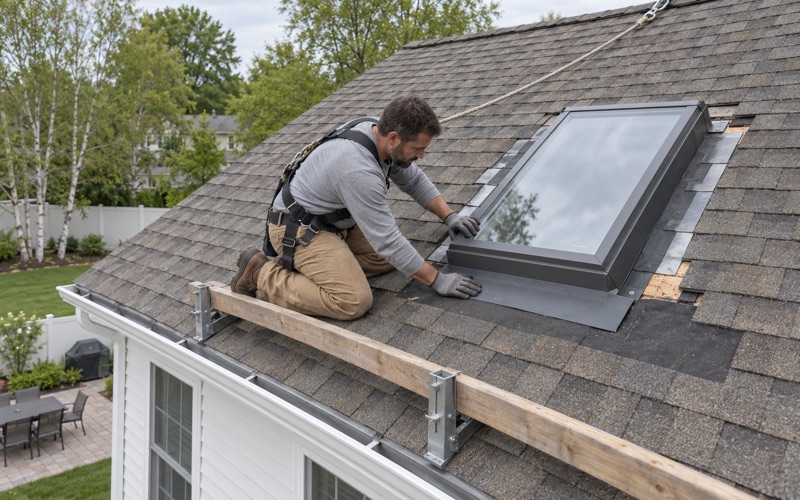
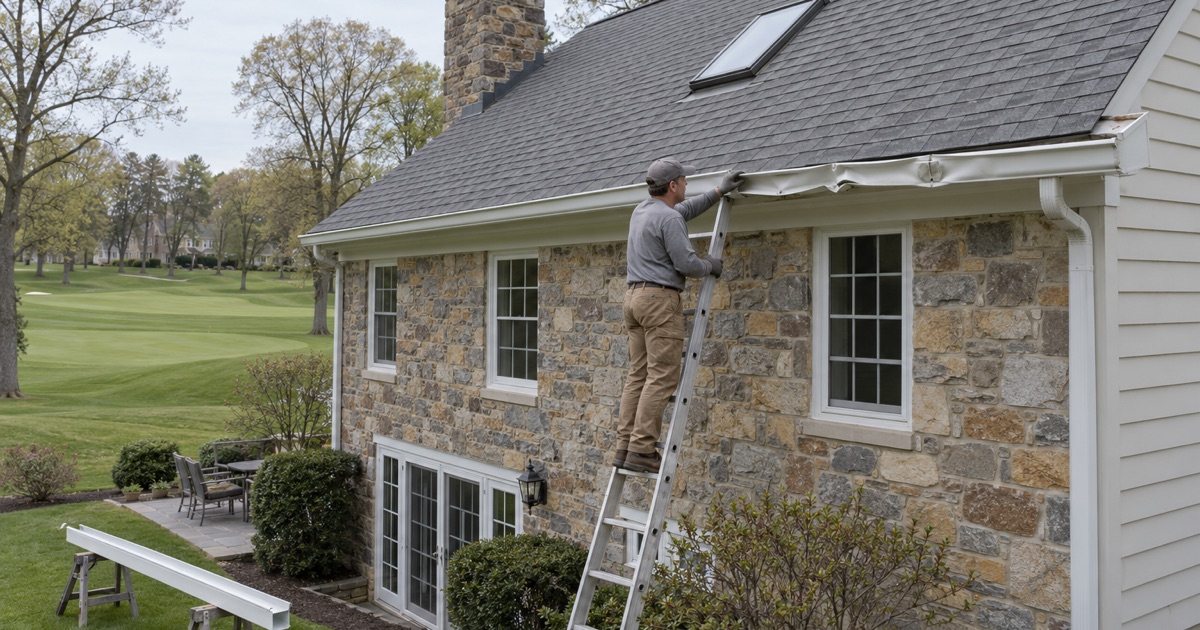
Even so, it points at the most exposed parts of a house. A dented run of seamless aluminum gutter can sag or pull at its hangers, and a skylight is glass set into the roof plane itself. A cracked skylight lens or a bent flashing collar can let water in long before anyone notices a problem from the ground.
Shingles, stated carefully
The source we read names windows and gutters, not shingles, so we do not claim that golf balls damage roofs. On a course-side house we look at the exposed shingles anyway, because a scuffed or cracked tab is easy to rule in or out during a visit we are already making. A clear answer either way is worth having.
If you are replacing a roof on a course-side lot, we can walk through impact-rated options, such as architectural shingles tested to UL 2218 Class 4, and explain what that test measures and what it does not. The choice stays yours, and we will not present a rating as a promise that nothing can ever mark the roof.
Vents, pipe boots and the ridge
A course-side check also covers the smaller pieces on the roof plane. Pipe boots, box vents and a ridge vent are made of plastic or thin metal, and a crack in any of them is a common leak point whatever caused it. We note their condition along with the attic’s ventilation, since soffit intake and ridge exhaust have to work together.
A roof check after the season
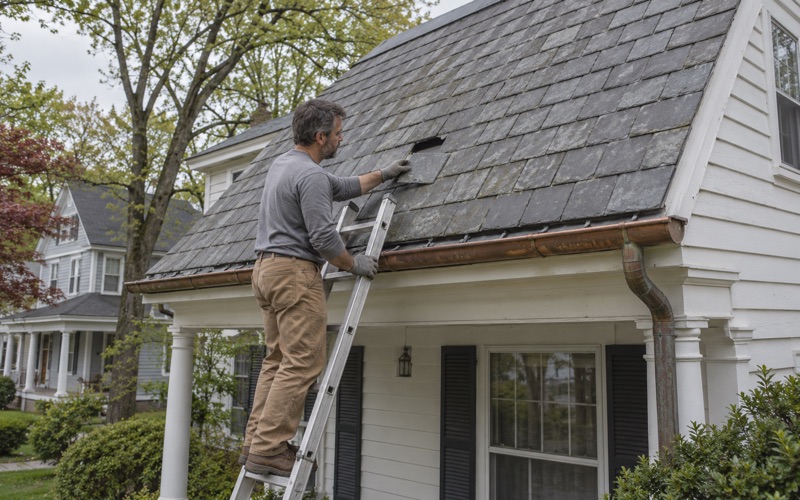
For a Lower Moreland house on the Philmont fairways, a check after the golf season covers more than weather wear. We walk the gutters, skylights, vents and exposed shingles along the course side, then go into the attic to look for staining under any spot that took a hit. You get photographs of anything we find and a plain read on whether it needs attention.
Many of those checks may find nothing at all, and that is a useful answer too. The township sits in the National Weather Service’s Eastern Montgomery forecast zone, served from the Mount Holly office, so when a storm warning names that zone, one visit afterward can cover both weather wear and the season’s stray balls.
Who Pays When a Ball Hits a House
No settled answer in the sources we read
Who pays for golf-ball damage to a home is often disputed among the golfer, the club and the homeowner. In the Georgia case InvestigateTV reported, the club’s insurer paid for the first broken windows more than a decade earlier and nothing since, and the report noted that individual golfers could be held responsible. No Pennsylvania source we read settles the question here.
That means we will not tell you that a club, a golfer or an insurance policy has to cover a repair. The answer depends on facts and policy language we have not seen, and on decisions made by people other than us. What we can control is the quality of the record you bring to whoever does make that call.
Photographs and a written description
When damage turns up, we photograph it, note where on the house it sits and describe the repair in writing. If it came from a storm, that same write-up supports your own insurance claim, and a crew member will meet the adjuster on site when you ask. The claim itself remains yours from start to finish; we supply the roofing facts.
If you are unsure whether a mark came from a ball, from hail or from simple age, we will tell you what we see and what we cannot tell. The cause of a dent is not always readable from the roof, and we would rather leave a question open than write a guess into a report someone else may rely on.
Repairing the damage properly
A single impact rarely justifies a whole new roof. If a damaged section can be repaired cleanly, that is what we recommend, and the reasoning goes into writing. A full replacement comes up only when the roof as a whole has reached the end of its life, and then we show you the evidence rather than ask you to take our word for it.
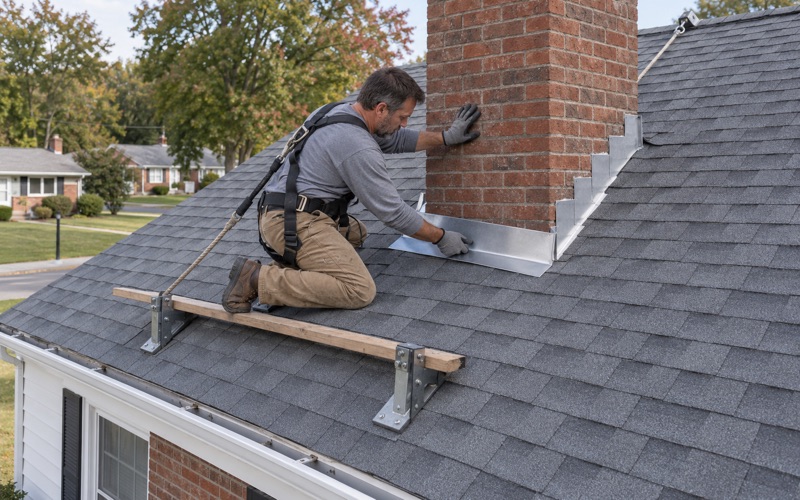
When we do redo a roof, the flashing at chimneys, sidewalls, skylights and valleys is replaced rather than caulked over. Curb-mounted and deck-mounted skylights each get the flashing method suited to their design. That way an old weak point is not carried forward under brand-new shingles, waiting to turn into a slow leak a year later.
Lower Moreland Houses Beside the North Course
A township of detached, owner-occupied homes
Lower Moreland is largely a township of single houses. Census estimates count 4,130 one-unit detached homes among 4,838 housing units, and 87.4 percent of occupied homes are owner-occupied. The building stock leans postwar: 2,180 units, or 45.1 percent, were built from 1950 through 1969, according to the same five-year survey.
An owner-occupied detached house usually means the person reading our estimate is the person who lives under the roof. We write every estimate with that in mind, in plain language, with each part of the job priced on its own line so nothing important hides inside a single total.
What the township’s permit page says
Lower Moreland’s Building Department page lists re-shingling a roof among the work that does not need a permit, along with painting and siding. It also states that most general construction does need one, and that work done without a required permit can result in the doubling of fees. Code Enforcement sits in the Township Building at 640 Red Lion Road, and questions about a specific project belong there.
Decking found under the old roof
Tear-offs sometimes uncover rotted decking that nobody could see from the yard. When we find it, we photograph it and show it to you before a single sheet is replaced, at a per-sheet price already fixed in the contract. Underlayment, drip edge and ventilation are then rebuilt to suit the house rather than copied from whatever the old roof had.
Solar panels, color and a clean yard
If panels sit on the roof, their removal and reinstall are scheduled with the roofing work in advance, not discovered on the morning of the job. Shingle colors are chosen against the house’s own brick, stone or siding, with samples held up on site. At the end of every work day the yard and driveway are cleaned, and a magnet sweep picks up stray roofing nails.
If your Lower Moreland house backs onto the Philmont fairways, or simply needs a roof looked at honestly, we start in the attic and on the roof and give you a straight answer. From there, the written estimate does the explaining, one line at a time.
- 20+ Years in Business
- Line-Item Written Estimates
- NJ and PA Contracts