Gloucester Township Roofing brings more than 20 years of work to roofing in Franklin Township, and a good number of the houses we are called to here have trees close behind them. That setting changes the conversation about a roof. The covering, the gutters and the small openings into the attic all deserve more thought when pines stand at the edge of the yard.
Before any of that, we settle the first question honestly: does the roof need replacing, or will a repair carry it for years yet? You hear a straight answer on that before anyone mentions a new roof. If the call starts with a drip or a stain, we climb into the attic as well as onto the shingles, so the price is set for the spot where water really gets in.
When replacement is the right call, our written estimate puts tear-off, decking, underlayment, flashing, ventilation and gutters on lines of their own. That way you can lay our number beside another contractor’s and compare each part directly instead of guessing at a lump sum. The rest of this page explains why the tree line matters in Franklin and what a roof near it should be built from.
Franklin Township’s Forested Side and the Scotland Run Fire
A township that is mostly woods
Franklin Township describes itself as mostly forested, with several lakes and streams that flow into the Maurice River. At 56 square miles it is the largest township in Gloucester County, and one-third of its land, mostly in the eastern portion, lies within the Pinelands National Reserve, where the township notes development is strongly restricted.
The township keeps separate articles in its land development code for the Pinelands Protection Area, maintained so the code stays certified with the New Jersey Pinelands Commission. Those articles set development procedures and minimum standards; they say nothing about roofs or fire. The Pinelands setting matters to a roof for a more practical reason, which is the forest itself and what can move through it.
The Scotland Run Wildfire, March 2025
On Wednesday, March 12, 2025, the Scotland Run Wildfire burned about 191 acres of private forest behind homes in Franklin Township. The New Jersey Forest Fire Service said 60 structures were threatened, and crews set a backfire behind houses that night. A helicopter and six local fire departments assisted, and the fire was declared fully contained by 8 a.m. Thursday, March 13.
No evacuations were ordered and no structure damage was reported, and the cause was still under investigation when the fire was contained. The state was under a drought warning at the time. A section warden with the Forest Fire Service put it bluntly: ‘Fire season is a thing of the past.’ For an owner near the woods, that is a reason to think about the roof before the next dry spell rather than after it.
Why the roof comes up first
In our trade’s experience, embers carried ahead of a wildfire tend to reach the roof, the gutters and the vents before anything else on a house. That is a roofer’s reading of how buildings meet fire, not a finding from the Scotland Run fire. It is also why the Pinelands Commission’s advice to homeowners spends so much of its length on what covers the house.
Looking for roofing closer to Cinnaminson? See Roofing in Cinnaminson.
What the Pinelands Commission Advises for a Roof
The coverings the Commission names
The Commission’s homeowner sheet, Protecting Your Home from Wildfire, asks owners to consider Class A asphalt shingles, slate or clay tile, metal, or terra-cotta tiles for roof construction. It adds that fire-resistant sub-roofs can provide added protection. On one material the sheet is unusually direct: do not use cedar shake shingles.
That wording is advice, not a mandate. The state’s Pinelands plan lists construction guidelines that a town may use when it writes its own ordinance, and we have not seen whether Franklin adopted any of them. So we present the Commission’s list as the clearest guidance on hand for a house near pine woods, and the decision about your covering stays with you.
Needles, dead limbs and openings into the house
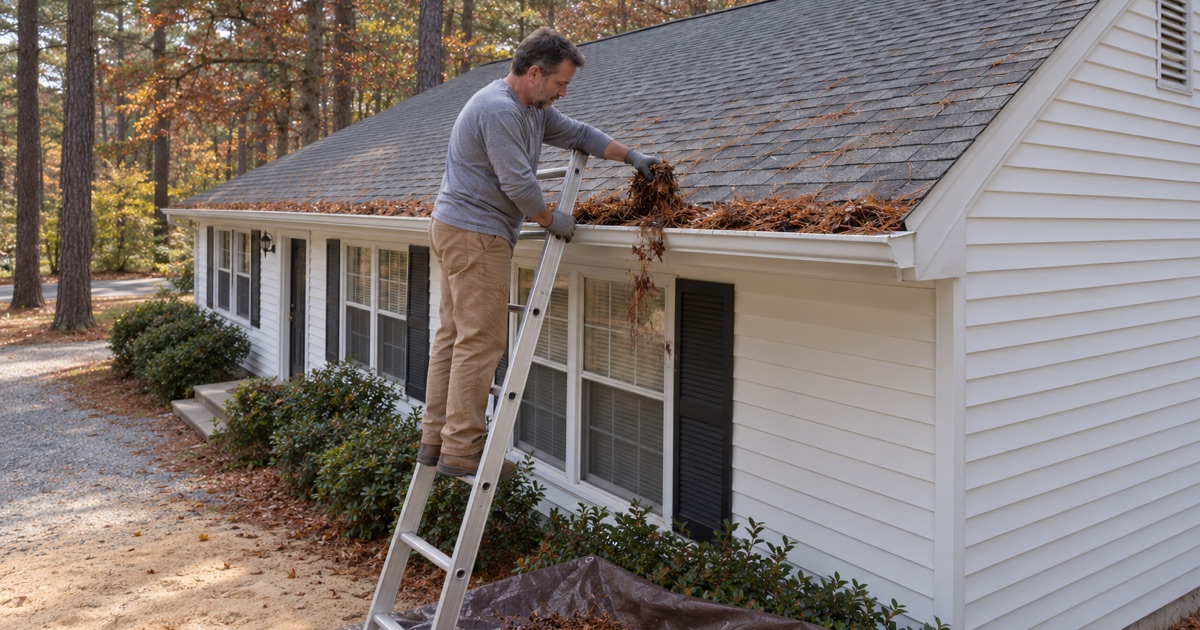
The same sheet asks owners to clean roofs and gutters regularly so pine needles, twigs and leaves do not build up. It recommends screening openings in the roof, attic and floors to keep needles and debris out, removing dead limbs that hang over the house, and fitting the chimney with a spark arrester whose mesh openings are no larger than an inch and no smaller than 3/8 inch.
Some of those jobs belong to the owner, a tree service or a chimney professional rather than a roofing crew, and we do not clear trees or fit spark arresters. Our part is the roof assembly itself: the covering, the flashing, the vents and the screens behind them, and how easily needles can settle on the surface or work their way inside.
An older fire behind the advice
The Commission’s sheet points back to the 1963 fire, which burned close to 183,000 acres and consumed 186 homes. The Scotland Run fire was a small fraction of that size and damaged no structures. The older record still explains why the advice on roofs and gutters is written so firmly, and why it remains worth reading for any Franklin owner whose yard meets the forest.
Pine Needles, Gutters and Attic Openings
Valleys and gutters that hold needles
Needles gather wherever water slows down: in valleys, behind chimneys, against sidewalls and along the gutter trough. A packed gutter keeps the fascia and drip edge damp, and a valley choked with needles can push runoff sideways under the shingle edges. On a house near the tree line, those are the first places we check during an inspection.
On a replacement estimate, gutters appear as their own line, so you can keep the existing ones or switch to seamless aluminum gutters and downspouts. Either way, the yard, driveway and gutters are cleaned at the end of each work day. A magnet sweep picks up loose roofing nails before the crew leaves the property.
Vents, soffits and attic screens
A ridge vent with soffit intake keeps an attic dry, yet every vent is also a gap in the house. We look at the screening behind soffit and gable vents, at loosened box vents and at worn ridge vent, since those are the openings the Commission’s sheet asks owners to screen. A torn or missing screen goes onto the estimate as a repair instead of being left open.
The attic visit does two jobs at once. The look that traces a leak to its true entry point also shows daylight where there should be none, water stains on the decking and debris that has blown in through a vent. We photograph what we find and walk you through the pictures before a single line of the estimate is priced.
Flashing at chimneys and walls
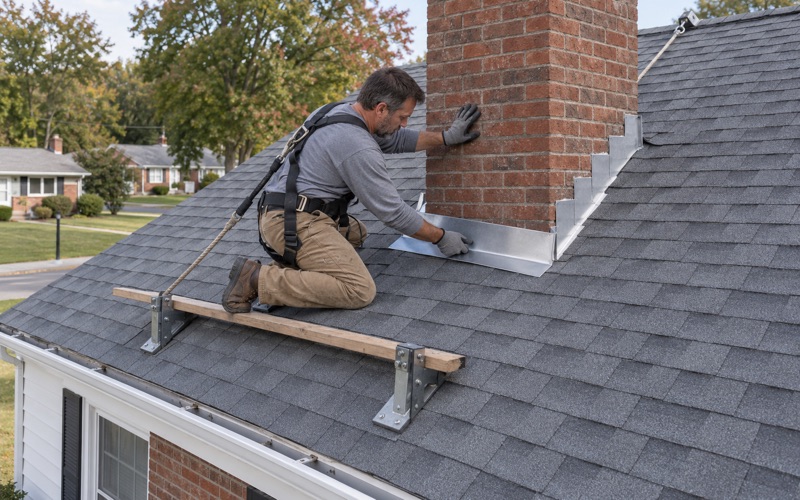
Chimneys and sidewalls are where needles pile up and where many leaks begin. When we redo a roof, the step flashing, counterflashing and chimney flashing are replaced rather than smeared over with caulk. On a wide chimney, a cricket on the uphill side splits the water and debris around the stack, so neither sits against the brick through a wet season.
Choosing a Class A Covering at Replacement
What a Class A rating means
Class A is the top fire rating for a roof covering under ASTM E108 and UL 790, tests that measure how an assembly resists flame spread and burning brands landing on it. Many architectural shingle lines, including GAF Timberline HDZ, Owens Corning Duration and CertainTeed Landmark, are listed by their makers as Class A when installed over the specified deck and underlayment.
No covering can promise how a house will fare in a wildfire, and we never suggest otherwise. A Class A roof takes the roof surface itself out of the list of easy fuels, which is the point of the Commission’s advice. A replacement is the natural moment to make that choice, because the old covering is already coming off.
Asphalt, metal or slate for a Franklin house
Franklin’s housing is mostly detached, and Census estimates put 1,413 of its 6,057 homes in the 1970s and 1,051 more in the 1980s. For most houses of that age, architectural shingles are the practical pick: a Class A listing, a broad range of colors and a cost that suits a single-family house.
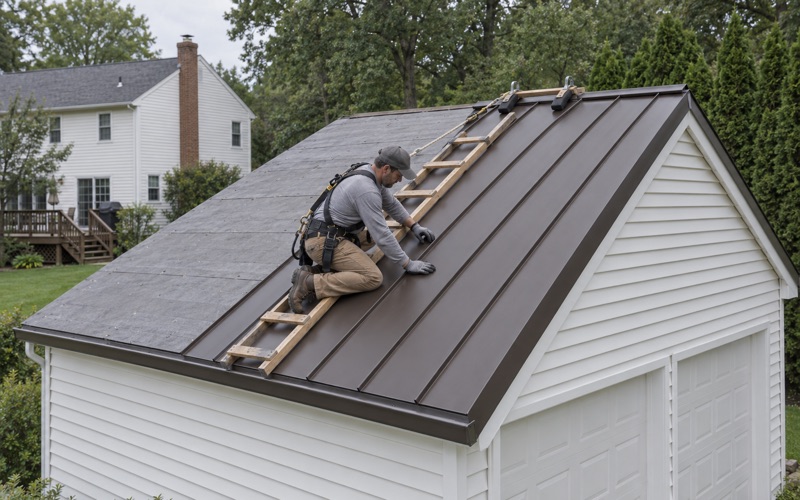
Standing seam metal suits owners who want a smooth surface that sheds needles readily and lasts for decades. Whatever the material, colors are chosen against the brick, stone or siding of your actual house, with samples held up on site. A shade that looks right against the woods out back can read quite differently against the front of the home.
Cedar, slate and repair first
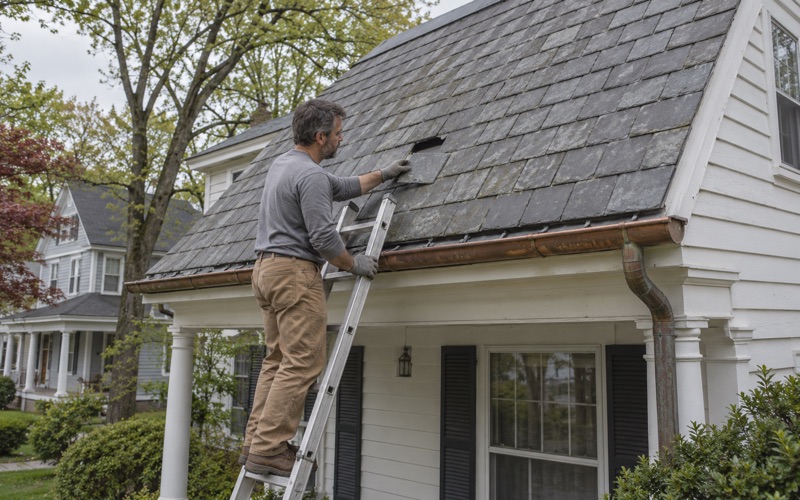
If your house still has a sound cedar or slate roof that only needs repair, we fix it with matching material where it can be found rather than whatever happens to be on the truck. When a cedar roof is worn out and the lot backs onto forest, we walk you through the Commission’s advice against cedar shakes before you choose what replaces it.
Decking, solar panels and the contract
Tear-off sometimes exposes soft decking. Any rotted sheets are photographed and shown to you before they are replaced, at the per-sheet price written into the contract. If solar panels sit on the roof, their removal and reinstall are planned into the schedule well before the first shingle comes off, so nothing about the job is a surprise on the day.
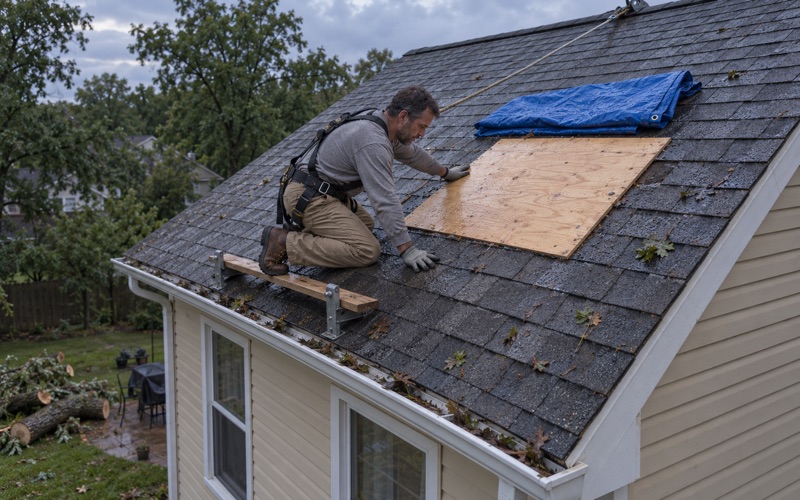
Our contracts follow New Jersey’s home improvement rules, including the right-to-cancel notice. If a storm damages the roof, we photograph the damage and write it up for your own insurance claim, and a member of our crew will meet the adjuster on site when you ask. Through all of it, the roof over a Franklin house near the pines is treated as part of how that house meets the woods around it.
- 20+ Years in Business
- Line-Item Written Estimates
- NJ and PA Contracts