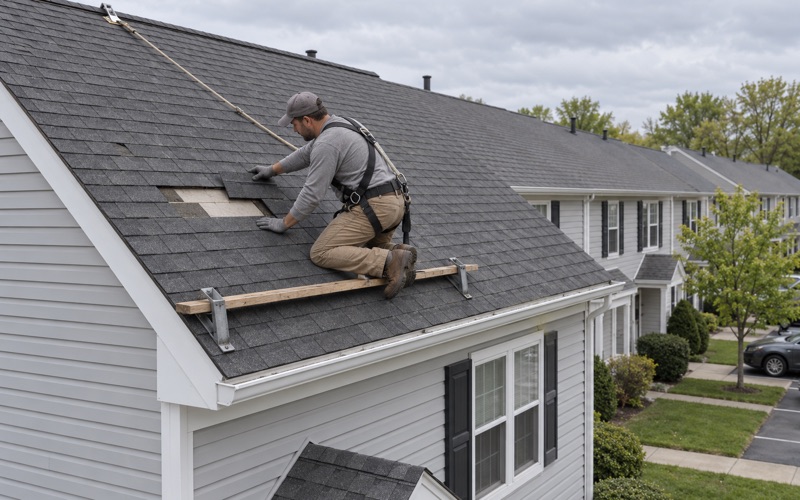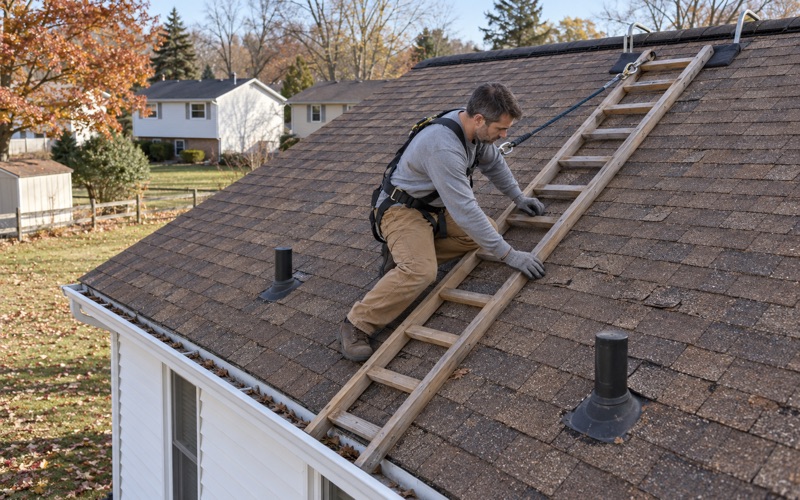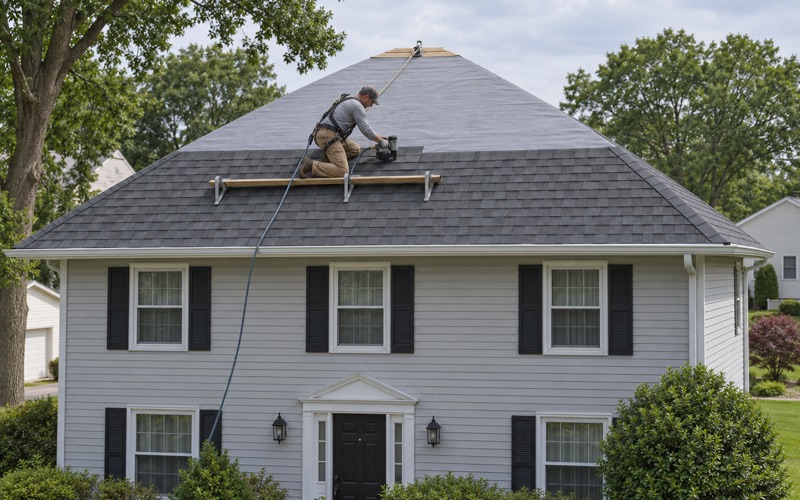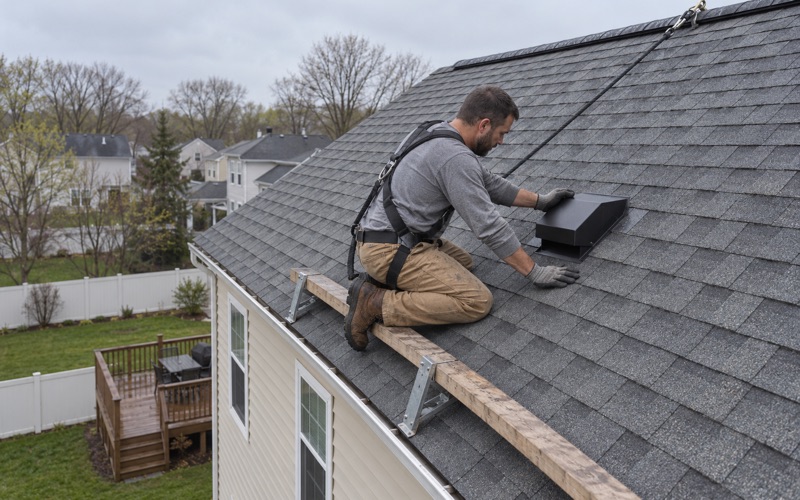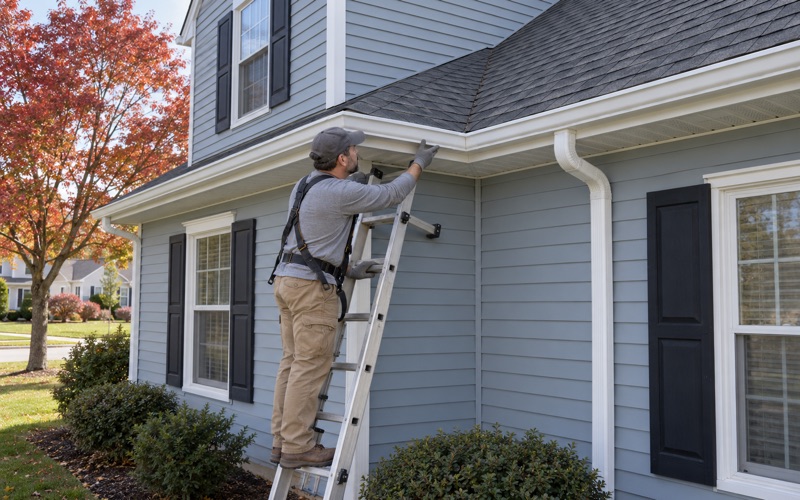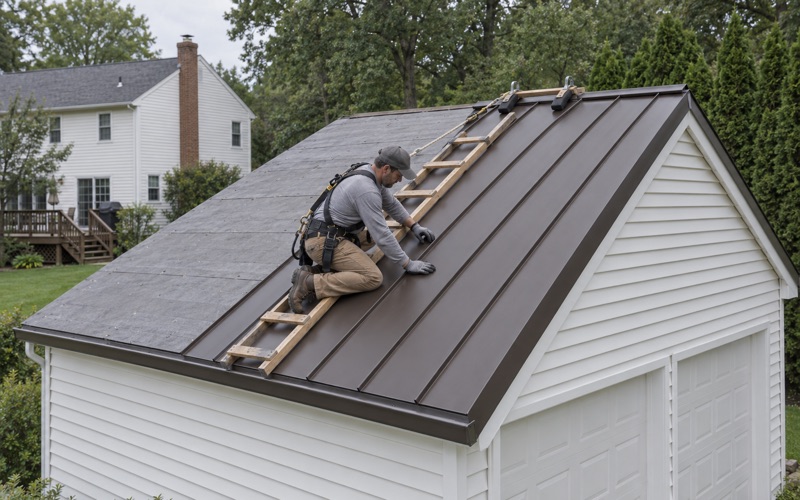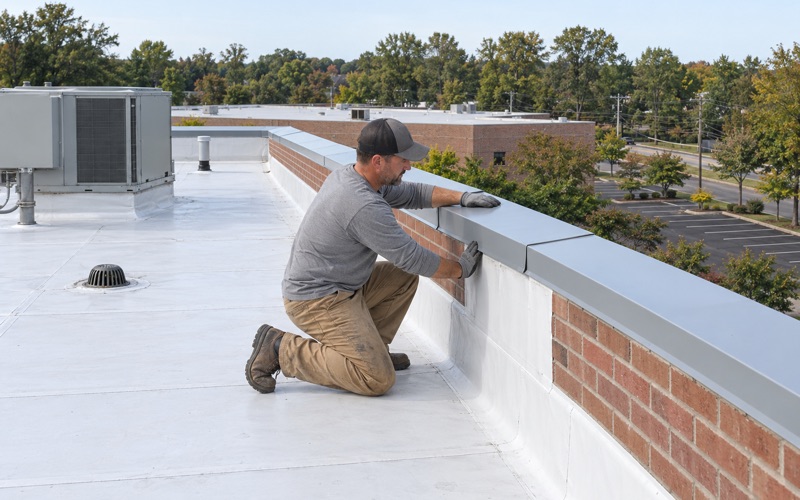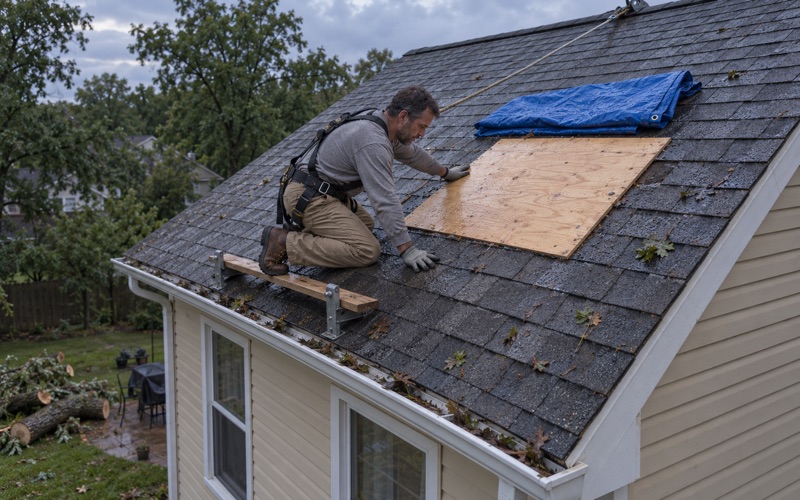
Gloucester Township Roofing has handled roofing in Florence and across South Jersey for more than 20 years, and the houses that bring us to this township most often are the older ones. On those, the covering on top is rarely the only decision to make. Before we recommend anything, we want to know what material is up there, how it is holding, and whether a repair still makes sense.
That last question gets a straight answer early. If a leak can be fixed without a new roof, we say so before replacement comes up at all. When we chase a leak, we go into the attic as well as up the ladder, because the stain on a ceiling and the spot where water gets past the roofing are rarely in the same place.
Should a new roof turn out to be the right call, the written estimate lists tear-off, decking, underlayment, flashing, ventilation and gutters each on a line of its own. If old boards prove rotten once the covering is off, you see photographs before we replace them, and the per-sheet price is the one already set in the contract.
Florence Village, Its 1849 Grid and the Slate That Remains
Florence village is older than the Roebling section of the township and grew up separately from it. According to the township’s own history, New York financiers organized the Florence City Company in 1849 and bought 600 acres, laid out as city lots, streets, parks and public landings. The plan included 1,000 lots measuring 16 feet by 100 feet, along with larger parcels.
Front Street became the main residential street and Broad Street the main commercial road. The company eventually went bankrupt, but the town it had platted stayed, and the Florence Iron Works followed in 1857 near what is now Foundry Street. The houses that line those streets today are a stock of their own, and their roofs reflect it.
Narrow lots, close neighbors
A lot 16 feet wide leaves very little room on either side of a house. For roof work, that means ladders, debris chutes and material staging get planned around a neighbor’s wall and a tight side yard rather than an open driveway. We work out where the dumpster goes and how old roofing comes down before the first day, instead of improvising once the crew arrives.
Close quarters also raise the stakes on cleanup. Broken slate, metal scraps and roofing nails do not stay politely on one property when houses sit this tight. At the end of each work day we clean the yard, driveway and gutters and run a magnet across the ground, so neither you nor the people next door find the job underfoot.
Slate still listed on village houses
Real estate listings for houses in the village still name slate. A two-story house on Chestnut Street built in 1900 lists a pitched slate roof along with flat roof sections, and a stone house on Walnut Street lists a slate roof. These are individual listings, not a survey, so they show that slate survives in Florence, not how common it is.
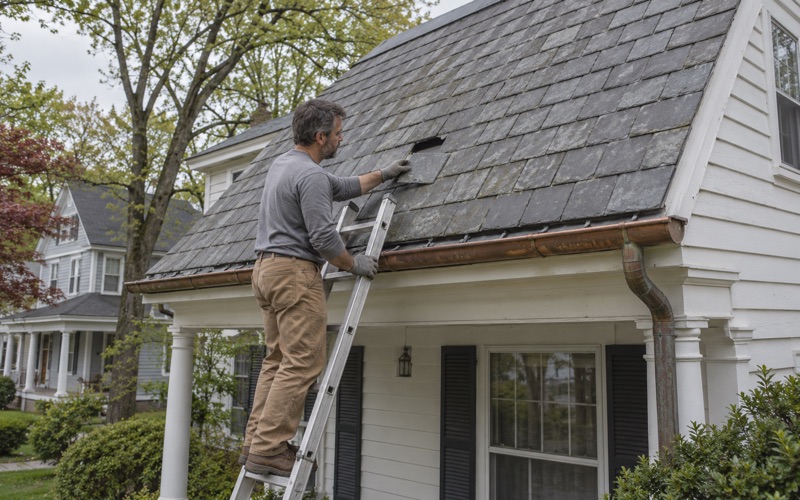
Slate is a long-lived material, and a roof that looks tired from the sidewalk may be mostly sound stone let down by failing nails or worn flashing. That is why we examine individual pieces before using the word replacement. A slate roof in decent shape often calls for repair work, with slate hooks used to set new pieces where old ones have cracked or slipped.
Matching material on a repair
When a slate has to be replaced, we look for matching material close in color, size and thickness to what is already on the roof, rather than slipping in whatever happens to be on the truck. A mismatched piece on a front slope stays visible from the street for as long as the roof lasts, and a slate of the wrong thickness will not lie flat with its neighbors.
Looking for roofing closer to Concord Township? See Roofing in Concord Township.
Metal Roofs in the Village
Slate is not the only older material named in Florence listings. A second Chestnut Street house built in 1900 lists a metal roof, and a property on Broad Street is described as having a metal roof with gutters. What those listings do not say is whether that metal is an early tin roof or a later standing seam system, and no source we have read settles the question.
Reading an old metal roof
A metal roof reveals its condition through its seams, its fasteners and its paint. Rust that has eaten through a panel, seams that someone nailed through during an old repair, and coatings worn down to bare metal each point toward a different answer. Some of those problems can be repaired in place; others mean the panels have reached the end of their service life.
We also check what the metal is fastened to. Many older roofs were laid on boards rather than sheet decking, and the state of that wood decides how much work a new roof involves. Where the attic is reachable, we inspect the underside of the deck for staining and soft spots before any figure goes on paper.
The roof edge and its gutters
The Broad Street listing mentions gutters alongside the metal roof, and that pairing deserves attention on any older building. The roof edge and the gutter have to work as one, with drip edge carrying water into the trough rather than behind it. When we replace a roof here, we treat the gutters and downspouts as part of the same job instead of an afterthought.
Choosing metal again
Owners who like the look of metal often want to stay with it. Standing seam metal roofing, with raised seams and concealed fasteners, is the usual modern choice, and it suits a house of this age without pretending to be something it is not. We go over panel profile, color and edge details with you, holding samples against the actual siding before anything is ordered.
Pitched Front, Flat Back: Two Roofs on One Narrow House
The Chestnut Street listing that names slate also names a flat roof shape alongside a pitched roof. On a narrow village lot, that can mean a steep front roof facing the street and a low-slope section over a rear addition or kitchen. Our reading rests on one listing, but it is an arrangement we check for on every older house we visit here.
Two materials, two jobs
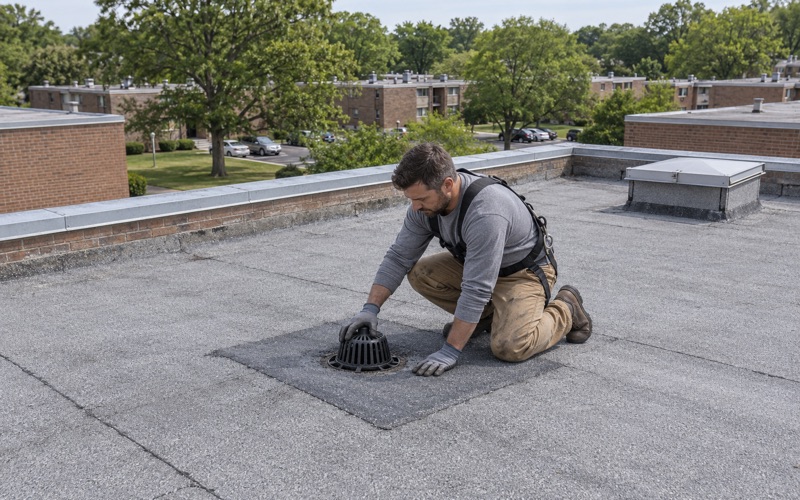
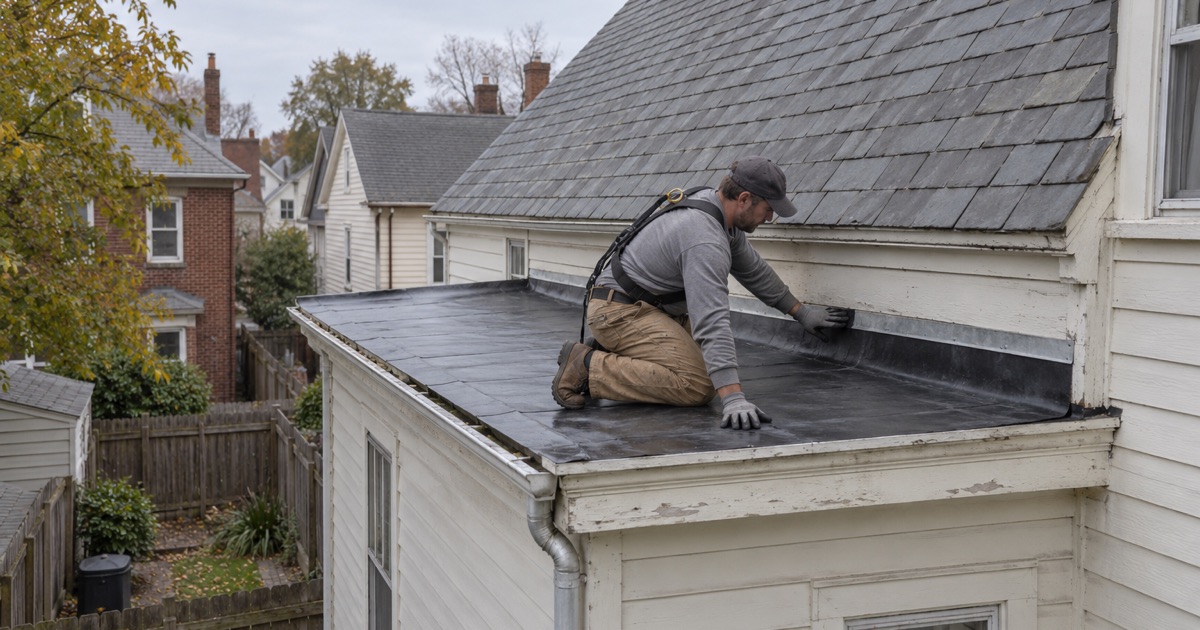
Slate and asphalt shingles both need real slope to shed water. A low-slope rear section cannot use them and instead takes a membrane, such as EPDM rubber, TPO, or torch-down modified bitumen. So one house can involve a slate repair in front and a membrane replacement in back, each with its own price, schedule and materials.
We write those as separate items on the estimate. If the rear section is failing and the slate in front is sound, there is no reason to replace both, and a single lump-sum figure would hide that choice from you. You decide which job to do now and which can wait.
Where the two roofs meet
The joint between a pitched front and a flat rear section is a common place for an older house to leak. Water comes down the steep slope quickly and lands on a surface built to drain slowly, and the flashing at that transition takes the punishment. We trace any ceiling stain below that line to its exact point of entry before deciding which roof owns the problem.
Drainage off the back
A low-slope roof on a narrow lot has nowhere generous to send its water. Gutters and downspouts have to carry it clear of the foundation and away from a neighbor’s wall a few feet off. When we rebuild a rear section, we set the slope toward the drains on purpose and fit seamless aluminum gutters where the existing ones no longer keep up.
Repair, Reinstall or Replace: What the Code Allows Over Slate and Metal
When a roof is redone on a one- or two-family house in New Jersey, the state’s residential subcode, based on the 2021 International Residential Code, separates slate from metal in ways that shape the whole job. Those rules are why two village houses of the same age can end up with very different plans.
Slate cannot be covered over
Section R908.3.1.1 bars a roof recover where the existing covering is slate, clay, cement or asbestos-cement tile. On a slate roof, there is no shortcut of laying new shingles over the old stone. Either the slate is repaired and kept, or it comes off and the new roof goes onto a deck that has been opened and inspected.
Only sound slate goes back
Section R908.5 allows existing slate to be reinstalled, but not damaged pieces, and it requires rusted or deteriorated flashings and vents to be replaced. When slate has to come up to reach flashing or decking, we sort what comes off, set aside the cracked and flaking pieces, and put back only stone that will keep doing its job.
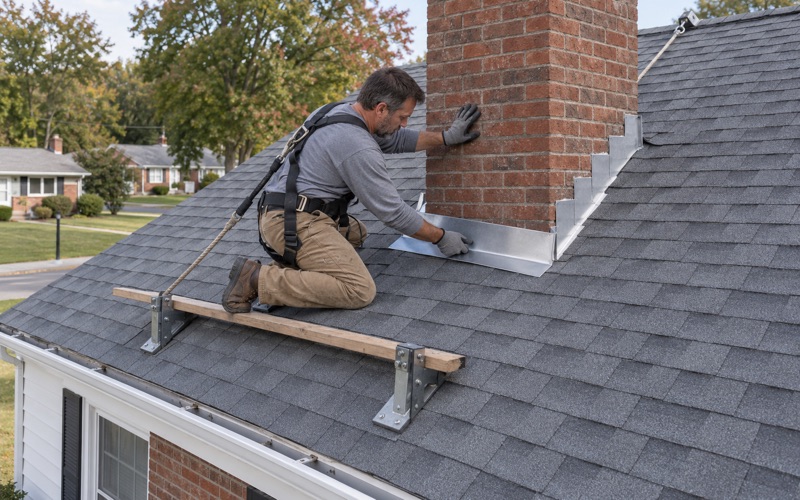
That sorting is also where flashing gets its due. At a chimney, sidewall or valley under slate, worn metal is replaced with new step flashing and counterflashing rather than smeared with caulk and left in place. Caulk might buy a season, but it is not a replacement for deteriorated flashing, and it is not how we work.
Metal that can go over an existing roof
Metal is treated differently. Section R908.3.1 permits a new covering over an existing one for standing seam and similar metal systems that do not rely on the existing roof for support. Put plainly, a metal system that carries itself can sometimes go on without a full tear-off, though the slate exclusion above still applies.
Whether that route is wise is a separate question from whether it is allowed. If the boards under an old roof are rotten, covering them buys little, and we would rather show you photographs of the damage than bury it. We set out both options in writing and let the condition of the roof decide.
When a storm is the cause
If a storm cracks slate or lifts metal panels, we photograph the damage and write it up for your own insurance claim, and we will meet the adjuster on site when you ask. Florence falls in the National Weather Service’s Northwestern Burlington forecast zone, which is the zone to check for the warnings in effect on the day of the damage.
If you own a village house of about 1900 and are unsure whether you face a slate repair, a metal decision or a failing rear roof, start with an inspection. We will tell you which of the three is in front of you, and each will sit on its own line of the estimate.
- 20+ Years in Business
- Line-Item Written Estimates
- NJ and PA Contracts