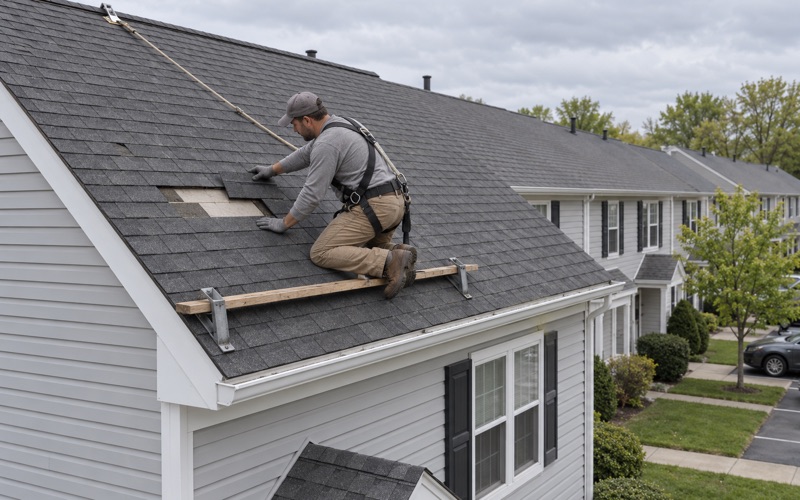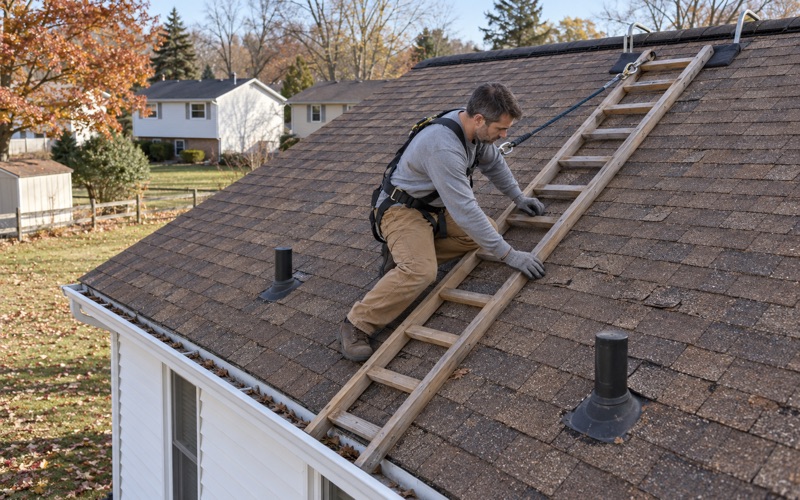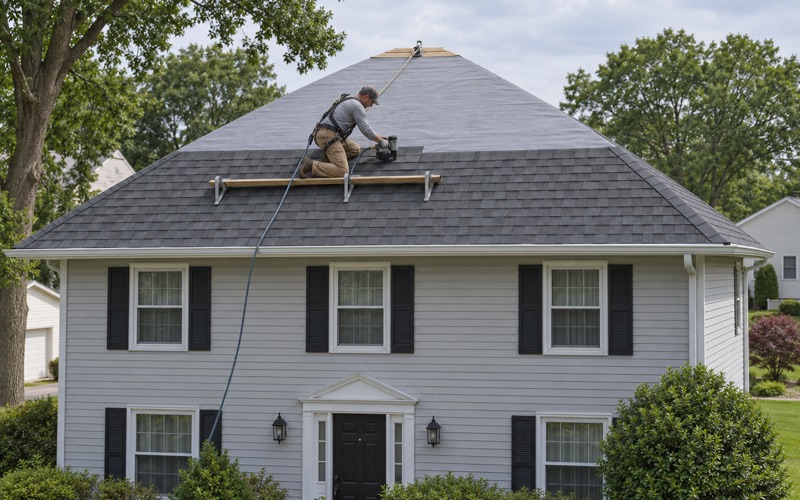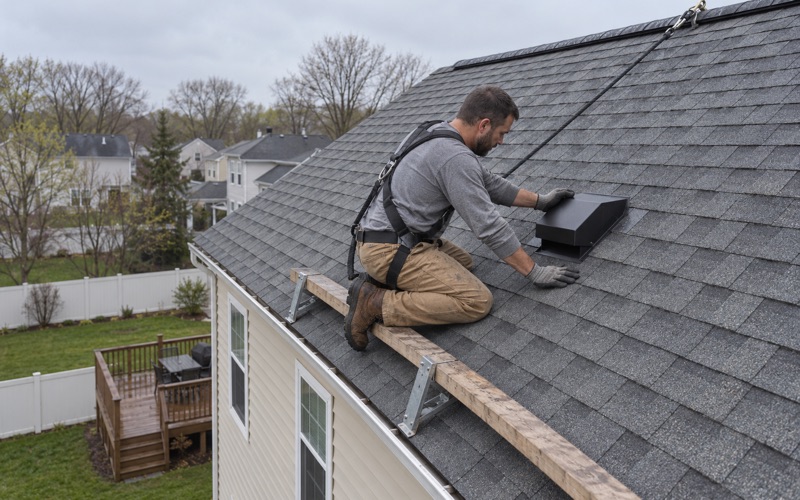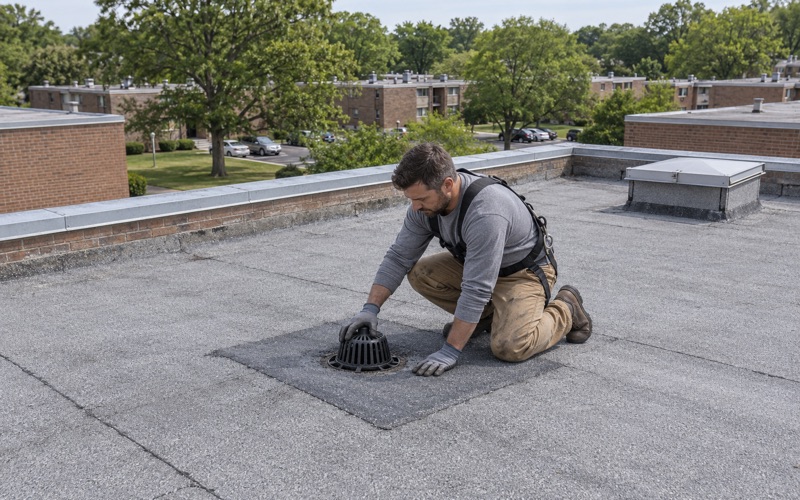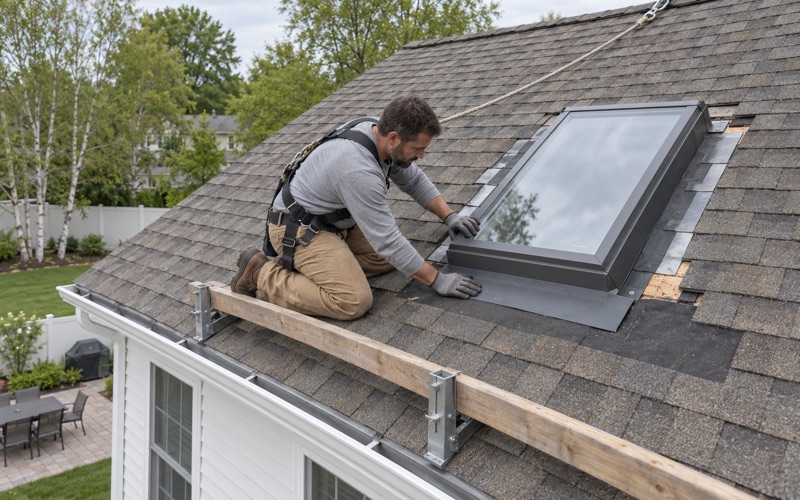
Gloucester Township Roofing has spent more than 20 years on roofing in Concord Township and the surrounding region, and many of the calls we take here begin with one question after a hard summer storm: did the wind, or something the wind brought down, reach the roof? We answer it from the shingles and from the attic, because a roof can look whole from the driveway and still be letting water into the framing.
The first thing a homeowner gets from us is a plain answer on whether the roof can be repaired. Replacement only enters the conversation when the decking, the shingle field or the flashing has reached the point where a patch would just postpone the next leak, and we show you which of those it is, on the roof or in photographs taken during the visit.
When a new roof is the right call, the estimate comes in writing with tear-off, decking, underlayment, flashing, ventilation and gutters each on a separate line. That layout lets you set our number beside another contractor’s and compare the same items one by one, rather than weighing two totals that may describe two quite different jobs.
The August 7, 2023 Storm North of Concordville
What the Survey Team Recorded
On the evening of August 7, 2023, a line of thunderstorms crossed this part of Delaware County, and the National Weather Service office in Mount Holly sent a survey team out over the next two days. Its update named one event the Concordville Thunderstorm Wind and gave it an estimated peak of 85 to 95 mph at 6:27 p.m.
The path was short, about 0.46 miles long and up to 500 yards wide, running from north-northeast of Concordville toward a point west-northwest of Chester Heights. Those speeds are the survey’s estimates for that narrow strip, worked out from the damage it left. They are not an instrument reading, and they do not describe the wind across all of Concord Township that night.
Straight-Line Wind, Not a Tornado
The survey team stated plainly that the extensive damage was due to straight-line winds. In other words, the air was driven forward and outward from the storm rather than spinning in a rotating column, which is why the Weather Service did not rate it as a tornado. The survey recorded no fatalities and no injuries, and its findings were labeled preliminary.
For a homeowner, the label matters less than what that kind of wind leaves behind. A strong push of air along an exposed slope can lift and crease shingle tabs, and the trees it snaps can land on whatever stands beside them. A sound roof check after a storm like that one therefore has to cover both the roofing itself and the canopy above it.
Other Reports From the Same Night
A Storm Prediction Center report logged trees and wires down around Governor Markham Drive in Concord Township, and the Concordville fire chief, Bob Vasek, told 6abc there were almost 30 storm-related damage reports with no injuries. The same survey also rated two shorter tracks near Elam, the historic Concord village it used as a reference point, at 85 to 90 mph and 80 mph.
None of those sources counts damaged roofs in the township, and we do not claim to know how many there were. What the record does show is that one evening of straight-line wind put a great deal of timber on the ground around Concordville in a very short time, which is exactly the situation where a roof deserves a careful look.
Looking for roofing closer to Plymouth Township? See Roofing Services in Plymouth Township.
Wooded Lots and the Trees Above the Roof
Andrien Road and the One- to Two-Acre Lot
The heaviest damage in the Concordville survey sat around Andrien Road, where the team found widespread and extensive tree damage, with many softwood and hardwood trees snapped or uprooted. Andrien Road addresses are recorded as Concord Township, and property listings there describe homes on one- to two-acre lots with mature landscaping.
On a property like that, the same trees that give a house its privacy are often tall enough to reach the roofline. After a storm, the useful question is not only whether a tree came down, but whether a trunk, a heavy limb or a scatter of smaller branches touched the roof on the way to the ground.
A Trunk Strike Versus a Limb
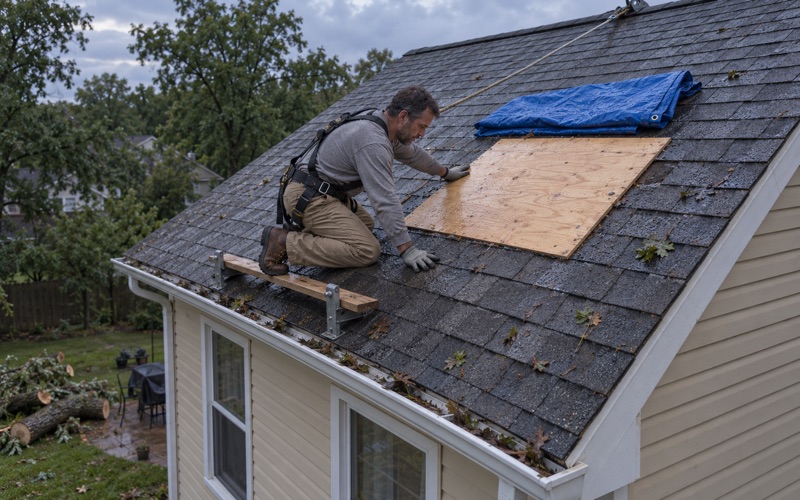
A whole trunk resting on a roof is obvious and usually urgent, because the decking and sometimes the rafters beneath it have taken a load they were never meant to carry. We stay off any section that may be compromised and work in sequence with the tree crew, so nobody walks a cracked deck while the weight is still on it.
A limb is far easier to miss. It can puncture a shingle, crack a ridge cap or bend a gutter, then slide off or get dragged away during cleanup, leaving a small opening that shows up weeks later as a stain on a ceiling. A broken branch lying under the eaves is worth a closer look even when the roof seems fine from the yard.
Gutters and Storm Debris
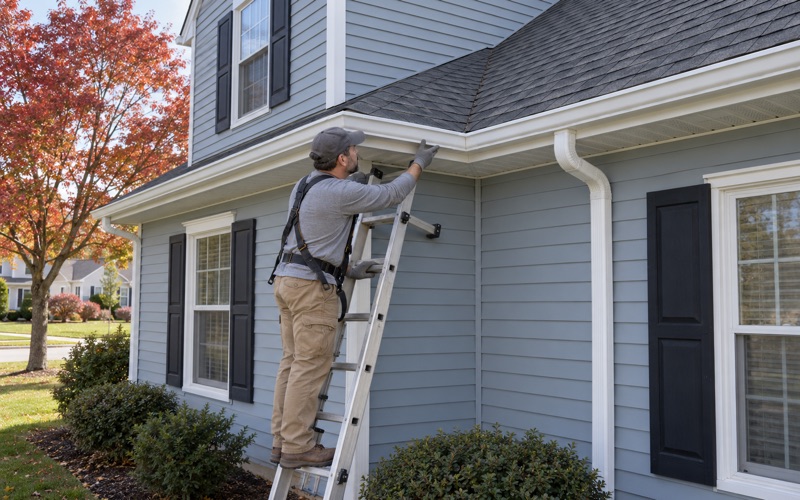
A storm that snaps trees fills gutters with leaves, twigs and loose shingle granules all at once. A clogged gutter can push water back under the drip edge at the eaves, so we clear and inspect gutters and downspouts during the same visit, and we note any section that was bent or pulled away from the fascia.
When we work on a house, the yard, the driveway and the gutters are cleaned at the end of every work day, and a magnet sweep picks up stray roofing nails. On a wooded lot, where leaf litter hides whatever lands in it, that sweep counts for more than it does on an open lawn.
Checking Shingles, Flashing and the Attic After High Wind
Lifted and Creased Shingles
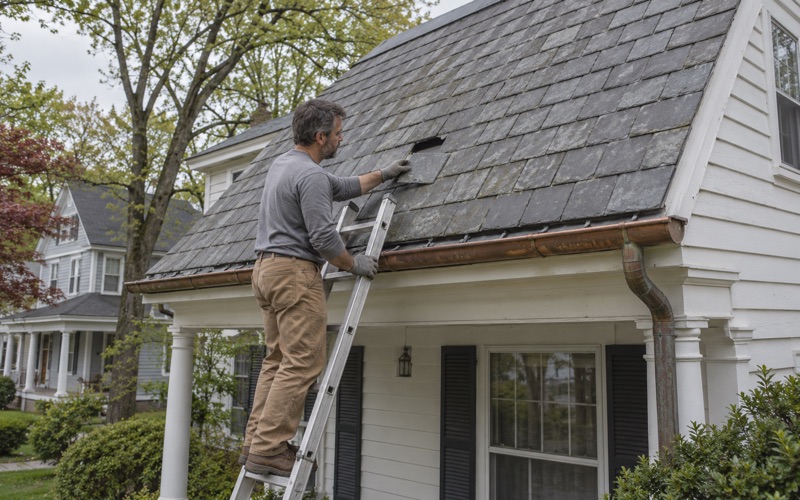
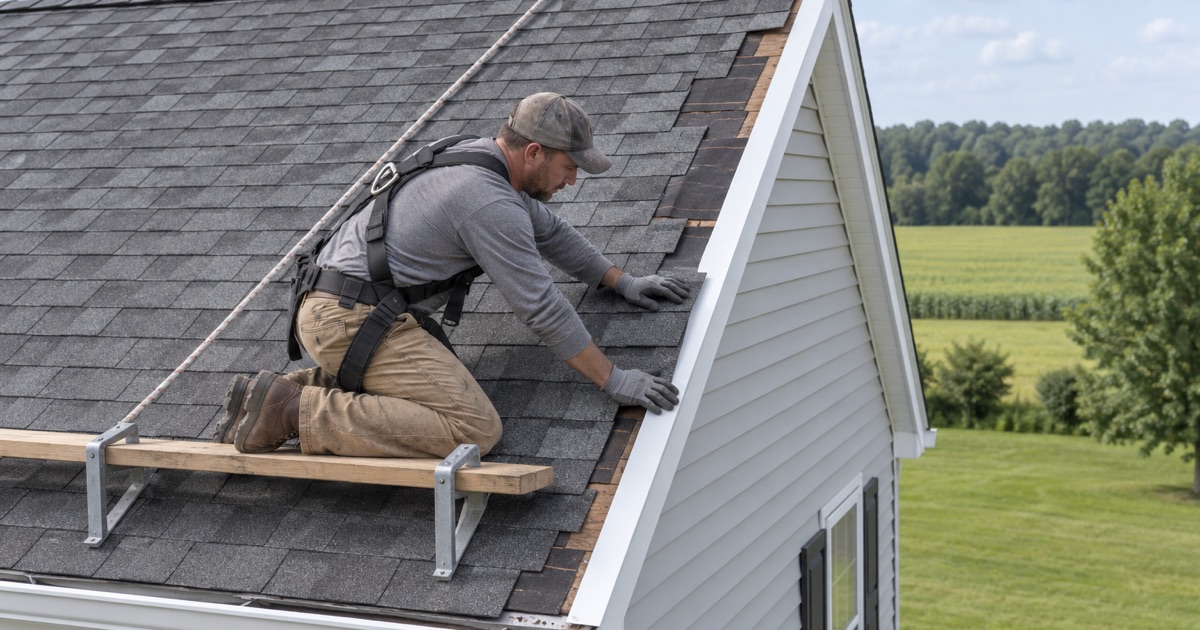
Wind damage on asphalt shingles is often subtle. A tab can lift, crease along its fold and drop back almost flat, breaking the seal strip that held it down, and the next gust raises it with much less effort. We look for crease lines, granule loss in a straight band and tabs that move freely when lifted by hand.
Where shingles are being replaced, the wind rating printed on the bundle is worth reading. Architectural shingles tested to ASTM D3161 Class F or ASTM D7158 Class H have passed recognized wind-resistance tests, and we tell you which rating a given product carries rather than calling every shingle storm-proof.
Flashing at Chimneys, Sidewalls and Valleys
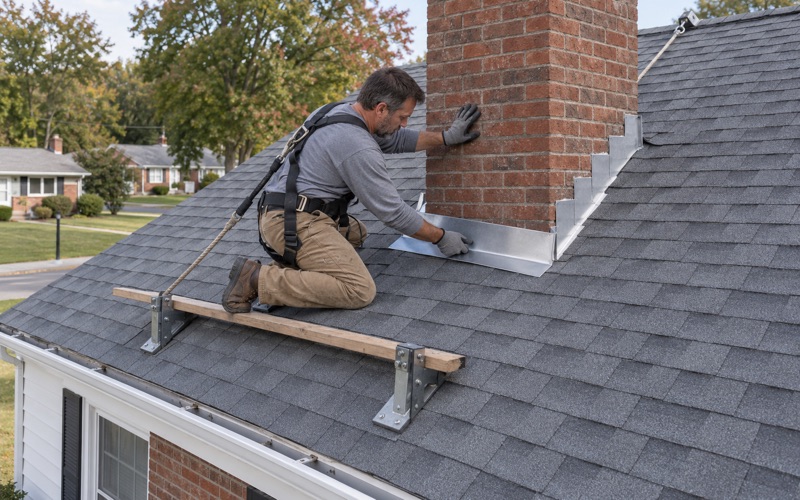
Wind and falling debris also work at the edges of a roof: step flashing along a sidewall, apron flashing and counterflashing at a chimney, the metal lining a valley and the pipe boots around plumbing vents. Any of these can be bent or loosened without a single shingle going missing, so they get their own pass during the inspection.
When a roof is redone, we replace that flashing with new metal instead of sealing the old pieces over with caulk. Caulk is a stopgap, and a new roof laid against tired flashing tends to leak at exactly the spots where water is most concentrated, around the chimney and in the valleys.
Looking From the Attic as Well as the Roof
Every leak call includes a trip into the attic. Water rarely drips straight down from the opening that let it in; it runs along the decking and the rafters first, so we trace the stain back to the point of entry before anything is priced. After a storm, the attic can also show a pinpoint of daylight that the shingles above are hiding.
If the old shingles come off and the decking underneath is rotted or cracked, we photograph it and show the owner before any of it is replaced. The contract fixes a per-sheet price for that decking in advance, so the final invoice does not hinge on what turned up after tear-off.
Planning Roof Work in Concord Township After a Storm
Repair First, Replacement When It Is Due
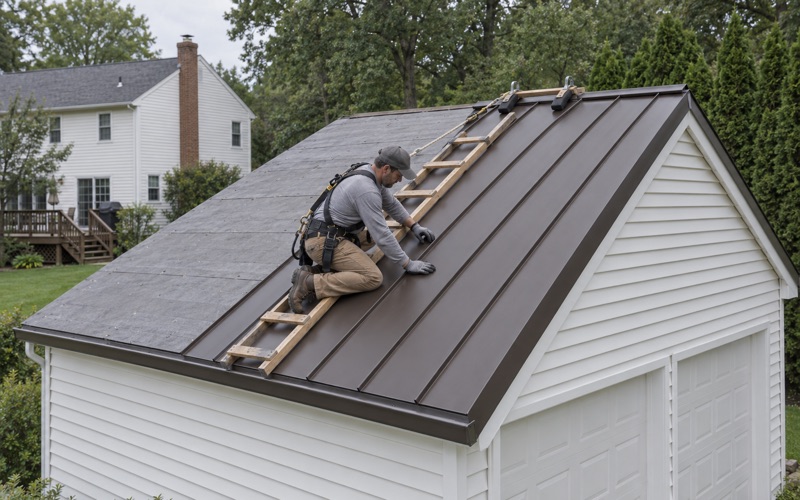
A wind check may end with nothing more than a modest repair: a few new shingles, a reset ridge cap, a fresh pipe boot or a gutter rehung. When a roof was already close to the end of its life, though, a storm can tip the decision toward replacement, and we explain which of those situations fits your house instead of letting the storm make the case.
Where an older house carries slate or cedar, that roof gets repaired with matching material where it can still be found rather than with whatever happens to be on the truck. If solar panels sit on the roof, the removal and reinstall are planned into the schedule ahead of time, not discovered on the morning the crew arrives.
Re-Roofing and the Township Permit
Concord Township lists re-roofing among the activities that require a permit. Applications go through Code Enforcement at 43 S. Thornton Road in Glen Mills, by appointment only, since the office does not accept walk-in applications. We build that step into the schedule before materials are ordered, so the permit is in hand when the tear-off begins.
A 2024 township council packet put the average turnaround for non-reviewable items such as roofs at two to three days, against 15 business days for reviewable residential permits. That short window for a roofing permit is one reason the timeline after a storm usually depends more on weather and materials than on paperwork.
Photographs for Your Own Insurance Claim
If a storm has damaged the roof, we photograph what we find and write it up so you have clear documentation for your own insurance claim. The claim stays between you and your insurer. When you ask, a member of our crew will meet the adjuster on site to walk the roof and point out what the photographs show.
Association Communities and Shingle Color
Concord Township includes age-restricted communities such as Fox Hill Farm and Riviera at Concord, where an association may take on some share of exterior upkeep. Who is responsible for a roof in either one depends on that community’s own declaration, so owners should confirm it with their association before scheduling any work.
When a new roof does go on, the color is chosen against the brick, stone or siding of the actual house. We hold shingle samples up on site, in daylight and beside the walls they will sit above, because a swatch that looks right on a screen can read very differently against the trim and the trees around a Concord home.
- 20+ Years in Business
- Line-Item Written Estimates
- NJ and PA Contracts