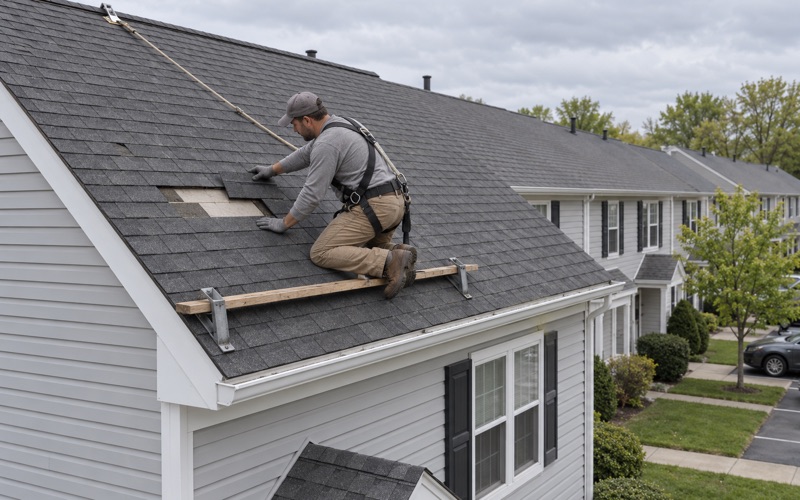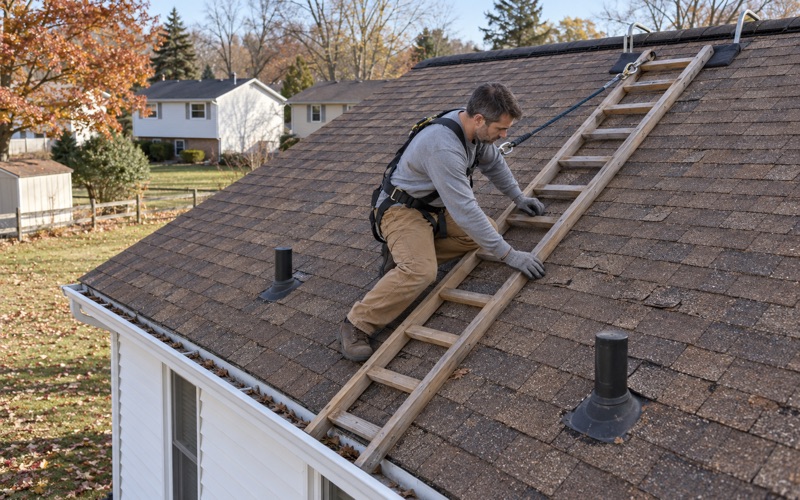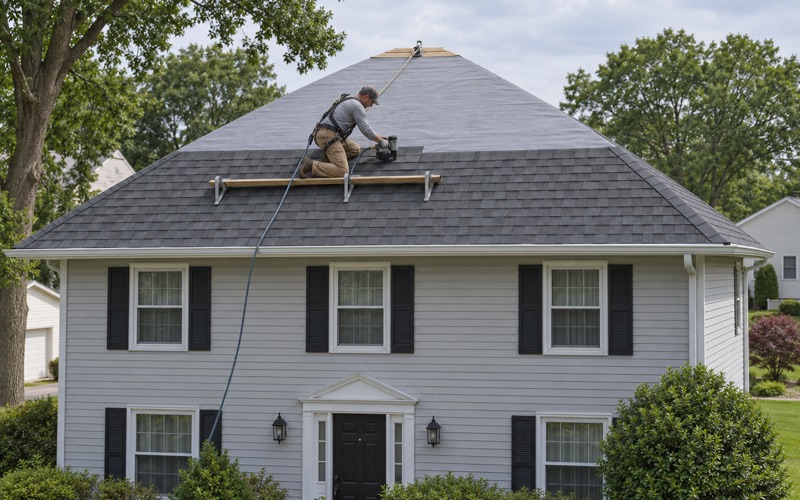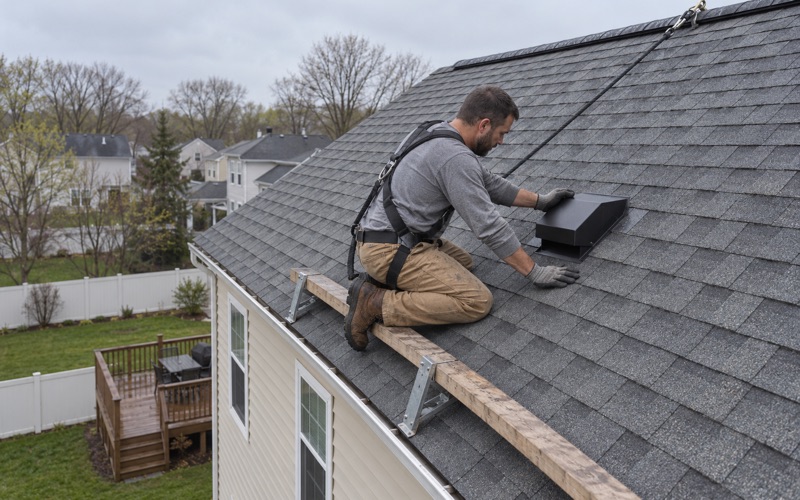
Gloucester Township Roofing brings more than 20 years in the trade to roofing in Collingswood, where a good number of roofs sit over somebody else’s home. When the person who owns the building is not the person under the ceiling, a leak turns into a chain of phone calls, and every day it stays open costs goodwill with a tenant.
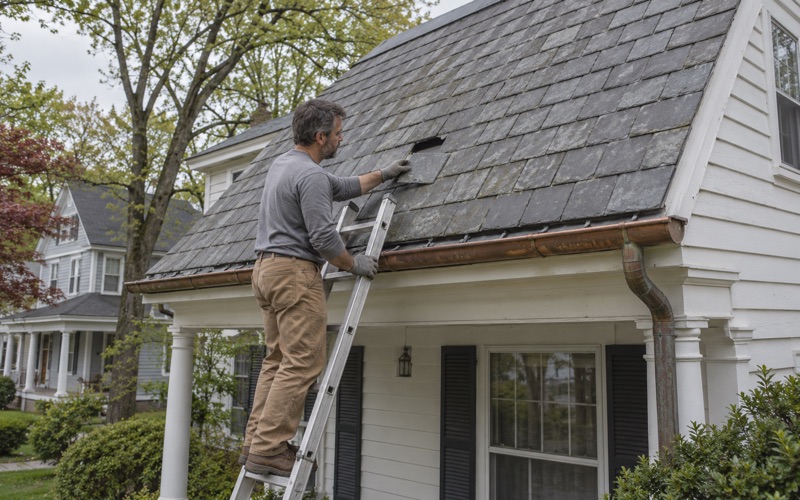
We keep that chain short. Each leak call starts with a look in the attic as well as on the roof, because the stain a tenant reports is rarely directly under the hole. Water runs along rafters and decking before it drips, so we follow it back to where it actually gets in before we put any number on paper.
Owners also get a straight answer on whether the roof can be repaired before anyone mentions replacing it. Plenty of rental roofs need a few feet of flashing, a pipe boot or a handful of shingles rather than a full tear-off, and a landlord deciding where to spend money deserves to hear that first.
Rental Certificates and Inspections in Collingswood
Owning a rental in this borough carries paperwork that a homeowner living in the house never sees. Knowing the outline of it explains why landlords here tend to call about a roof problem sooner rather than later, and why the timing of a repair matters as much as the repair itself.
A certificate at every rental
Collingswood requires a rental certificate of occupancy at the time of the rental of all commercial and residential units, according to the borough’s own Property Maintenance, Nuisance and COs page. Questions about those certificates go to the Collingswood Fire Prevention & Inspection Bureau, which handles rental certificates and property maintenance for the borough.
The same page says dwelling units in triplexes and larger must be inspected between tenants. It names the criteria used in those inspections as the BOCA National Property Maintenance Code of 1993. That code, rather than any roofing standard, is the yardstick a rental is measured against, and it is broad enough to cover the whole building envelope.
Registration with each change in occupancy
A draft of Chapter 237 Rental Property, dated March 2019 and posted on the borough site, has every rental unit registered annually and again with each change in occupancy. The borough’s Rental License chapter, as amended in 2023, also calls for rental properties and units to be registered, inspected and licensed every year.
For an owner, that turnover rhythm is the practical point. A unit changing hands is a natural moment to deal with anything the last tenant mentioned about water, before the next lease begins and before a new household moves furniture under a suspect ceiling.
What the 2019 draft proposed
The March 2019 draft calls for each rental unit to be inspected at least once every 12-month period, and for rental units to be maintained in accordance with the BOCA National Property Maintenance Code among other codes. It also says that after an unsatisfactory inspection the owner should not lease the property until the necessary corrections have been made.
That text is a draft, and we have not read the wording the borough finally adopted, so treat it as a sign of direction rather than a quotation of current law. The borough’s own staff are the people to ask what applies to a given unit today; we fix roofs and stay out of the certificate process entirely.
Looking for roofing closer to Harrison Township? See Harrison Township Roofing.
What the Property Maintenance Code Asks of a Roof
The borough page names the 1993 edition of the BOCA code, which we have not read. The 1996 edition of the same code has a section on roofs and drainage, and its language gives a landlord a clear picture of what a maintained roof looks like under that family of codes.
Sound, tight and free of leaks
Section PM-304.7 of the BOCA National Property Maintenance Code of 1996 reads: “The roof and flashing shall be sound, tight and not have defects that admit rain.” The same wording carries into the International Property Maintenance Code that followed it. Notice that flashing is named alongside the roof itself, not treated as an afterthought.
In plain terms, a roof that lets water in is a maintenance problem under that standard, not just a cosmetic one. For a building that houses tenants, a drip into a closet or a stain spreading across a bedroom ceiling is something an owner should treat as urgent rather than leaving for the next dry stretch.
Drainage is part of the roof
The same 1996 section goes on to say roof drainage shall be adequate to prevent dampness or deterioration in the walls or interior of the structure. That sentence pulls gutters, downspouts and the way water leaves the eaves into the same conversation as shingles and flashing.
A gutter packed with leaves or a downspout that empties against a foundation can soak a wall long before anyone sees a ceiling stain. When we look at a rental, we look at where the water goes after it leaves the roof, and we can replace failing runs with seamless aluminum gutters and downspouts sized for the roof they serve.
Flashing is where tight usually fails
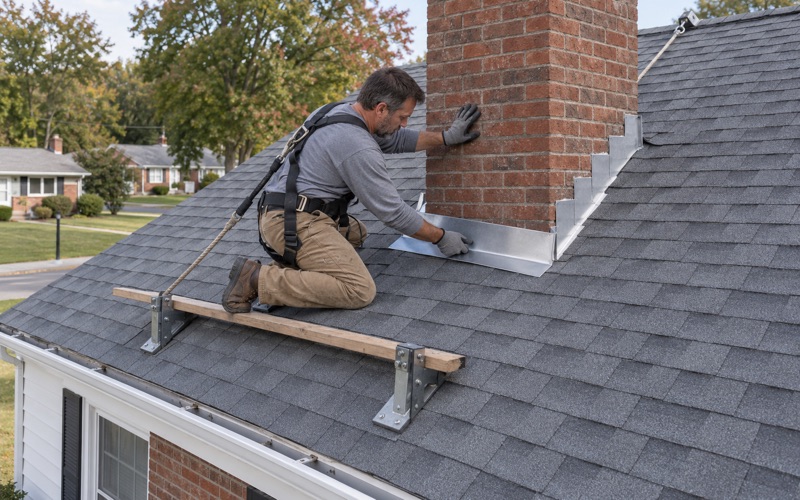
On most leaks we trace, the shingles are not the culprit. Water finds its way in at the step flashing along a sidewall, the counterflashing set into a chimney reglet, a cracked pipe boot or a valley where two slopes meet. Those joints are where a roof stops being tight first.
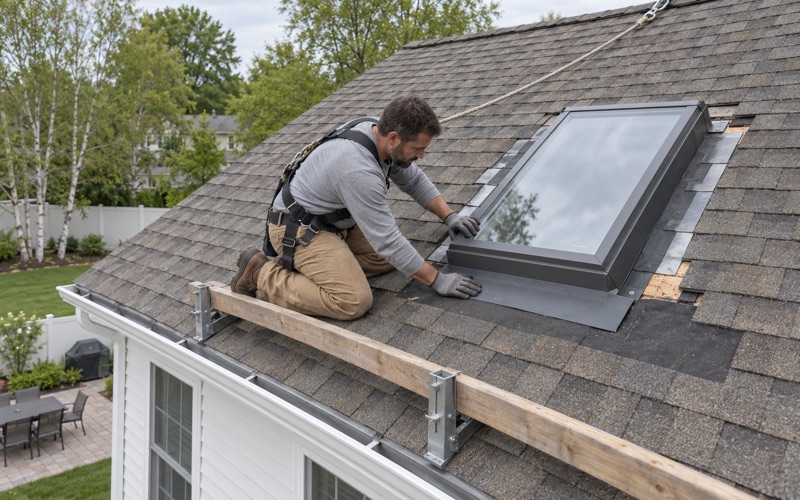
When we redo a roof, flashing at chimneys, sidewalls, skylights and valleys is replaced rather than smeared with caulk and left in place. Caulk can look fine at the end of the job and open up a season later, which is exactly the kind of quiet failure a landlord does not want to discover through a tenant’s text message.
The Sale Looks at Concrete, the Lease Looks at the Building
Owners sometimes assume the borough will flag a tired roof when a house changes hands. In Collingswood, the paperwork at a sale points somewhere else entirely, which is part of why the rental side carries so much weight for anyone holding a roof over tenants.
What the resale certificate covers
A resale certificate of occupancy is required at every sale, but the borough page says it primarily concerns the inspection of the concrete: sidewalks, driveways, aprons and curb gutters, under Chapter 227-3. A buyer should not read a resale certificate as a statement about the roof, because that is not what it addresses.
That leaves the roof to the buyer’s own inspector, the seller’s disclosures and, once the house is rented, the property maintenance code. If you are buying a Collingswood house to rent out, it is worth having the roof looked at before closing so you know what you are taking on before the first tenant arrives.
Two-family houses and attached rows
Renting is common here. The Census Bureau’s 2024 five-year American Community Survey counts 2,804 renter households out of 6,517 occupied homes, which is 43.0 percent, along with 781 units in two-unit buildings and 1,197 one-unit attached houses.
A two-family house often means one roof over two households, and a leak on one side can be traced to a chimney or valley on the other. Attached houses share party walls and sometimes a continuous roof line, so we look at how the neighboring roof meets yours before deciding where the water starts.
Larger rental buildings
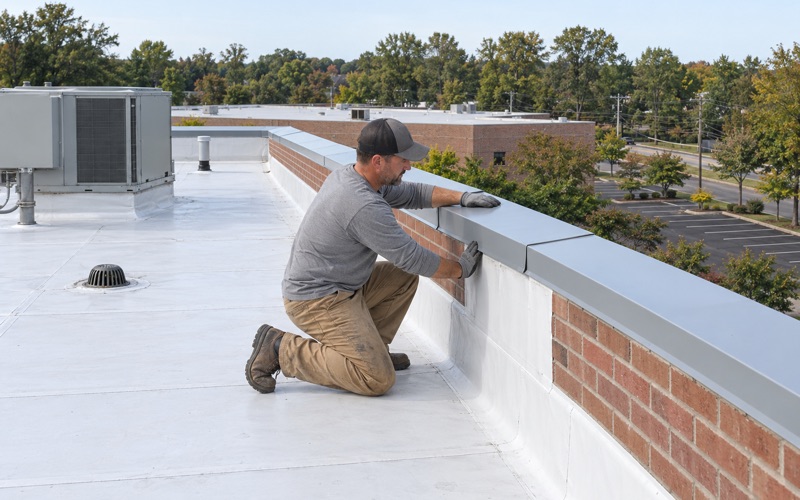
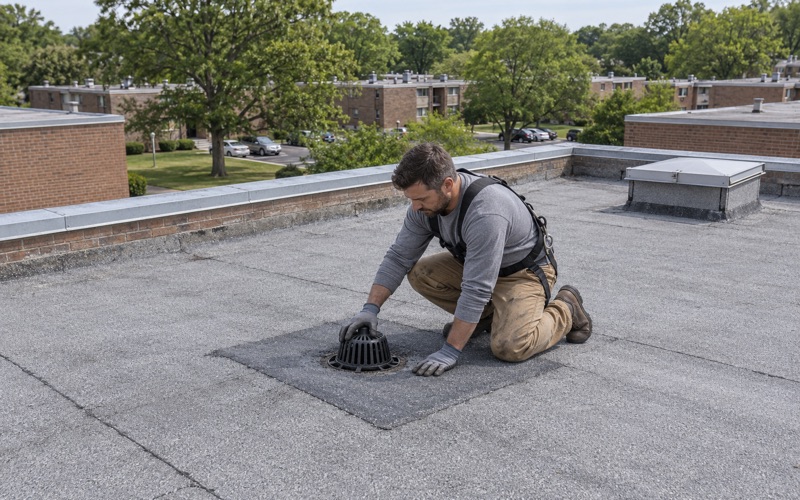
The same survey places 2,038 renter households in buildings of three or more units. Many of those are low-slope or flat roofs, where the materials change to EPDM rubber membrane, TPO single-ply or torch-down modified bitumen, and where ponding water and failing drains are common sources of trouble.
These are also the buildings the borough page says are inspected between tenants. We repair and replace low-slope roofs on small apartment buildings, and we plan the work around occupied units so residents are not left without a dry ceiling overnight.
Fixing a Leak Before the Next Tenant Moves In
The window between one lease and the next is often the easiest time to work on a rental roof. Access is simpler, interior ceilings can be opened and checked, and nobody’s belongings are in the way of a drop cloth.
Tracing the water first
Our attic check is where a rental repair is usually won or lost. Looking at the underside of the decking shows how far water has traveled, whether the wood is soft, and whether poor ventilation is adding condensation to the problem. That tells us whether a repair will hold or whether the damage runs deeper.
Collingswood sits in the National Weather Service Camden forecast zone, NJZ018, served by the Mount Holly office. Watching that forecast helps us schedule tear-offs and temporary protection so an open roof is not caught by rain while a unit sits empty between tenants.
Estimates a landlord can compare
Our written estimates break out tear-off, decking, underlayment, flashing, ventilation and gutters as separate lines. An owner with more than one building, or a partner to answer to, can set two bids side by side and see exactly where they differ instead of comparing two lump sums.
If rotted decking turns up once the old shingles are off, we photograph it and show it to you before it is replaced, at a per-sheet price already fixed in the contract. Contracts follow New Jersey’s home improvement rules, including the right-to-cancel notice, so the terms are clear before work begins.
Storm claims and solar panels
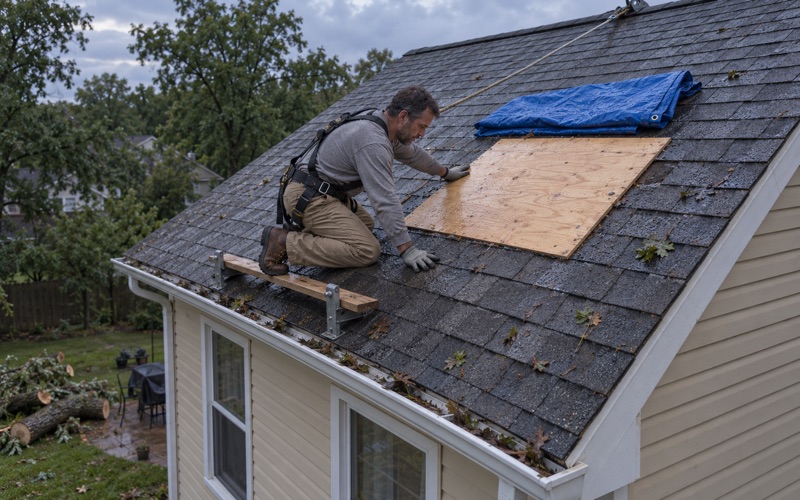
When wind or hail damages a rental roof, we photograph the damage and write it up for the owner’s own insurance claim. If you ask, our crew will meet the adjuster on site, which saves a landlord from taking another morning off to walk the roof with them.
Roofs under solar panels get the panel removal and reinstall planned before the job is scheduled, not discovered on the day. That keeps a rental from losing its array longer than necessary and keeps the roofing and solar crews from working on top of each other.
Leaving the property clean
A rental often has neighbors, tenants or a shared driveway close by while we work. We clean the yard, driveway and gutters at the end of every work day and run a magnet sweep for roofing nails, so nobody steps on or drives over a stray nail.
Shingle colors are chosen against the brick, stone or siding on the actual building, with samples held up on site. On a two-family house or an attached row, that also means checking how the new roof will look beside the neighbor’s before the order is placed.
- 20+ Years in Business
- Line-Item Written Estimates
- NJ and PA Contracts