Gloucester Township Roofing has spent more than 20 years on roofing in Cinnaminson and the neighboring South Jersey towns, and one of the costliest errors a homeowner can make with a roof is a timing error. A roof near the end of its life gets covered with solar panels, and a few years later the owner pays to have the array taken down so the roof underneath can be replaced.
We do not sell, design or install solar, and we never touch the wiring. What we do is tell you plainly how much life your roof has left and what it is made of, so the solar decision is made with that on the table rather than discovered after the rails are bolted down. If the roof can be repaired instead of replaced, you hear that from us first.
When a house that already carries panels needs a new roof, we build the schedule around the solar company’s removal and reinstall, agreed before a tear-off date is set. Our written estimates list tear-off, decking, underlayment, flashing, ventilation and gutters on separate lines, and our contracts follow New Jersey’s home improvement rules, right-to-cancel notice included.
Solar in Cinnaminson: On the Roof or on the Ground
Why the roof comes first
Rooftop panels sit on the roof covering for their whole service life. They shade it, hide it from view, and are fastened through it with mounts that each need their own flashing. None of that is a problem on a sound roof with plenty of years left. On a tired roof, the array locks in a repair bill that arrives right in the middle of the panels’ working life.
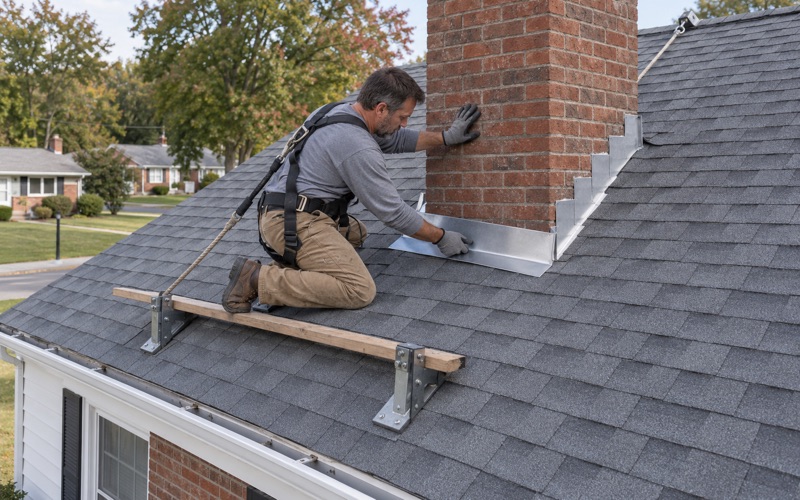
That is why we treat the roof as the opening question in any solar plan. Asphalt that has shed much of its granule surface, decking with soft spots, or chimney flashing that has been smeared with sealant more than once are all worth fixing or replacing before the mounts go in, not after the system is generating power.
When the array goes on the ground instead
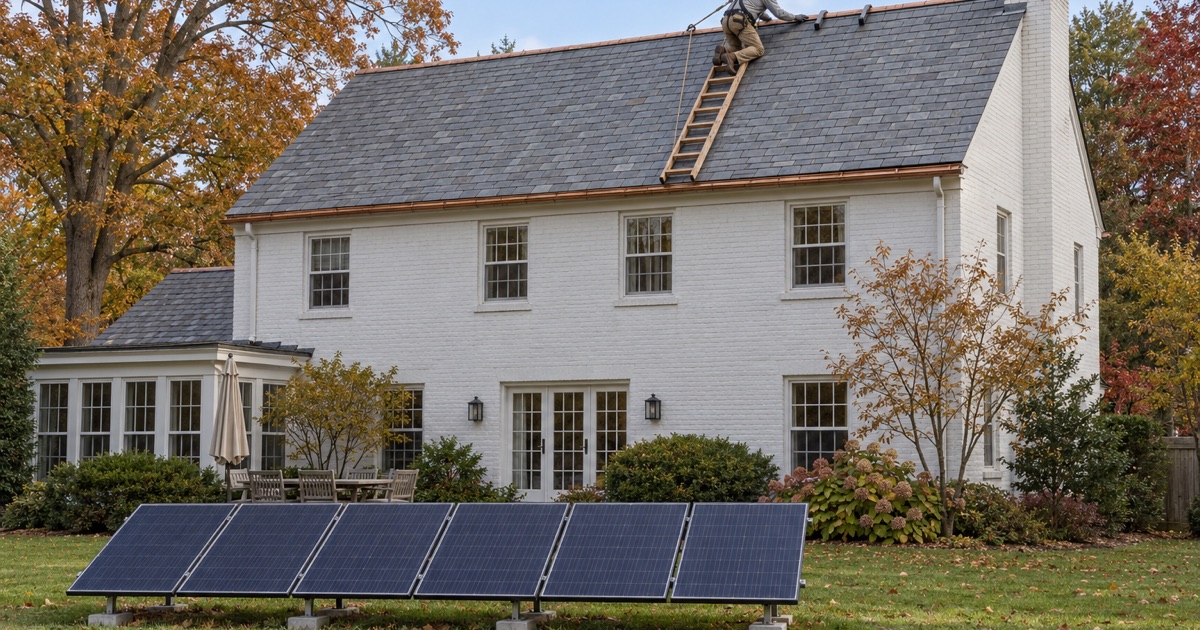
Not every owner puts panels on the house at all. A ground-mounted array leaves the roof alone, but it trades one set of questions for another. On a residential lot it becomes a structure in the yard, and where it sits against the setbacks can bring it before the township’s Zoning Board of Adjustment. Whether a given array needs that review is decided case by case, and the township decides it.
For a homeowner, the practical point is that a ground mount is a genuine alternative with its own process, not a shortcut around one. It is worth knowing about before a roof that is a poor candidate for panels gets pressed into carrying them for the next couple of decades.
Looking for roofing closer to Darby? See Roofing Services in Darby.
The Riverton Road Slate House and Its Ground Array
What the Zoning Board heard on October 6, 2021
One case before the Cinnaminson Zoning Board shows how a roof can steer the whole solar decision. At its October 6, 2021 meeting, the board took up an application for a property on Riverton Road. The owner testified that his home is about 150 years old, that his roof is slate, and that he wanted to put the solar panels in the back rather than on the house.
The minutes record that testimony in that order. They never state that the slate roof was the reason for going to the ground, and we do not claim it was. Read in sequence, though, the testimony describes a choice that owners of old roofs in town will recognize: keep the panels off the roof and accept a different kind of process to get them installed.
How the board handled the array
Because the array would stand within the front-yard setback, the board approved it as an accessory structure. The chair described it as a solar field in what is considered a front yard. A neighbor objected to its height and size, and the board attorney explained that a bulk variance requires the applicant to show a community benefit.
The board approved the array at no more than 72 by 21 feet and 8 feet high, by a vote of six in favor with one abstention. The approval was conditioned on no trees or limbs being removed from a neighbor’s yard, and the owner testified that the trees screening the Chatham Drive neighbors would stay.
What the case does and does not tell other owners
We had no role in that application, and we have found no count of how many Cinnaminson homes carry panels. What the minutes show is narrower and still useful. An owner with an old slate roof looked at where solar should go and chose the yard, and that choice meant neighbors in the room, a variance standard and conditions attached to the approval.
Re-Roofing Under Panels: Removal and Reinstallation
Who takes the panels down
Panels on an asphalt roof have to come off for any re-roof, and putting them back is part of the same job. That work belongs to the solar company or a qualified electrical contractor, because it means disconnecting and later reconnecting a live system. We do not disconnect, remove or reset panels ourselves.
What we do is plan around that work from the first conversation. Before a tear-off date is fixed, we confirm when the panels come down, where they will be stored, and when the installer returns to remount them. A roof under solar should never turn into a surprise on the morning the crew arrives with the dumpster.
What gets done while the array is off
With the panels removed, the roof is open in a way it will not be again for many years, so that window deserves careful work. Rotted decking found after tear-off is photographed and shown to you before it is replaced, at the per-sheet price already written into the contract, and every mount location is laid out with the installer in mind.
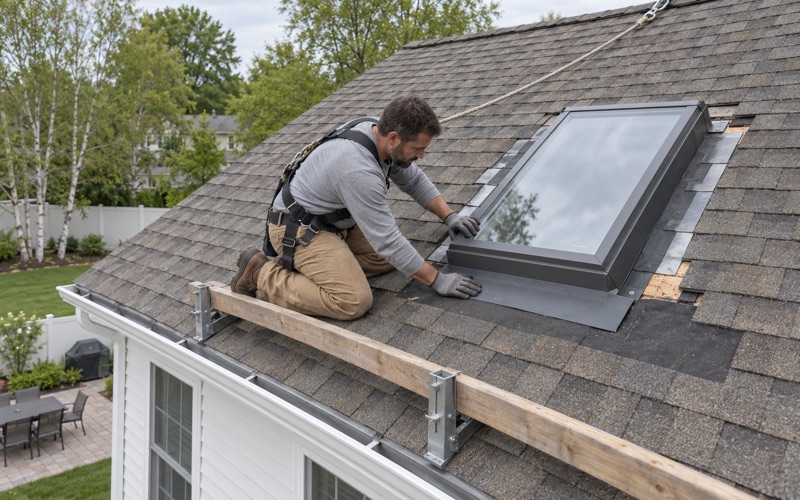
Flashing at chimneys, sidewalls, skylights and valleys is replaced rather than covered with caulk. A common specification pairs ASTM D8257 synthetic underlayment across the field with ASTM D1970 self-adhering ice and water barrier at the eaves and valleys, and the estimate names exactly what goes down before any shingle does.
Where the old array left fastener holes in the decking, those spots are repaired or the sheet is replaced before the new covering goes on. The goal is that the remounted panels sit on a clean, fully dried-in roof rather than over patches left behind by the previous system, with nothing hidden under the rails that we would not want you to see.
A clean site for the reinstall crew
Panels waiting in a garage or along the side of the house need clear access when the installer comes back. We clean the yard, driveway and gutters at the end of every work day and run a magnet sweep for roofing nails, so the solar crew walks onto a finished roof and a tidy lot.
Roof Age, Material and What the Code Allows
Asphalt: will it outlast the array?
Solar arrays are generally expected to stay up for decades, so the honest question for an asphalt roof is whether it will last that long. Architectural shingles in good condition over sound decking with balanced ridge and soffit ventilation may be ready as they stand. A roof in its final years usually costs less to replace before the array than under it.
Every evaluation we do includes the attic as well as the roof surface. Staining on the rafters, damp insulation or daylight showing through the decking tells us more than the shingles alone, and it all goes into a plain written answer about repair or replacement. If new shingles are the answer, we hold samples up against your brick or siding before you choose a color.
Slate: no covering it over
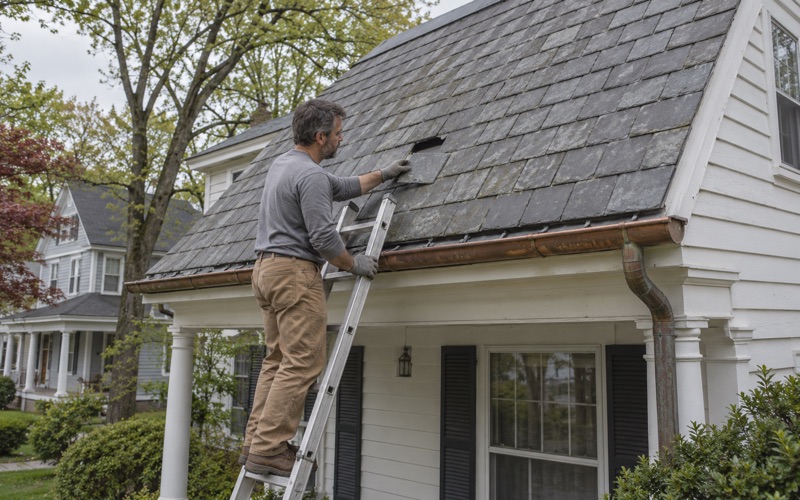
Slate is a different case. Under New Jersey’s residential code for one- and two-family homes, section R908.3.1.1 does not allow a new covering to be laid over existing slate. The same code permits reinstalling existing slate, though not damaged pieces. None of that says slate cannot carry panels, but it does mean the roof deserves a careful look before any solar layout is drawn.
Where slate needs repair, we match it with like material when it can be found rather than patching with whatever happens to be on the truck. That repair work is best finished and settled before any decision about mounts, so the roof and the array are planned as one project rather than two.
State permitting and the township’s largest array
New Jersey’s Smart Solar Permitting law, signed at the close of 2025, directs the Department of Community Affairs to provide an online, automated permitting platform for residential rooftop solar and home batteries. Easier permitting can make it simpler to put panels up, which makes checking the roof beforehand more important, not less.
Whatever the platform’s timing turns out to be, a permit for an array says nothing about the condition of the roof beneath it. That judgment still has to come from someone who has stood on the roof and looked in the attic, and it is the part of the solar decision we are glad to take on for Cinnaminson homeowners.
The largest solar installation in Cinnaminson is not on a roof at all. PSE&G’s 13 megawatt-dc farm, part of its Solar 4 All program, sits on 25 acres of reclaimed Superfund landfill in the township. For a single house the scale is very different, but the lesson about choosing the right surface for panels carries over.
- 20+ Years in Business
- Line-Item Written Estimates
- NJ and PA Contracts