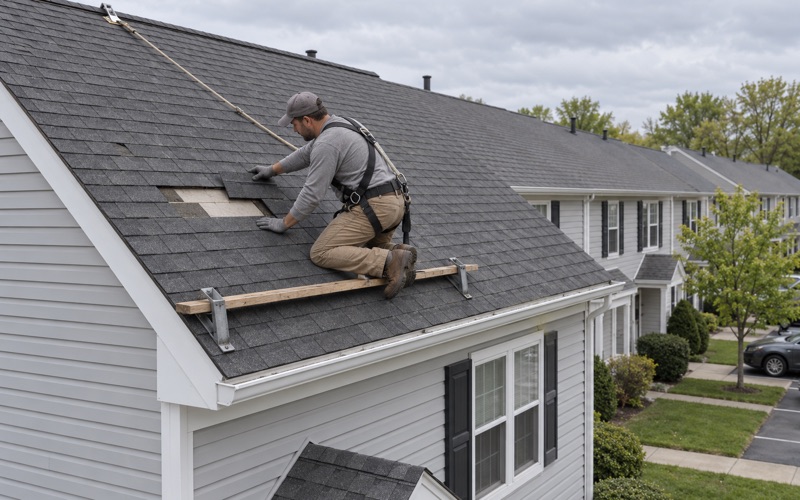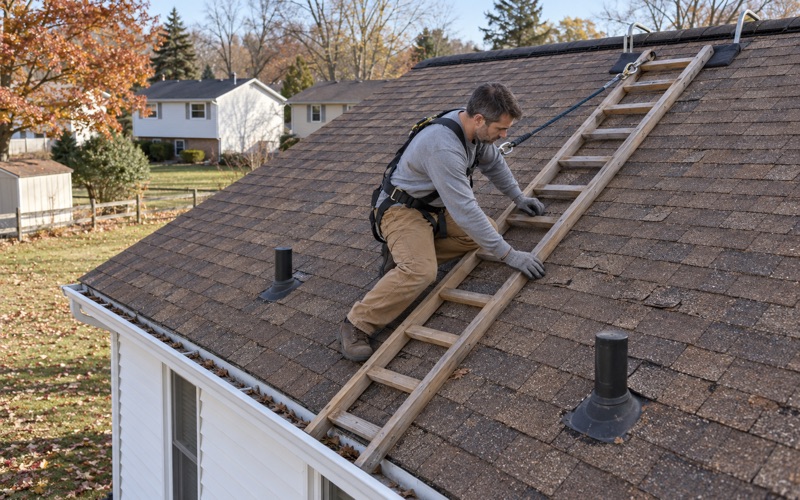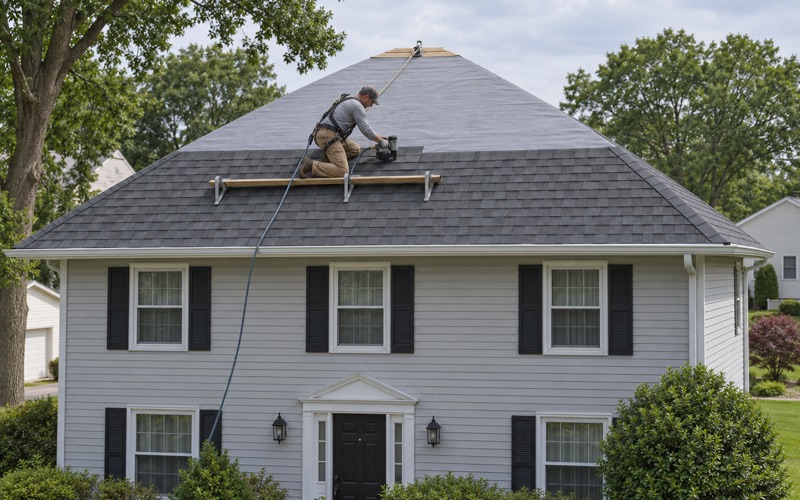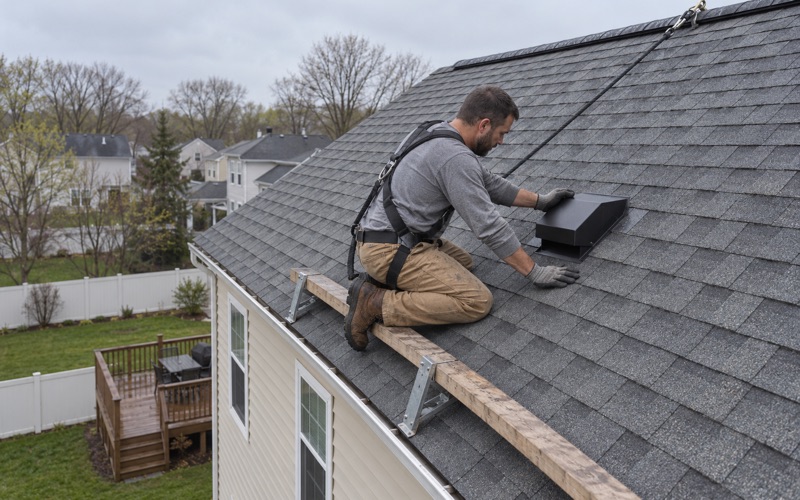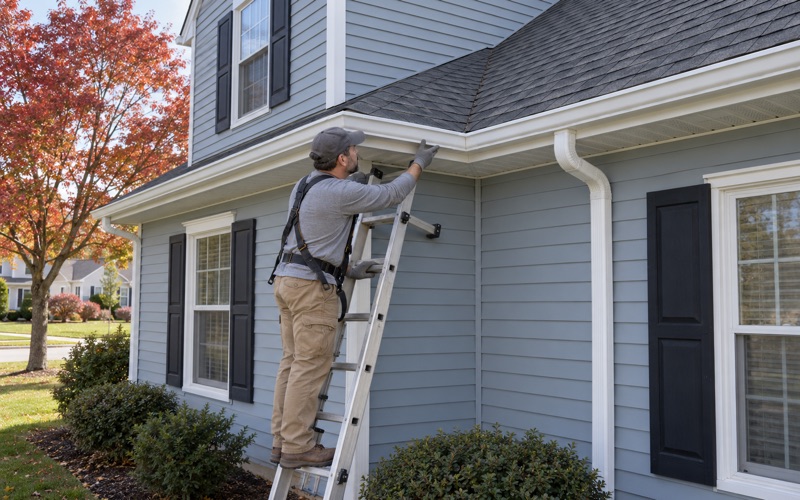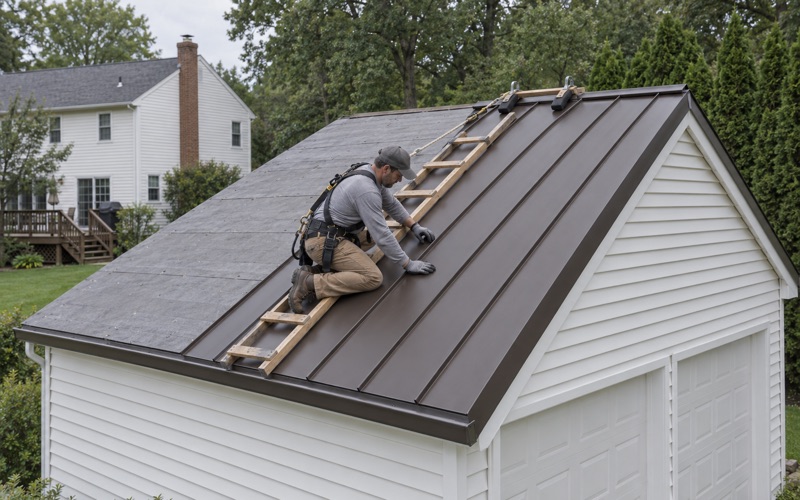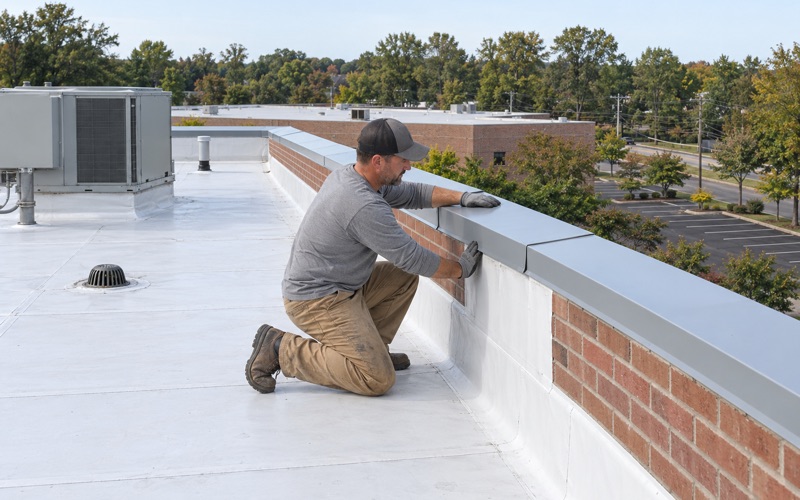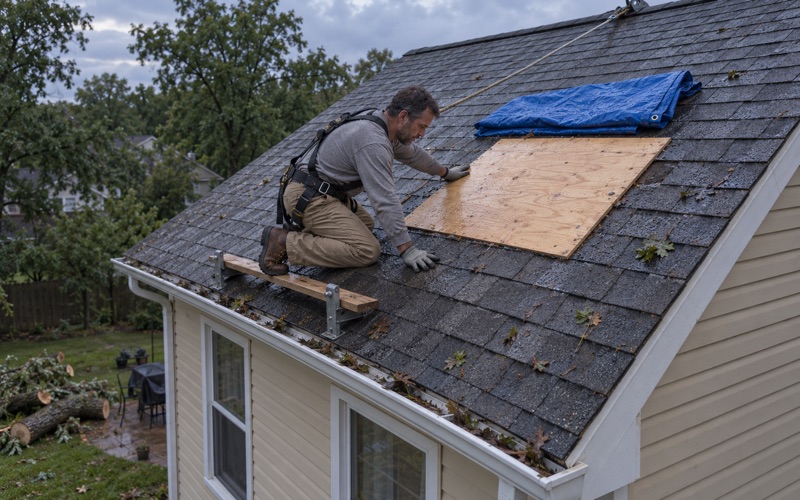
Gloucester Township Roofing brings more than 20 years of roofing in Burlington and across South Jersey to repairs, full replacements and leak calls on houses of every age. Before we price anything, we tell you plainly whether the roof in front of us can be fixed, because a sound roof with one failed detail does not need to be torn off.
A leak gets traced from both sides. We walk the roof and then go into the attic, following stains and wet sheathing back to the point where water actually gets in, which is often a few feet from where the ceiling shows it. Only after that do we write the estimate, so the price covers the real problem rather than a guess.
On older houses the next question is often what the roof is allowed to become. Some owners want the same material back, others want a change, and in parts of this city that choice can decide whether a public review comes before the work. The sections below explain how that decision works here and how we plan a roof around it.
Burlington’s Historic Districts and the Commission
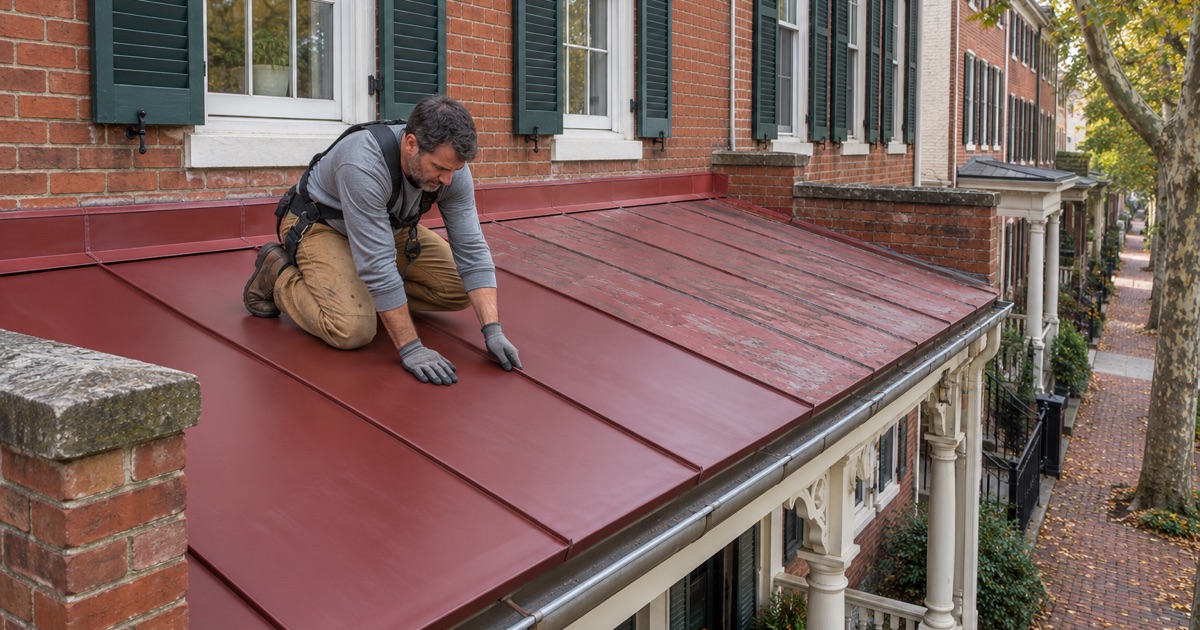
Burlington was settled in 1677, and a good share of its housing still reflects a long building history. The city protects that character through its Historic Preservation Commission, which reviews exterior changes to properties inside the historic districts under the city’s Historic District Ordinance, Section 207-22. Knowing whether a house falls inside a district is the first thing to settle before roof work is planned.
Three Districts, Not One
The commission’s 2026 application names three districts: the High Street Historic District, the Burlington City Historic District and the Burlington City Municipal Historic District. According to that form, review is highest for contributing properties in the two State and National Register districts. Not every street in the city sits inside a district, so we suggest owners confirm their own property’s status with the commission before planning any visible change.
The commission’s own page asks owners to call its secretary before starting exterior work, and it notes that unauthorized exterior changes are prohibited. That call costs nothing and settles the question early. We would rather a homeowner learn at the estimate stage that a roof needs review than find out after a crew has already stripped the old covering.
Key, Contributing and Non-Contributing Buildings
The official-use block on the 2026 application classes each building as Key, Contributing or Non-Contributing. Those labels matter because the level of attention a roof receives follows the building’s standing within its district. A Key building on a prominent street can be expected to draw closer attention than a structure the commission classes as non-contributing.
Owners rarely know which class their house carries, and the label is not something we assign or guess. The commission holds that record. Once an owner has it, we can talk through which roof choices are likely to keep the house consistent with its classification and which ones would invite a closer look at the monthly meeting.
An Old, Often Attached Housing Stock
The numbers explain why so much roof work here touches older structures. The American Community Survey’s 2024 five-year estimates count 1,720 of the city’s 4,208 housing units as built in 1939 or earlier, and 1,397 as one-unit attached houses. Older roofs, shared rooflines and original chimneys are a normal part of the work rather than an exception.
On houses of that age we expect to find layers of past repairs, flashing that was sealed over instead of replaced, and decking that has seen decades of small leaks. When old shingles come off and rotted boards appear, we photograph them and show the owner before replacing anything, at the per-sheet price already written into the contract.
Looking for roofing closer to Lower Moreland? See Roofing in Lower Moreland.
Like-for-Like Roofs and Changes of Roof Material
Inside the historic districts, the line for roof work is drawn by material and appearance rather than by how large the job is. That is the single most useful thing an owner can understand before calling for estimates, because it shapes the whole plan, from the product we price to whether the commission’s calendar becomes part of the schedule.
Matching What Is Already There
A local real estate explainer summarizing Chapter 207, Article IV of the city code lists a roof repair or replacement with no change in design, scale, material or appearance as work that does not need commission review. A search excerpt of the same article describes repair and replacement of existing roof structures, such as dormers and chimneys, using the same materials. We treat both as a summary to confirm, not a promise that any particular job is exempt.
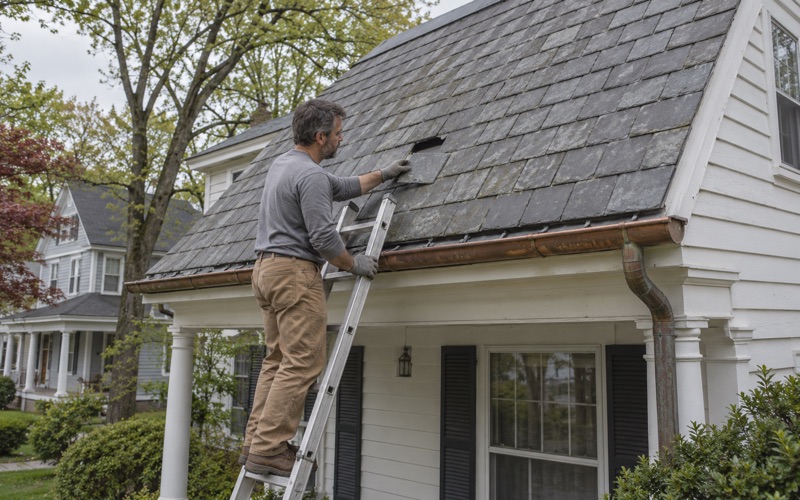
In practice, a like-for-like roof means the same kind of covering, the same profile and a look that matches what the street already sees. Where a house carries older slate or cedar, we repair it with matching material when that material can be found, instead of patching it with whatever happens to be on the truck. That keeps the roof honest to the house and keeps the decision simple.
When a New Roof Material Brings Review
The same explainer lists changing a roof material as work that requires review. Swapping an old covering for a different one, such as moving from one roofing type to standing seam metal or to architectural shingles, changes the appearance the district is meant to protect. For a property inside a district, that kind of change belongs in front of the Historic Preservation Commission before work begins.
We do not tell owners which material the commission will prefer, and we do not claim any color or product rule, because the city’s newer design guidance on roofs was not something we could read. What we can do is lay out the options honestly, explain which ones would keep the existing look and which would change it, and let the owner decide with that in mind.
Roof Replacements on High Street
Roof replacements do come before the commission. The October 7, 2026 agenda lists Application 2026-22, a roof replacement at 212 High Street, a building designated Key in the High Street Historic District. That listing shows the process in use on one of the city’s most prominent streets, and that a replacement on a Key building is ordinary business for the commission.
We point to that agenda item only as an example of how the process runs. Its outcome is not something we know, and the property has no connection to our work. For an owner on or near High Street, the useful lesson is to expect a material change on a prominent building to be discussed in public, and to plan the timeline with a meeting in it.
What a Roofing Application to the Commission Includes
When a roof does need review, the 2026 Application for Certificate of Appropriateness spells out what the commission wants to see. Roof, Chimney, Dormer(s) and Cornice/Trim all appear among its listed work items, so a project touching any of those parts of the house is covered by the same form. Gathering the pieces early keeps an application from coming back incomplete.
Samples and Color Charts
The form asks for samples of proposed siding or roofing materials and for color charts where they apply. This is where our own habit of choosing shingle colors on site helps. We hold real samples up against the brick, stone or siding of the actual house, so the owner sees how a color reads in daylight before anything is ordered or brought to a meeting.
Those same samples and the manufacturer’s color chart can go straight into the owner’s application packet. We supply product literature for whatever material is under discussion, whether that is a laminated shingle line, a natural slate, or a standing seam profile. The owner decides what to submit; we make sure the material in the packet is the material that would actually go on the roof.
Photographs, Sketch and Brochures
Every application also needs photographs of the street scape and the adjacent buildings, a sketch and brochures. The street-scape views let the commission judge how a roof will sit beside its neighbors, which is the reason the photographs reach beyond the house itself. On attached rows, where one roofline runs into the next, that context carries real weight.
The 2026 form says incomplete applications are returned within ten days, so a missing photograph can cost an owner a whole meeting cycle. Our written estimate helps here as well, because it lists tear-off, decking, underlayment, flashing, ventilation and gutters as separate lines. An owner can show exactly what is being replaced and what is being kept, rather than describing the job in general terms.
The Monthly Meeting and Appeals
The commission meets on the first Wednesday of each month at 7 p.m. in the City Hall Council Chambers. The owner must attend, or send a representative with written authorization, which the form says can be someone such as a contractor or an attorney. Filing the application and attending remain the owner’s decisions, and we never promise an outcome or a faster review.
The form also notes that technical assistance from the commission’s consultant may be available with the chairperson’s approval, and the commission’s page lists roofing among the topics it covers. If a decision goes against an owner, appeals go to the City Land Use Board. Knowing that path exists makes it easier to approach the meeting as a conversation rather than a single pass-or-fail moment.
Emergency Roof Repairs and Everyday Work in the City
Not every roof problem can wait for the first Wednesday of the month. A tree limb through the deck or a sudden failure during a storm needs attention now, and the rules around the historic districts account for that. The remainder of the job, from tarping to final cleanup, follows the same standards we hold on any house.
Repairs First, Review After
The real estate explainer summarizing the city code says emergency repairs needed to keep a house habitable may be done first, with review requested as soon as possible afterward. We read that as permission to stop the water, not to finish a full material change. Our emergency work stays temporary or like-for-like until the owner and the commission have had their chance to weigh in.
When storm damage is the cause, we photograph it and write it up for the owner’s own insurance claim, and we will meet the adjuster on site when asked. That same record helps later if the permanent repair needs commission review, since it documents what the roof looked like before the damage and what the emergency work actually changed.
What the State Code Covers
Under the state construction code, replacing the roof covering on a detached one- or two-family house is ordinary maintenance under N.J.A.C. 5:23-2.7. That rule does not answer the separate question of historic review. A house can be exempt from a construction permit and still sit inside a district where the city’s own ordinance governs a change of roof material.
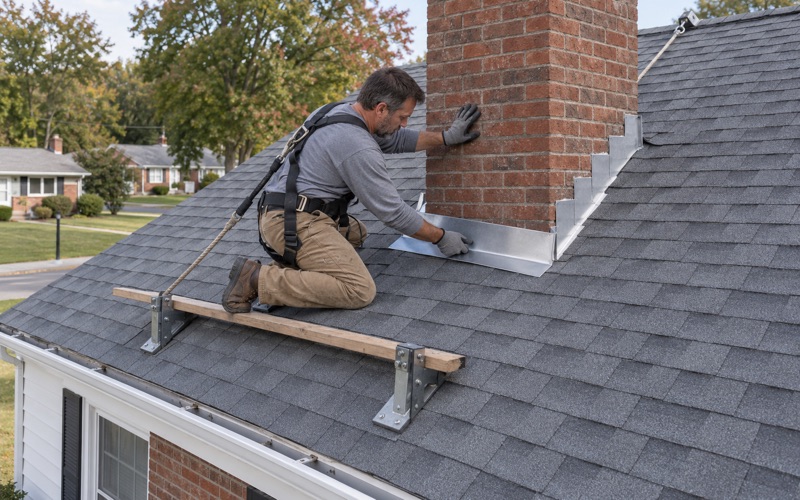
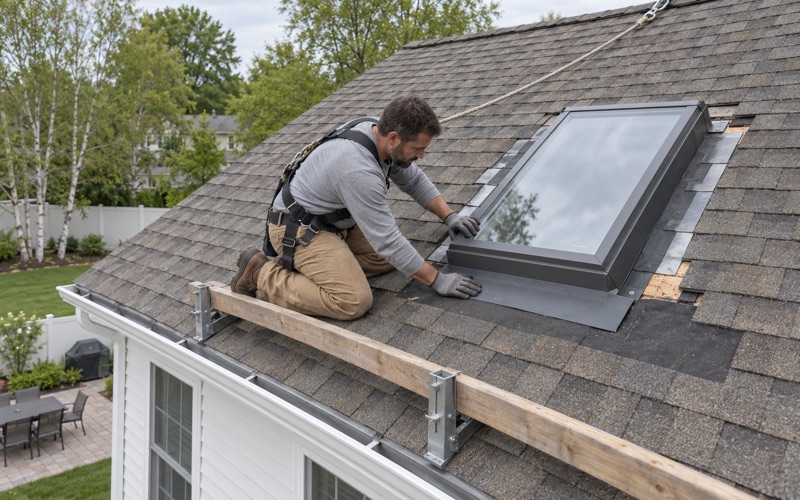
Our contracts follow New Jersey’s home improvement rules, including the right-to-cancel notice, so an owner has the terms in writing before any work begins. The contract also states how flashing will be handled: at chimneys, sidewalls, skylights and valleys we replace it with step flashing and counterflashing when the roof is redone, rather than sealing old metal over with caulk.
Planning Around Panels and Cleanup
When a house carries solar panels, a reroof underneath them needs the removal and reinstall planned before the first day, not discovered on it. We build that sequence into the schedule from the start. On a house whose roof also needs commission review, that planning keeps the panel crew, the meeting date and our own work from colliding.
At the end of each work day the yard, driveway and gutters are cleaned, and the ground gets a magnet sweep for loose roofing nails. On close-set streets where a neighbor’s walkway sits a few feet from the work, that daily cleanup matters as much as the roof itself. A finished job should leave the street looking the way it did before we arrived.
- 20+ Years in Business
- Line-Item Written Estimates
- NJ and PA Contracts